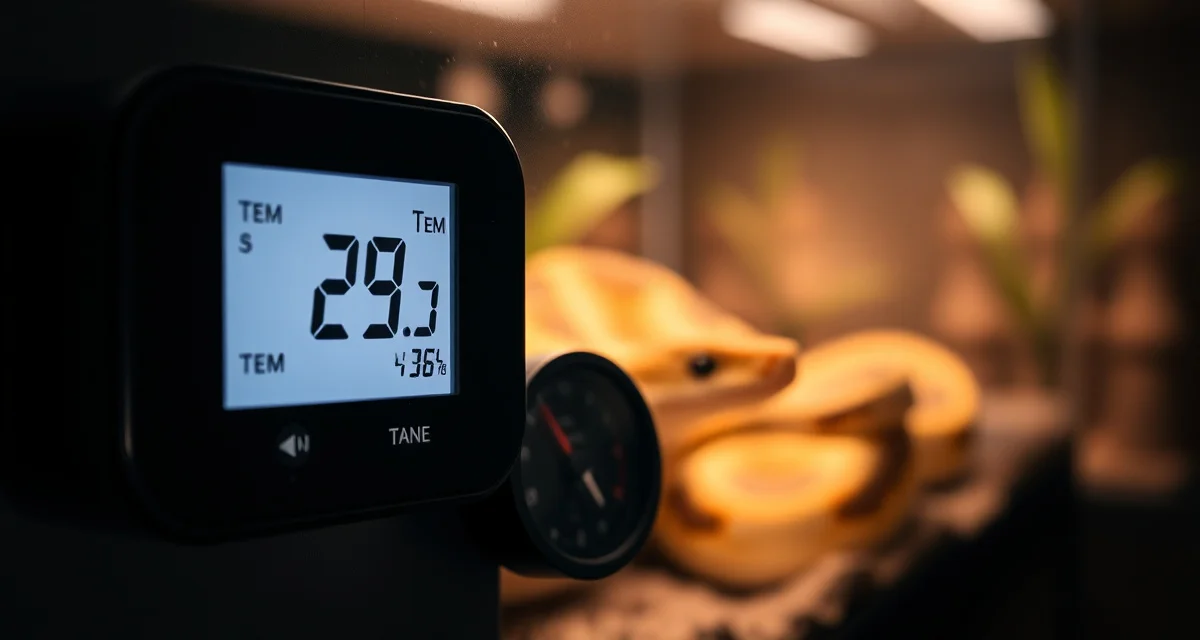
Ball Python Thermostat Calibration and Temperature Verification: A Technical Guide
Breeders using integrated software report 30% less time on administrative tasks, freeing them to focus on the technical management work that actually determines animal health outcomes. Thermostat accuracy is one of those technical fundamentals that experienced breeders check consistently and newer breeders often overlook until they have a problem.
TL;DR
- Ball python breeding operations require systematic record-keeping from pre-season preparation through end-of-season sales.
- Females at 1,200-1,500g or more are the target weight before introducing them to a breeding male.
- Ovulation detection is the key event that anchors pre-lay shed and lay date calculations.
- Clutch profitability guide depends on understanding actual cost basis per animal, not just gross sale revenue.
- Well-documented animals with complete feeding histories and clear genetic records consistently sell faster and at higher prices.
A thermostat that reads 88F but delivers 92F is running your animals four degrees hot. In the short term, you won't see obvious symptoms. Over months, you'll see increased water consumption, more frequent sheds, and eventually reproductive and health issues. Thermostat verification isn't paranoia; it's basic quality control.
Why Thermostats Drift
Thermostats aren't perfectly accurate in perpetuity. Several factors affect their accuracy:
Probe placement: A thermostat controlling heat tape reads the probe's location, not the actual substrate surface temperature where the animal rests. If the probe is at the wrong location, the thermostat maintains the wrong temperature even if it's operating perfectly.
Probe degradation: Thermostat probes are sensitive components that can degrade over time, especially with repeated heating and cooling cycles. A probe that was accurate at installation may drift over months or years.
Heat tape variation: Heat tape doesn't heat uniformly along its entire length. The center of a heat tape run is often hotter than the edges. A probe placed at the edge may indicate correct temperature while the center is notably hotter.
Controller circuit variation: The electronic controller itself may have small calibration drift over time, particularly in inexpensive units.
Verification Equipment
Infrared thermometer (temp gun): The primary verification tool. An infrared thermometer measures surface temperature at the point you aim it. Verify probe-set temperature against temp gun readings on the substrate surface.
Digital probe thermometers: A separate high-accuracy digital thermometer with a probe can be placed inside a tub or enclosure to verify the ambient temperature reading independently of the thermostat's own display.
Data loggers: Temperature data loggers that record continuously over hours or days reveal variation that spot-checks miss. Overnight temperature fluctuations, temperature peaks during the hottest part of the day, and the actual temperature range the animal experiences are only visible through continuous logging.
The Verification Workflow
Quarterly at minimum, monthly if possible:
- Set your thermostat to its normal set point. Let it run for at least 30 minutes to stabilize.
- Use a temp gun to measure surface temperature at 3-5 points along the heat tape coverage area: near the probe location, at the far end from the probe, and in the center.
- Compare surface readings to the thermostat display. Note any discrepancy.
- Place a separate probe thermometer inside a tub at the animal's typical resting position for 30 minutes and compare.
- Record your findings with the date.
If the surface temperature where the animal rests differs from the thermostat set point by more than 2F, investigate: probe placement, probe condition, or thermostat calibration.
Correcting Discrepancies
Probe repositioning: If the probe is poorly placed, moving it closer to the animals' actual resting position often resolves the discrepancy. Most Herpstat and similar professional thermostats allow adjustment of the probe location.
Probe replacement: Thermostat probes are typically inexpensive and user-replaceable. If a probe is failing or has degraded, replacing it often restores accuracy without replacing the whole thermostat.
Thermostat adjustment: Some thermostats allow calibration offsets: you tell the thermostat that it's reading X degrees off from a reference standard, and it adjusts its output accordingly. Check your specific unit's documentation.
Thermostat replacement: If a unit is consistently inaccurate and can't be corrected through adjustment, replace it. The cost of a new Herpstat is minimal compared to the cost of animals lost or harmed by an inaccurately running system.
Incubator Temperature Verification
Incubator accuracy matters more than rack thermostat accuracy during breeding season because eggs are more temperature-sensitive than adult animals. A degree or two of error in your rack temperatures is recoverable; sustained incubation temperatures outside the optimal range produce deformities or dead embryos.
Best practice:
- Place a separate, calibrated probe thermometer inside each incubation container (not just in the incubator body) to verify actual egg-level temperature
- Use a data logger in the incubator during each incubation run to capture any temperature excursions
- Verify incubator temperature weekly during active incubation, not just at the start of the run
Logging Verification Data
Recording verification results creates a maintenance history. If an animal health issue arises and you need to understand whether temperature was a contributing factor, having date-stamped temperature logs from the past year is invaluable.
HatchLedger's equipment records let you log thermostat verification checks alongside animal health records, giving you the maintenance history to investigate potential environmental contributors to any health problems that arise.
The HatchLedger reptile breeder software keeps your equipment and animal records in the same system, making it easy to correlate any animal health observations with recent temperature data.
Frequently Asked Questions
What is the best approach to ball python thermostat calibration and verification?
Verify every thermostat in your system quarterly using a calibrated infrared thermometer, check surface temperatures at multiple points along the heat tape run, place a separate probe thermometer inside a tub for ambient verification, and log your findings with dates. Replace probes or thermostats when you find persistent inaccuracies that can't be corrected through adjustment.
How do professional breeders handle thermostat verification and temperature accuracy?
Experienced breeders verify thermostats as a scheduled maintenance task rather than waiting for a problem to appear, use data loggers in incubators to catch temperature excursions, maintain a temperature verification log alongside their animal records, and invest in quality thermostats (proportional control units like Herpstat) that offer better long-term accuracy than on/off units.
What records should every reptile breeder maintain per animal?
At minimum: acquisition date and source, morph and genetic documentation, feeding log, weight history, any veterinary treatments, and breeding history including pairing dates, clutch of origin for captive-bred animals, and offspring records. These records serve your own management, buyer documentation, regulatory compliance, and long-term genetic tracking.
How should reptile breeders document genetics for buyers?
A complete genetic record for sale includes the animal's visual morph name, confirmed het genes and their basis (parentage documentation or proven-out production), possible het genes with probability percentages, hatch date, and parent morph information. Including clutch-of-origin records lets buyers independently verify the claims.
Sources
- USARK (United States Association of Reptile Keepers)
- Association of Reptilian and Amphibian Veterinarians (ARAV)
- World of Ball Pythons (WoBP genetics reference database)
- MorphMarket (reptile industry marketplace)
- Reptiles Magazine (Bowtie Inc.)
Get Started with HatchLedger
Every part of a ball python breeding operation -- from pairing records to clutch documentation to financial tracking -- works better when the data is connected rather than scattered across notebooks and spreadsheets. HatchLedger is built for exactly that. Try it free with up to 20 animals.