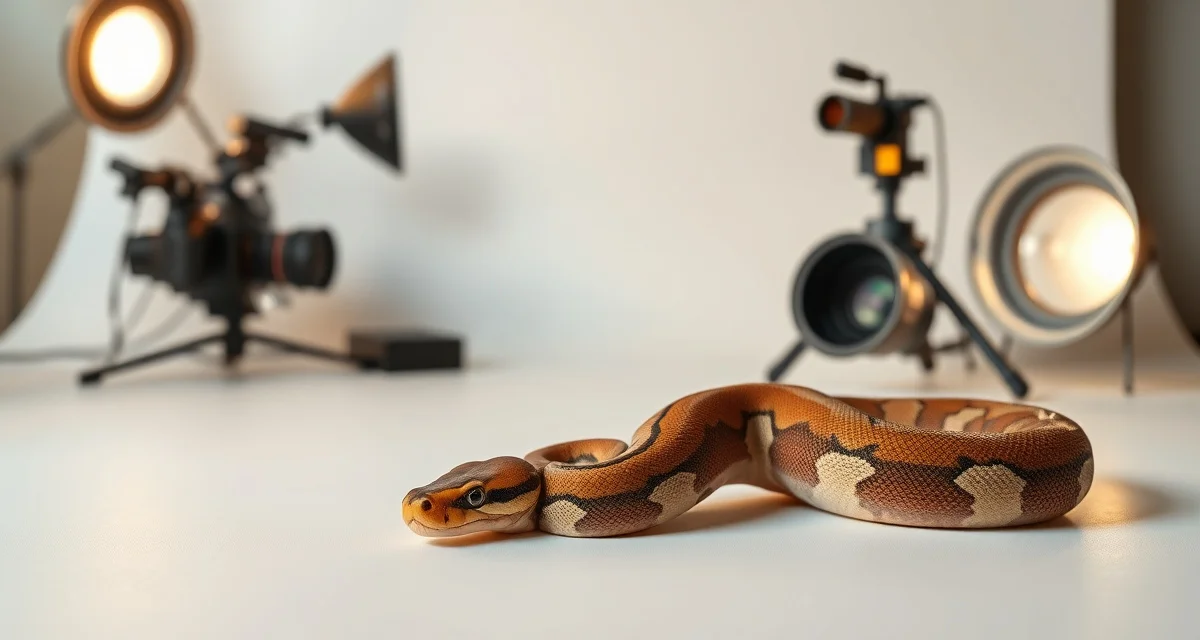
Ball Python Photography for Sales: Getting Shots That Sell
Breeders using integrated software report 30% less time on administrative tasks, freeing up time for the marketing work that drives revenue. Photography is one of the highest-return activities you can invest in for your breeding operation. A great photo of a mediocre animal sells; a poor photo of a great animal doesn't.
TL;DR
- Ball python breeding operations require systematic record-keeping from pre-season preparation through end-of-season sales.
- Females at 1,200-1,500g or more are the target weight before introducing them to a breeding male.
- Ovulation detection is the key event that anchors pre-lay shed and lay date calculations.
- Clutch profitability guide depends on understanding actual cost basis per animal, not just gross sale revenue.
- Well-documented animals with complete feeding histories and clear genetic records consistently sell faster and at higher prices.
Buyers on Morph Market are making purchase decisions from photos. They can't pick up the animal, they can't see it move, and they may be comparing your listing to dozens of others. The photo is everything at that decision point.
Equipment: What You Actually Need
You don't need a professional camera. A modern smartphone camera with good settings handling produces excellent results for ball python photography. What matters more than the camera is lighting, background, and composition.
Phone cameras: The camera on any recent flagship smartphone (iPhone 13 or newer, recent Samsung flagships) shoots at quality well above what Morph Market or Instagram can display. The limiting factor is never the phone; it's everything else.
DSLR or mirrorless cameras: If you already have one or want to invest, a DSLR with a 50mm or 100mm macro lens produces beautiful reptile images. The macro capability lets you get close enough to capture scale detail and eye clarity. But a skilled phone photographer outperforms an unskilled DSLR user every time.
Tripod or phone stand: Shake causes blur. Especially at close range and in lower light, stabilizing the camera makes a meaningful difference in sharpness.
Lighting: The Single Most Important Variable
Poor lighting is the most common cause of bad ball python photos. Two solutions:
Natural indirect light: Shooting near a bright window on an overcast day or in indirect sunlight produces soft, even lighting with accurate color rendition. Direct sunlight creates harsh shadows and blows out highlights. A large north-facing window on a bright day is ideal.
Artificial lighting setup: Two identical light sources (daylight-balanced LED panels or softboxes) at 45-degree angles to the subject eliminate shadows and produce even illumination. This is the approach for shooting after dark or in rooms without good natural light.
Avoid mixed lighting (combining room fluorescent lighting with window light or flash). Mixed color temperatures make white balance impossible and produce unnatural-looking images.
Avoid flash: On-camera or phone flash produces harsh direct light that flattens features, causes hot spots on scales, and washes out the iridescent quality that makes ball pythons visually interesting. Always choose ambient lighting over flash.
Background: Keep It Clean and Consistent
A clean, consistent background focuses the buyer's attention on the animal. A cluttered background is distracting and makes the photo look unprofessional.
Recommended backgrounds:
- White foam board or posterboard: creates clean separation from the snake, enhances perceived color
- Black fabric or matte black surface: works well for lighter morphs and creates dramatic contrast
- Medium gray: neutral and versatile for most morphs
Avoid busy backgrounds (enclosure substrate visible, hands in frame, cluttered workbench). The snake is the product; the background shouldn't compete with it.
Use the same background for all your listing photos if possible. Consistent visual style across your Morph Market listings makes your operation look professional and creates a recognizable brand.
Composition for Morph Photography
Different goals require different compositions:
Head shot: Shows the buyer the animal's face, eye clarity, head pattern, and overall health impression. A sharp head shot is often the most valuable single image in a listing. Get close enough that the head fills most of the frame.
Body shot showing pattern: Lay the snake on a flat background and shoot from directly above. This shows full dorsal pattern and allows morph identification and pattern comparison. Important for patterned morphs like pieds, clowns, and genetic stripes.
Side profile: Shows body condition (is the animal at healthy weight? No spine showing?), size, and overall build.
Coiled resting shot: A natural-looking coiled position shows the animal's full body in a compact frame. Popular on social media.
For Morph Market listings, provide at minimum: a head shot, a dorsal body shot, and one full-body shot showing overall size and condition. Three to five photos is the right range for a listing. More than seven or eight becomes redundant.
Post-Processing
Basic editing improves almost every photo:
Brightness and exposure: Correct for any underexposure that makes the animal look darker than it actually is. Don't overexpose to the point that highlights on scales wash out.
White balance: Correct for any color cast from artificial lighting. The animal should look like it does in person.
Cropping: Crop for tight composition. Remove dead space that's just empty background.
Sharpening: Modest sharpening enhances scale detail and eye clarity.
What to avoid: heavy color grading that makes the animal look different than it does in person. Buyers who receive an animal that looks nothing like the photos are unhappy buyers. Accurate representation builds the reputation that generates repeat business.
Free tools like Lightroom Mobile (free tier), Snapseed, or the built-in photo editors on iOS and Android are sufficient for all the basic adjustments you need.
Connecting Photography to Your Records
When you photograph a hatchling for listing, document the photo date alongside the animal's health and weight records. This creates a timeline that's useful for showing buyers how the animal has developed.
HatchLedger's collection records connect each animal's records to its listing history, giving you context around when animals were photographed relative to their development.
The HatchLedger reptile breeder software keeps your operational data organized so you know which animals are ready to be photographed and listed, preventing animals from sitting unmarketed after they're ready to sell.
Frequently Asked Questions
What is the best approach to ball python photography for sales listings?
Use two-point soft lighting or indirect natural window light, shoot against a clean consistent background, and provide at minimum a head shot, dorsal body shot, and overall size shot for each listing. Post-process for accurate exposure and color but don't alter the animal's appearance notably.
How do professional breeders handle ball python listing photography?
Successful operations establish a consistent photography setup and style they use for every animal, shoot multiple angles per animal, use soft even lighting to show accurate colors, and maintain quality standards that make their listings recognizable and trusted by repeat buyers.
What records should every reptile breeder maintain per animal?
At minimum: acquisition date and source, morph and genetic documentation, feeding log, weight history, any veterinary treatments, and breeding history including pairing dates, clutch of origin for captive-bred animals, and offspring records. These records serve your own management, buyer documentation, regulatory compliance, and long-term genetic tracking.
How should reptile breeders document genetics for buyers?
A complete genetic record for sale includes the animal's visual morph name, confirmed het genes and their basis (parentage documentation or proven-out production), possible het genes with probability percentages, hatch date, and parent morph information. Including clutch-of-origin records lets buyers independently verify the claims.
Sources
- USARK (United States Association of Reptile Keepers)
- Association of Reptilian and Amphibian Veterinarians (ARAV)
- World of Ball Pythons (WoBP genetics reference database)
- MorphMarket (reptile industry marketplace)
- Reptiles Magazine (Bowtie Inc.)
Get Started with HatchLedger
Every part of a ball python breeding operation -- from pairing records to clutch documentation to financial tracking -- works better when the data is connected rather than scattered across notebooks and spreadsheets. HatchLedger is built for exactly that. Try it free with up to 20 animals.