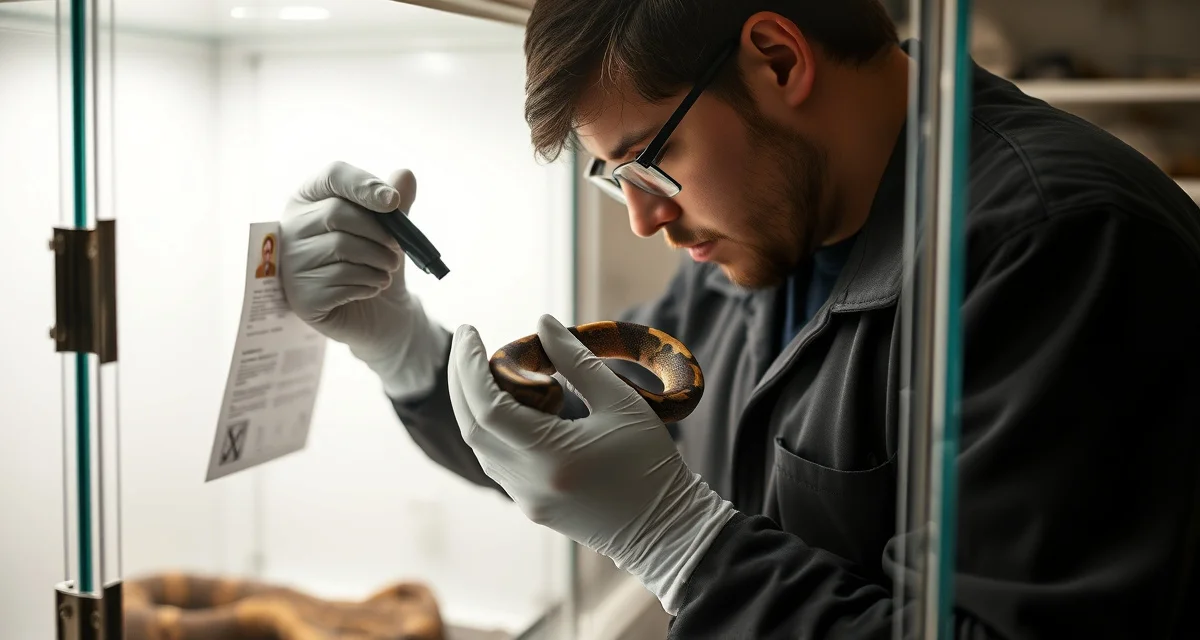
Ball Python Quarantine Protocols: Protecting Your Collection
Breeders using integrated software report 30% less time on administrative tasks, and quarantine tracking is one of the places where that efficiency matters most. A missed quarantine entry point for a sick animal doesn't show up as a problem for weeks, by which time you've potentially exposed your entire collection. Documentation creates accountability.
TL;DR
- Ball python breeding operations require systematic record-keeping from pre-season preparation through end-of-season sales.
- Females at 1,200-1,500g or more are the target weight before introducing them to a breeding male.
- Ovulation detection is the key event that anchors pre-lay shed and lay date calculations.
- Clutch profitability guide depends on understanding actual cost basis per animal, not just gross sale revenue.
- Well-documented animals with complete feeding histories and clear genetic records consistently sell faster and at higher prices.
The single most common disease vector in ball python collections is a new acquisition that wasn't quarantined properly. Breeders who've worked through an IBD situation or a cryptosporidiosis outbreak in their main collection almost universally report the same origin: they skipped quarantine on an animal that "seemed healthy," or they shortened quarantine because they were eager to get the animal integrated.
Why Quarantine Is Non-Negotiable
A healthy-appearing animal can be:
- Incubating a respiratory infection that won't manifest for 2-4 weeks
- A subclinical carrier of cryptosporidiosis (Crypto can take months to manifest visibly)
- Carrying mites that aren't yet visible at acquisition
- An asymptomatic carrier of IBD
Standard veterinary-recommended quarantine for new reptile acquisitions is 90 days minimum. Many experienced breeders extend this to 6 months for animals entering breeding collections, particularly animals from unknown or unverified sources.
During that 90-180 day window, you're watching for problems that weren't visible at acquisition. That's the purpose. Cutting it short eliminates the observation window before the incubation period for many pathogens expires.
Physical Quarantine Setup
Location: The quarantine area must be physically separate from your main collection. Separate room is ideal. If that's not possible, maximum separation within the same room, with no shared airspace if possible.
Dedicated equipment: Every item that touches quarantine animals stays in quarantine. Dedicated tongs, hooks, water bowls, cleaning supplies, and feeding tools. Nothing moves from quarantine to the main collection.
Handling order: Handle main collection animals before handling quarantine animals, not after. If you handle a quarantine animal, wash and disinfect hands thoroughly before touching any main collection animal. Many breeders change clothes or at minimum change gloves.
Air flow: Avoid having quarantine animals in the same HVAC zone as your main collection if you're concerned about airborne pathogens. Respiratory infections in particular can spread through shared air.
The 90-Day Minimum
During quarantine, document:
- Weight at arrival and every 2 weeks (weight loss during quarantine is a notable concern)
- Feeding response: does the animal eat normally? First refusal is acceptable; consistent refusal is a flag
- First shed in your care: examine the shed for retained skin, examine the animal post-shed for any skin abnormalities
- Fecal examination: a fecal float or fecal PCR from a reptile veterinarian early in quarantine is advisable for animals from unknown sources
- Respiratory signs: any wheezing, clicking, or mucus production
- Behavior and posture: neurological signs, star-gazing, abnormal posture
If anything concerning appears during quarantine, consult a reptile veterinarian before the quarantine period ends. An animal that develops respiratory signs in quarantine doesn't graduate to the main collection until the infection is fully resolved and you have veterinary clearance.
Specific Screening
For animals from sources with unknown or questionable biosecurity:
Crypto screening: Fecal antigen testing for Cryptosporidium. A single negative test isn't definitive given the intermittent shedding of crypto, but it's a baseline. Repeated testing at intervals during a longer quarantine is more reliable.
IBD screening: Blood test or tissue biopsy. IBD testing is particularly important for animals coming from collections where multiple snake species are housed (the inclusion body disease arenavirus can affect boids broadly). If you're acquiring an animal from a breeder whose biosecurity practices you can't verify, IBD testing before introduction to your main collection is reasonable.
Mite inspection: Full physical examination under good light at acquisition. Any mite evidence (visible mites, fecal specks, irritated skin around eyes or labial pits) requires full treatment before the quarantine period continues.
Sourcing and Quarantine Decision-Making
Your quarantine rigor should match the risk level of the source:
Low-risk sources (long-established breeders you know personally, animals you've bred yourself): Standard 90-day quarantine, routine monitoring.
Medium-risk sources (reputable breeders you haven't worked with before, reptile shows): Full 90-day quarantine with fecal screening.
Higher-risk sources (reptile rescues, animals from unknown care history, animals that were kept in mixed-species collections): Consider 180-day quarantine with veterinary workup including crypto and IBD screening.
This isn't about distrust; it's about risk stratification. The best breeders in the hobby can inadvertently have a problem in their collection they're not yet aware of.
Documentation During Quarantine
Every observation during quarantine should be recorded with a date. If an animal is sick during quarantine and you don't have records, you lose information about the onset and progression that matters both for treatment and for future sourcing decisions.
HatchLedger's animal records let you track each quarantine animal separately with date-stamped health observations, weight logs, and feeding records from day one.
The HatchLedger reptile breeder software lets you flag animals as "in quarantine" so they appear in a distinct status in your collection view, making it easy to verify which animals are still in quarantine and when each is scheduled to complete.
Frequently Asked Questions
What is the best approach to ball python quarantine protocols?
Maintain a physically separate quarantine space with fully dedicated equipment, observe new animals for a minimum of 90 days, document weight, feeding, and health observations throughout, and get a veterinary fecal exam for animals from unknown sources. Don't shorten quarantine because an animal appears healthy.
How do professional breeders handle ball python quarantine?
Experienced breeders treat quarantine as an absolute protocol, not a suggestion. They maintain dedicated quarantine rooms with separate equipment, handle quarantine animals after main collection animals, and use fecal screening and veterinary workups for animals from unfamiliar sources. The cost of proper quarantine is minimal compared to the cost of a collection-wide disease event.
What records should every reptile breeder maintain per animal?
At minimum: acquisition date and source, morph and genetic documentation, feeding log, weight history, any veterinary treatments, and breeding history including pairing dates, clutch of origin for captive-bred animals, and offspring records. These records serve your own management, buyer documentation, regulatory compliance, and long-term genetic tracking.
How should reptile breeders document genetics for buyers?
A complete genetic record for sale includes the animal's visual morph name, confirmed het genes and their basis (parentage documentation or proven-out production), possible het genes with probability percentages, hatch date, and parent morph information. Including clutch-of-origin records lets buyers independently verify the claims.
Sources
- USARK (United States Association of Reptile Keepers)
- Association of Reptilian and Amphibian Veterinarians (ARAV)
- World of Ball Pythons (WoBP genetics reference database)
- MorphMarket (reptile industry marketplace)
- Reptiles Magazine (Bowtie Inc.)
Get Started with HatchLedger
Every part of a ball python breeding operation -- from pairing records to clutch documentation to financial tracking -- works better when the data is connected rather than scattered across notebooks and spreadsheets. HatchLedger is built for exactly that. Try it free with up to 20 animals.