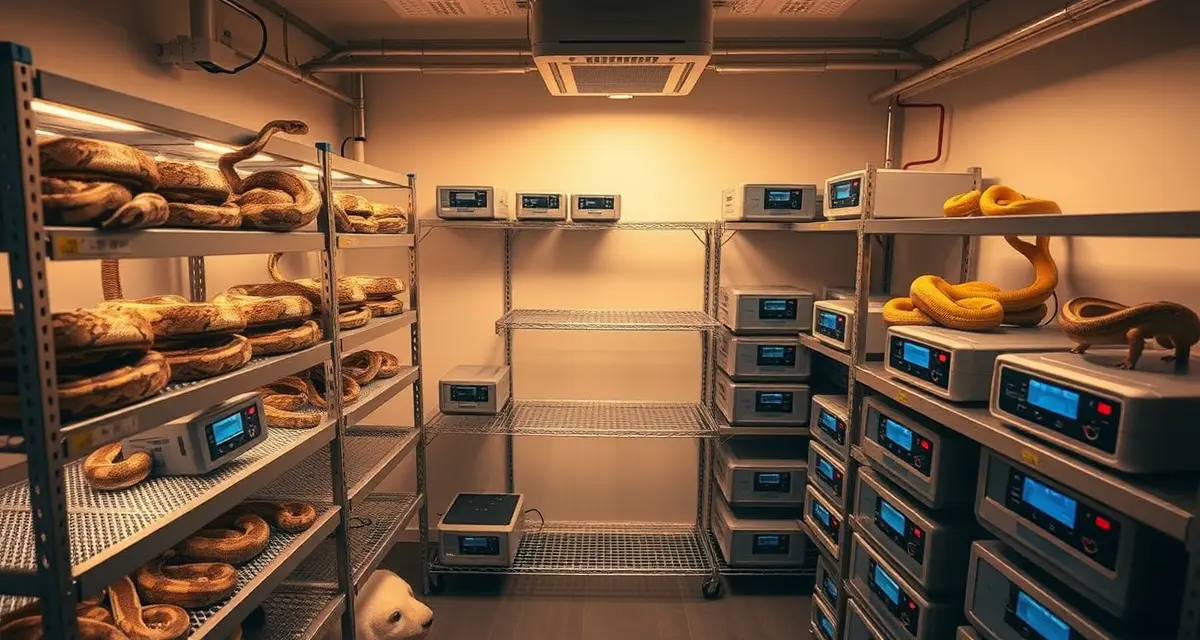
Ball Python Equipment and Room Setup for Breeding Operations
Breeders using integrated software report 30% less time on administrative tasks, and a well-designed facility is part of the infrastructure that makes that efficiency possible. The physical layout and equipment quality of your reptile room affects every management task you do, every day. Getting the setup right from the beginning saves money and time later.
TL;DR
- Ball python breeding operations require systematic record-keeping from pre-season preparation through end-of-season sales.
- Females at 1,200-1,500g or more are the target weight before introducing them to a breeding male.
- Ovulation detection is the key event that anchors pre-lay shed and lay date calculations.
- Clutch profitability guide depends on understanding actual cost basis per animal, not just gross sale revenue.
- Well-documented animals with complete feeding histories and clear genetic records consistently sell faster and at higher prices.
Whether you're converting a spare bedroom, building a dedicated outbuilding, or just optimizing an existing space, thoughtful equipment selection and room design makes your operation easier to manage at every scale.
Room Design Principles
Climate control: Your reptile room needs dedicated climate control separate from the rest of the house. A window air conditioner and space heater combination gives you independent control. Without this, your reptile room temperature varies with household climate changes, creating management complexity.
Humidity management: Built-in electrical outlets with GFCI protection, adequate ventilation to prevent stagnant air, and the ability to add humidity sources (humidifier) without creating safety hazards.
Lighting: Standardized, timed lighting with a consistent photoperiod supports your cycling protocols. LED strip lighting along the top of rack units is efficient and provides good working visibility.
Plumbing access: If possible, a utility sink in the reptile room eliminates trips to the kitchen with water bowls and cleaning supplies.
Flooring: Easy-to-clean flooring. Vinyl plank, epoxy-sealed concrete, or similar surfaces. Carpet in a reptile room is impractical.
Security: Childproof latches on any accessible racks, a self-closing door to contain any escapes, and locks on the room if others in the household shouldn't have unsupervised access.
Rack Systems: The Foundation of Production Housing
For the actual animal housing, commercial rack systems are the industry standard for production operations:
Freedom Breeder: High quality, available in multiple configurations for different life stages. Popular with professional breeders. notable upfront investment but durability justifies it.
Boaphile: Well-regarded thermal performance. Specifically designed for ball pythons and similar species.
Vision Reptiles: Long-established brand with a wide product range.
Animal Plastics (AP): Well-priced, functional racks that are popular particularly for intermediate breeders.
DIY racks: Some breeders build their own from melamine or plywood. Can be cost-effective but requires careful attention to thermostat placement, heat tape coverage, and structural stability.
Whatever brand you choose, verify:
- Tub sizes are appropriate for ball pythons at the life stage you're housing
- Heat tape or heat cable coverage is adequate for the tub positions
- The thermostat system is appropriate for the rack's configuration
Thermostats and Heat Systems
Herpstat (Spyder Robotics): The most recommended thermostat in the production ball python community for heat tape control. Proportional control, reliable, expandable.
Inkbird, Ranco, and similar: Temperature controllers commonly used for supplemental heating in incubators and room-level heating. Not specifically designed for reptile applications but functional.
Heat tape: Commercial heat tape (sold by the foot) is the standard for rack heating. Never run heat tape directly from an outlet without a thermostat.
Ceramic heat emitters (CHE): For individual display enclosures and gravid female setups where ambient heating is preferred over belly heat.
Radiant heat panels: For large enclosures where full-body warmth is beneficial.
Incubation Equipment
Commercial incubators: The Brinsea OvaEasy and similar egg incubators can be adapted for reptile eggs but aren't optimized for the temperature range ball python eggs require (closer to the upper range of bird incubation temperatures).
DIY incubators: Modified coolers with heating elements and thermostats are the most popular choice among production breeders for reliability and temperature stability. A DIY incubator with a good Herpstat thermostat outperforms most commercial options at this task.
Temperature probe: A separate temperature probe inside the incubation containers (not just the incubator body) verifies actual egg-level temperatures.
Monitoring Equipment
Temperature guns (infrared thermometers): For verifying substrate surface temperatures. Point at the substrate where the snake contacts it. Every rack and every display enclosure should be verified with a temp gun regularly.
Digital thermometer/hygrometer units: For monitoring ambient temperature and humidity in the reptile room and in individual enclosures.
Digital scale: For weighing animals monthly. A kitchen scale accurate to 1g handles most adults; a 0.1g scale for hatchlings.
Data loggers (optional but valuable): Temperature and humidity data loggers that record continuously give you a full picture of environmental conditions, including overnight fluctuations and any anomalies.
Cleaning and Hygiene Equipment
Dedicated cleaning tools per rack section or per animal: Tongs, spatulas, water bowl brushes. Cross-contamination prevention requires dedicated tools or thorough disinfection between animals.
Disinfectant: Hospital-grade disinfectants for thorough cleaning. A dilute bleach solution (1:10 bleach:water) for general disinfection. More specialized disinfectants for when mites or known pathogens require it.
Spray bottles: For diluted disinfectant solutions.
Gloves and PPE: Nitrile gloves for routine health checks and handling of sick animals.
Organizing Your Records Alongside Your Facility
Physical records and digital records need to be connected. Label every rack position clearly, use labels that match your digital record IDs, and ensure that anyone caring for animals can find the digital record for any physical animal in less than 30 seconds.
HatchLedger's collection management features let you record each animal's physical location, linking your digital records to your physical facility layout.
The HatchLedger reptile breeder software keeps your operational data accessible from mobile devices so you can update records in the reptile room without going to a computer.
Frequently Asked Questions
What is the best approach to ball python breeding room and equipment setup?
Invest in dedicated climate control for your reptile room, purchase commercial rack systems from established manufacturers rather than compromising on DIY solutions, use quality thermostats (not just on/off switches) for all heat sources, and set up the physical organization system before loading animals. Good equipment pays back in reduced troubleshooting and fewer animal health problems.
How do professional breeders handle reptile room and equipment setup?
Production breeders standardize on a specific rack system that they've tested and trusted, invest in quality thermostats and temperature monitoring equipment, and design their rooms for efficient workflow (everything within reach, easy cleaning access, lighting that works for their inspection routine).
What records should every reptile breeder maintain per animal?
At minimum: acquisition date and source, morph and genetic documentation, feeding log, weight history, any veterinary treatments, and breeding history including pairing dates, clutch of origin for captive-bred animals, and offspring records. These records serve your own management, buyer documentation, regulatory compliance, and long-term genetic tracking.
How should reptile breeders document genetics for buyers?
A complete genetic record for sale includes the animal's visual morph name, confirmed het genes and their basis (parentage documentation or proven-out production), possible het genes with probability percentages, hatch date, and parent morph information. Including clutch-of-origin records lets buyers independently verify the claims.
Sources
- USARK (United States Association of Reptile Keepers)
- Association of Reptilian and Amphibian Veterinarians (ARAV)
- World of Ball Pythons (WoBP genetics reference database)
- MorphMarket (reptile industry marketplace)
- Reptiles Magazine (Bowtie Inc.)
Get Started with HatchLedger
Every part of a ball python breeding operation -- from pairing records to clutch documentation to financial tracking -- works better when the data is connected rather than scattered across notebooks and spreadsheets. HatchLedger is built for exactly that. Try it free with up to 20 animals.