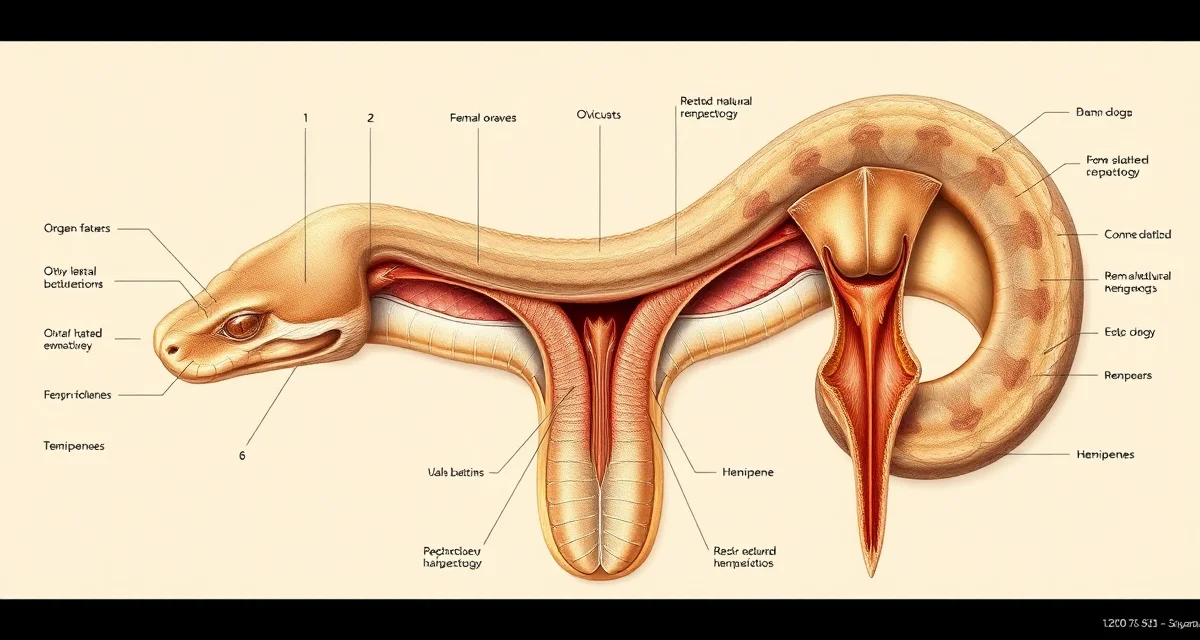
Ball Python Reproductive Anatomy and Physiology for Breeders
Breeders using integrated software report 30% less time on administrative tasks, and understanding the biology underlying what you observe during breeding season makes your observations more meaningful and your interventions more targeted. Knowing why females bask after ovulation or why cooling triggers gonadal development helps you make better management decisions.
TL;DR
- Ball python breeding operations require systematic record-keeping from pre-season preparation through end-of-season sales.
- Females at 1,200-1,500g or more are the target weight before introducing them to a breeding male.
- Ovulation detection is the key event that anchors pre-lay shed and lay date calculations.
- Clutch profitability guide depends on understanding actual cost basis per animal, not just gross sale revenue.
- Well-documented animals with complete feeding histories and clear genetic records consistently sell faster and at higher prices.
This is practical anatomy and physiology, focused on what breeders need to know to understand and manage the reproductive process effectively.
Female Reproductive Anatomy
Paired ovaries: Female ball pythons have two ovaries positioned in the posterior two-thirds of the body cavity. In non-reproductive season, the ovaries are small and not palpable. During vitellogenesis (follicle development), they enlarge notably.
Follicles: Eggs develop within follicles on the ovaries. Pre-ovulatory follicles feel like grape-like clusters when palpated carefully. During breeding season, follicular development is visible via ultrasound and palpable in advanced stages.
Oviducts: Two tubular structures that receive ovulated follicles and conduct them toward the cloaca. After ovulation, eggs form their shells (actually a leathery membrane in snakes) within the oviducts during the post-ovulatory period.
Infundibulum: The funnel-like structure at the anterior end of each oviduct that captures ovulated follicles from the ovary.
Uterus (posterior oviduct): The eggs develop and are maintained in the posterior oviducts, often called the uterus in colloquial use. This is where the eggs are positioned just before laying.
Cloaca: The common opening for the reproductive, urinary, and digestive systems. Eggs are laid through the cloaca.
The Female Reproductive Cycle
Pre-vitellogenesis: Ovaries are small, follicles are microscopic. This is the non-reproductive state.
Vitellogenesis: Follicles begin rapid growth as the liver produces vitellogenin (yolk precursor protein) and transports it to the follicles via the bloodstream. This is triggered by a combination of temperature change, photoperiod, and body condition. Palpable follicles at later vitellogenesis feel like small clusters in the mid-body.
Pre-ovulatory swelling: Follicles reach their maximum pre-ovulatory size (30-45mm+). This may be visible as a slight distension in the female's mid-body.
Ovulation: Follicles are released from the ovary and travel to the oviduct. This is the palpable swelling event that breeders observe as the "ovulation bulge." The female's body shape changes as the follicular mass consolidates.
Post-ovulation (gestation): Eggs are in the oviducts, developing their shells. The female's appetite typically declines or ceases. She basks extensively to maintain elevated body temperatures that support development.
Pre-lay shed: Approximately 18-28 days post-ovulation, the female sheds. This shed may be triggered by the hormonal changes occurring as eggs complete development.
Egg laying: 14-30 days after the pre-lay shed. Uterine contractions move eggs through the oviducts and out through the cloaca.
Male Reproductive Anatomy
Paired testes: Located in the mid-to-posterior body cavity. Active during breeding season and visibly enlarged during spermatogenic activity.
Hemipenes: Two intromittent organs stored inverted in the tail base. During mating, one hemipenis (the one on the same side as the female's cloaca) is everted and inserted. Ball pythons use one hemipenis per copulation; subsequent matings may use either side.
Hemipenis morphology: Ball python hemipenes are bilobed and covered in small papillae and spines that help maintain the lock during copulation. The spine patterns are species-specific and sometimes used in taxonomic studies.
Pelvic spurs: Small remnant pelvic bones visible as small claw-like structures on either side of the cloaca. In ball pythons, males have more prominent spurs. During mating, males use the spurs to stimulate the female's sides and cloaca during courtship.
The Lock Mechanism
During copulation, the everted hemipenis is inserted into the female's cloaca and the interlocking spines help maintain the connection. "Locks" can last from a few minutes to several hours.
The lock serves to ensure sperm transfer. After the lock releases, the hemipenis is re-inverted. Both animals typically return to normal behavior fairly quickly after a lock ends.
You don't need to observe a lock to know breeding occurred. Many successful pairings involve locks that happened overnight. The presence of vigorous sperm-transfer behavior (male aligned with female, both relatively stationary for extended periods) is a good indicator even if you didn't see the specific lock.
Sperm Storage
Female ball pythons can store viable sperm for weeks to months. Sperm storage in the female's reproductive tract means fertilization can occur at ovulation even if the last pairing was some time before the ovulation event.
This explains why introducing a male well before ovulation is effective: sperm deposited weeks earlier are still viable at the time of ovulation. It also means that a female who had a single pairing three weeks before ovulation can still produce a fertile clutch.
Hormonal Control
The reproductive cycle is controlled by the hypothalamic-pituitary-gonadal (HPG) axis:
- The hypothalamus releases GnRH (gonadotropin-releasing hormone)
- GnRH stimulates the pituitary to release LH and FSH
- LH and FSH act on the gonads to stimulate sex hormone production and gametogenesis
- Sex hormones (estrogen in females, testosterone in males) drive secondary reproductive behaviors
Temperature and photoperiod both affect GnRH release, which is why cooling protocols that manipulate both triggers are more effective than temperature alone.
HatchLedger's breeding records capture the observable events (introductions, ovulation, pre-lay shed, lay) that reflect this underlying biology. Understanding the biology helps you interpret what you observe and anticipate what comes next in the cycle.
The HatchLedger reptile breeder software connects these biological events to your project records and P&L tracking.
Frequently Asked Questions
What is the best approach to understanding ball python reproductive physiology for breeding?
Focus on the observable events that reflect the underlying biology: follicular development (palpable as the breeding season progresses), the ovulation event (visible mid-body swelling), the post-ovulatory gestation period, and the pre-lay shed signal. Understanding the hormonal basis of these events helps you interpret why cooling protocols work and what's driving the female's behavioral changes.
How do professional breeders use ball python reproductive physiology knowledge?
Experienced breeders use physiological understanding to interpret what they observe more accurately, distinguishing normal variation from concerning deviations. They understand why palpation and ultrasound can detect follicular development before ovulation, why sperm storage makes timing less critical than the inexperienced think, and why temperature and photoperiod together are more effective cycling triggers than temperature alone.
What records should every reptile breeder maintain per animal?
At minimum: acquisition date and source, morph and genetic documentation, feeding log, weight history, any veterinary treatments, and breeding history including pairing dates, clutch of origin for captive-bred animals, and offspring records. These records serve your own management, buyer documentation, regulatory compliance, and long-term genetic tracking.
How should reptile breeders document genetics for buyers?
A complete genetic record for sale includes the animal's visual morph name, confirmed het genes and their basis (parentage documentation or proven-out production), possible het genes with probability percentages, hatch date, and parent morph information. Including clutch-of-origin records lets buyers independently verify the claims.
Sources
- USARK (United States Association of Reptile Keepers)
- Association of Reptilian and Amphibian Veterinarians (ARAV)
- World of Ball Pythons (WoBP genetics reference database)
- MorphMarket (reptile industry marketplace)
- Reptiles Magazine (Bowtie Inc.)
Get Started with HatchLedger
Every part of a ball python breeding operation -- from pairing records to clutch documentation to financial tracking -- works better when the data is connected rather than scattered across notebooks and spreadsheets. HatchLedger is built for exactly that. Try it free with up to 20 animals.