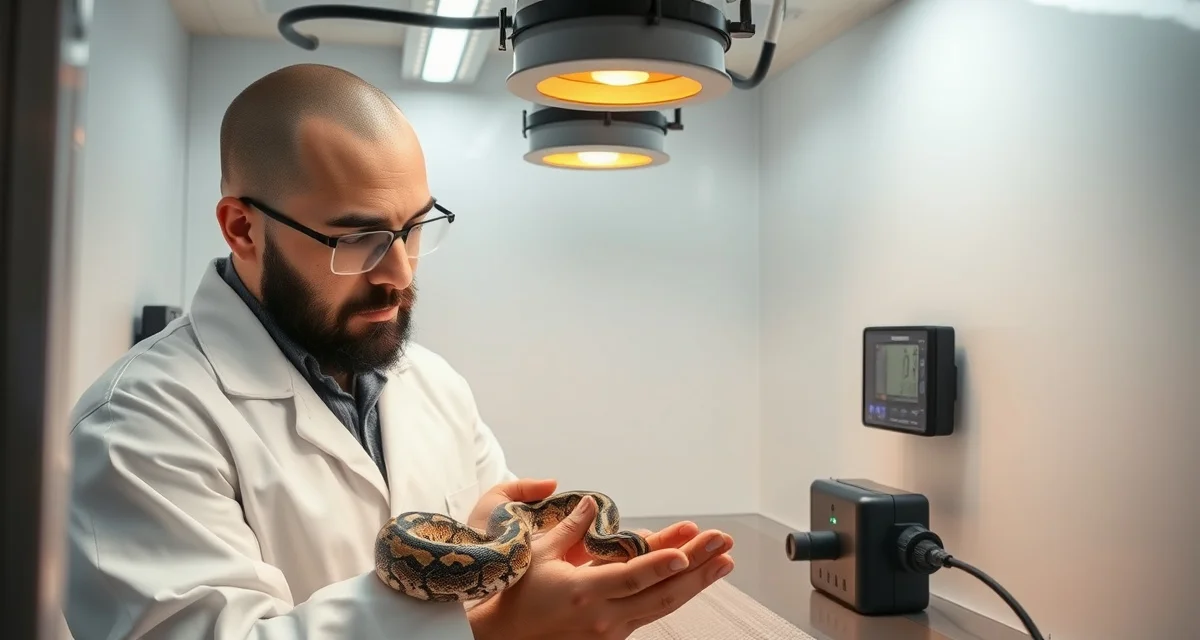
Ball Python Wintertime Breeding Season Management: Cold Weather Husbandry Guide
Breeders using integrated software report 30% less time on administrative tasks, and winter is when the breeding season is at its most active for most North American breeders. November through March is introduction season, ovulation detection season, and early laying season. Managing all of that alongside cold weather husbandry challenges requires systematic attention.
TL;DR
- Ball python breeding operations require systematic record-keeping from pre-season preparation through end-of-season sales.
- Females at 1,200-1,500g or more are the target weight before introducing them to a breeding male.
- Ovulation detection is the key event that anchors pre-lay shed and lay date calculations.
- Clutch profitability guide depends on understanding actual cost basis per animal, not just gross sale revenue.
- Well-documented animals with complete feeding histories and clear genetic records consistently sell faster and at higher prices.
Winter brings specific challenges that summer operations don't face: cold drafts, power outages, furnace failures, and dry indoor air from heating systems. Understanding how these affect your collection and having protocols to address them keeps your breeding season on track.
Cold Weather Husbandry Challenges
Temperature stability: Your reptile room's temperature is more affected by outdoor temperatures in winter. A room that maintains 75F in August may struggle to maintain 70F in January if it's poorly insulated or adjacent to an exterior wall. This affects your thermal gradients, particularly the cool side of your rack system.
Dry indoor air: Forced-air heating systems remove humidity from indoor air notably. A reptile room that maintains 60% humidity in summer may drop to 30-40% in winter, which affects shedding quality and animal comfort.
Power outages: Winter storms in most of the country bring power outage risk. A power outage in July is inconvenient; a power outage in January when ambient temps can drop below freezing is a genuine emergency for your collection.
Respiratory infection risk: Cold drafts around rack systems or enclosures near exterior walls or windows can cool animals locally, predisposing them to respiratory infections even when your thermostat reads an appropriate temperature.
Verifying Your Thermal Environment in Winter
Verify your reptile room and enclosure temperatures specifically in winter conditions. Don't assume that summer calibrations hold.
Walk through your room when it's cold outside and check:
- Is there any draft near racks or enclosures close to exterior walls, windows, or doors?
- Do temperature gradients in tubs maintain their calibration even when ambient room temp is lower?
- Are your thermostats keeping up with the increased heating demand?
Adjust thermostat settings if needed to compensate for lower ambient room temperature. A thermostat set to maintain 88F at the warm side of a tub in a 70F room may need to be adjusted upward in a 62F room to maintain the same warm-side temperature.
Humidity Management in Winter
Add moisture back to your reptile room during winter. Options:
Room humidifier: A whole-room humidifier running in your reptile space can bring humidity from 30-40% up to the target 50-70% range. Monitor with a hygrometer and adjust the humidifier output.
Individual humid hides: Ensure every animal has access to a humid hide (damp sphagnum moss inside a hide box). In winter, these may need more frequent moisture refreshing as they dry out faster.
Water bowl maintenance: Large, open water bowls contribute moisture to the ambient air through evaporation. Keep them well-filled.
Misting: Light misting of enclosures (not rack tubs) can supplement humidity but evaporates quickly in a dry environment.
Monitor your animals' shed quality through winter as a humidity proxy. If multiple animals in the same rack section start having poor sheds, humidity in that area has dropped below adequate.
Power Outage Preparedness
Don't wait for an outage to know your plan. Prepare:
Generator: For serious operations, a backup generator is a genuine investment in collection protection. Even a portable generator can power your critical heat tape circuits.
Temperature threshold assessment: Know how long your reptile room maintains safe temperatures after power loss in winter conditions. Insulated rooms hold heat longer. Time yourself during a power loss test.
Emergency heat sources: Chemical hand warmers placed near (not on) rack sections or in enclosed spaces can extend safe temperature windows by hours. Stock these before winter.
Contact list: Know who in your area has a generator and would allow emergency boarding of your most critical animals.
Priority triage: If you can only save power for some of your animals, which get priority? Gravid females, hatchlings, and valuable breeding animals get the generator power first.
Winter-Specific Respiratory Risks
Ball pythons in cold, drafty conditions develop respiratory infections faster than animals in stable, warm environments. During winter:
- Check all rack tubs that are near exterior walls or cold air returns for consistent temperature
- Move any animal showing early respiratory signs to a warmer location promptly
- Increase monitoring frequency during particularly cold periods or following any draft exposure event
Log any respiratory observations with dates in health records. Winter respiratory incidents that resolve with improved thermal management help you identify which enclosures are problematic in cold weather.
Active Breeding Season Management in Winter
While managing these environmental challenges, you're also running your most active pairing schedule. A few specific winter breeding season notes:
Males leaving cycling: Some males that went into cooling in October are cycling through their most active breeding window now. Watch for the behavioral changes (restlessness, constant tongue-flicking) that indicate peak readiness.
Pre-ovulation monitoring: Females that ovulated in December or January are approaching their pre-lay shed window in January or February. Have nest boxes ready.
Egg timing: First eggs of the season may be entering the incubator. Verify incubator temperatures when the season's first clutch goes in.
Female condition monitoring: Track weights monthly for all breeding females. Winter is when the metabolic demands of cycling and early gestation peak.
HatchLedger's breeding records and health logs keep all of this information organized. You can see at a glance which females have ovulated and when to expect their pre-lay sheds, which males have been introduced to which females, and which animals have any health concerns.
After the Cold: Transitioning to Spring
As outdoor temperatures moderate in March-April, your reptile room environment stabilizes and the acute challenges of winter management ease. But don't relax all at once:
- Verify that spring temperature changes aren't creating humidity swings (rapid ambient temperature increases can initially reduce humidity as warm air absorbs moisture)
- Check thermostat settings as the room temperature rises and heating demand decreases
- Continue monitoring females in late gestation as the season's main laying period approaches
The HatchLedger reptile breeder software keeps your breeding season timeline visible across the entire active period, helping you stay organized through the most demanding management window of the year.
Frequently Asked Questions
What is the best approach to ball python winter husbandry and breeding season management?
Verify your thermal environment in winter conditions specifically (not just summer calibration), add humidity to compensate for dry heated indoor air, prepare for power outages with a generator or emergency heat source plan, and monitor respiratory health more carefully during cold weather. Continue active pairing management while addressing environmental challenges.
How do professional breeders handle ball python collections in winter?
Experienced breeders with large collections treat winter as both the most active breeding season and the most challenging environmental management period. They verify temperatures and humidity specifically in cold conditions, have power outage plans documented and supplies stocked, and increase respiratory monitoring frequency during the coldest months.
What records should every reptile breeder maintain per animal?
At minimum: acquisition date and source, morph and genetic documentation, feeding log, weight history, any veterinary treatments, and breeding history including pairing dates, clutch of origin for captive-bred animals, and offspring records. These records serve your own management, buyer documentation, regulatory compliance, and long-term genetic tracking.
How should reptile breeders document genetics for buyers?
A complete genetic record for sale includes the animal's visual morph name, confirmed het genes and their basis (parentage documentation or proven-out production), possible het genes with probability percentages, hatch date, and parent morph information. Including clutch-of-origin records lets buyers independently verify the claims.
Sources
- USARK (United States Association of Reptile Keepers)
- Association of Reptilian and Amphibian Veterinarians (ARAV)
- World of Ball Pythons (WoBP genetics reference database)
- MorphMarket (reptile industry marketplace)
- Reptiles Magazine (Bowtie Inc.)
Get Started with HatchLedger
Every part of a ball python breeding operation -- from pairing records to clutch documentation to financial tracking -- works better when the data is connected rather than scattered across notebooks and spreadsheets. HatchLedger is built for exactly that. Try it free with up to 20 animals.