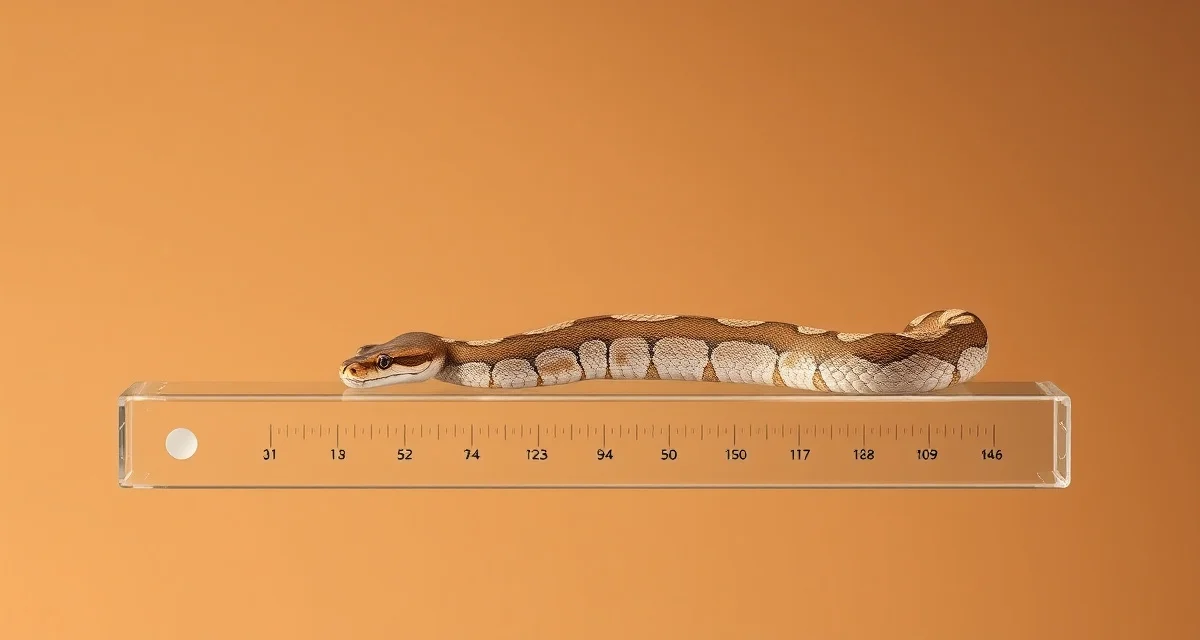
Ball Python Juvenile Growth Rates and Development Milestones
Breeders using integrated software report 30% less time on administrative tasks, and growth tracking for a large hatchling cohort is one of the areas where that time savings is most valuable. Manually tracking weights for 60 hatchlings every two weeks is tedious; having it organized in software makes it practical.
TL;DR
- Ball python breeding operations require systematic record-keeping from pre-season preparation through end-of-season sales.
- Females at 1,200-1,500g or more are the target weight before introducing them to a breeding male.
- Ovulation detection is the key event that anchors pre-lay shed and lay date calculations.
- Clutch profitability guide depends on understanding actual cost basis per animal, not just gross sale revenue.
- Well-documented animals with complete feeding histories and clear genetic records consistently sell faster and at higher prices.
Understanding normal ball python growth rates helps you identify animals that are developing on schedule, flag animals falling behind, and plan when animals will reach target weights for breeding or sale.
Normal Growth Benchmarks
Ball python growth rates vary by individual, morph line, sex, and feeding quality. These are general benchmarks, not rigid targets:
Hatchling (0-3 months):
- Typical hatch weight: 60-100g
- Growth rate: 10-15% body weight per month with reliable feeding
- At 3 months: 100-160g range for typical animals
Early juvenile (3-6 months):
- Growth rate accelerates as prey size increases
- At 6 months: 180-320g range depending on sex, morph line, and feeding intensity
Juvenile (6-12 months):
- Strong growth phase, particularly in well-fed animals
- At 12 months: 400-700g range; wide variation based on sex and feeding intensity
- Males typically lighter than females from this point forward
Subadult (12-24 months):
- Continued growth, rate beginning to slow
- At 18 months: 500-1,000g range
- At 24 months: 700-1,500g range
Adults:
- Males typically reach 1,200-1,800g as adults, most commonly 1,300-1,600g
- Females typically reach 1,500-3,000g, with most production females at 1,600-2,200g
- Large-bodied morph lines may exceed these ranges
These are starting points. Genetic lines vary, and animals that eat more grow faster. The key is tracking the individual's trend rather than comparing to a generic standard.
Factors Affecting Growth Rate
Feeding frequency and prey size: The single biggest determinant of growth rate. Animals fed every 5-7 days on appropriately sized prey grow notably faster than animals on a 10-14 day schedule. For hatchlings you want to bring to breeding size quickly, aggressive early feeding produces meaningful acceleration.
Sex: Females have more growth potential and typically grow larger than males after the first year. At 6 months, many males and females look similar; by 18-24 months, the female's size advantage is usually apparent.
Morph line: Some morph lines trend smaller (certain pastel lines, some fire animals) while others trend larger. Cinnamon and black pastel-based animals often have good size. Knowing the size characteristics of the specific lines you're working with helps calibrate expectations.
Individual variation: Even in a same-clutch cohort on identical husbandry, some individuals simply grow faster than others. This is normal genetic variation.
Recognizing Growth Problems
An animal that's failing to thrive while eating reliably may have:
- Internal parasites consuming nutrients
- Chronic low-grade infection
- Metabolic issues related to husbandry
- An underlying genetic or developmental problem
If a hatchling eats consistently but gains weight notably below cohort-mates, investigate. A veterinary exam and fecal testing are the appropriate first steps.
Conversely, an animal that grows faster than cohort-mates isn't a problem, but it may be ready for prey size increases sooner and may reach breeding size earlier than expected.
Growth and Prey Size Progression
Prey size should increase as the animal grows. The guideline (prey diameter approximately matching the snake's body diameter at its widest point) means regular reassessment:
- Hatchlings: Pinkies or hopper mice
- Juveniles: Adult mice or fuzzy/hopper rats
- Subadults: Small or medium rats
- Adults: Medium to large rats
Don't keep feeding a growing snake prey that's proportionally too small; it slows growth and often doesn't satisfy the animal's appetite, which can cause feeding problems.
Tracking Growth Data Effectively
Weigh every hatchling every 2 weeks for the first 3 months, then monthly after establishing reliable feeding. Record weight with the date and feeding history. After several weigh-ins, you can calculate average gain per month.
For a cohort of hatchlings from the same clutch, compare individual growth rates. This tells you:
- Which animals are developing ahead of schedule
- Which may have husbandry issues worth investigating
- How your cohort compares to previous seasons' cohorts
Year-over-year cohort comparison is one of the analytical capabilities that HatchLedger's breeding management tools support. Seeing that your 2024 hatchling cohort averaged 12% monthly weight gain vs. your 2025 cohort at 9% average gives you actionable information about whether feeding protocols or husbandry conditions changed.
When Animals Reach Breeding Size
Males can technically breed at relatively low weights (400-500g minimum, though 600g+ is better) but for long-term health and consistent performance, allow males to reach 800g+ before intensive breeding use.
Females should be at minimum 1,400-1,500g for most breeding attempts, with 1,600g+ for more consistent results and better post-lay recovery. Don't rush females to breed before they're adequately developed.
Track the date each animal reaches your target breeding weight. If you're growing animals specifically for breeding projects, this tells you which season they'll be available and helps you plan your pairing schedule.
The HatchLedger reptile breeder software tracks each animal's weight history with dates, allowing you to calculate when an animal at current growth rate is expected to reach target breeding weight.
Frequently Asked Questions
What is the best approach to ball python juvenile growth rate monitoring?
Weigh every 2 weeks for the first 3 months, then monthly. Compare growth rates between cohort-mates from the same clutch to identify outliers. Adjust prey size as the animal grows (prey diameter should match body diameter). Investigate any animal eating reliably but growing notably behind cohort-mates with a fecal test and veterinary assessment.
How do professional breeders handle ball python juvenile growth tracking?
Production breeders track weights for their entire hatchling cohort on a regular schedule and compare growth trajectories across the cohort and against previous seasons. They use growth data to anticipate when animals will reach sale weight, breeding size, or need prey size upgrades.
What records should every reptile breeder maintain per animal?
At minimum: acquisition date and source, morph and genetic documentation, feeding log, weight history, any veterinary treatments, and breeding history including pairing dates, clutch of origin for captive-bred animals, and offspring records. These records serve your own management, buyer documentation, regulatory compliance, and long-term genetic tracking.
How should reptile breeders document genetics for buyers?
A complete genetic record for sale includes the animal's visual morph name, confirmed het genes and their basis (parentage documentation or proven-out production), possible het genes with probability percentages, hatch date, and parent morph information. Including clutch-of-origin records lets buyers independently verify the claims.
Sources
- USARK (United States Association of Reptile Keepers)
- Association of Reptilian and Amphibian Veterinarians (ARAV)
- World of Ball Pythons (WoBP genetics reference database)
- MorphMarket (reptile industry marketplace)
- Reptiles Magazine (Bowtie Inc.)
Get Started with HatchLedger
Every part of a ball python breeding operation -- from pairing records to clutch documentation to financial tracking -- works better when the data is connected rather than scattered across notebooks and spreadsheets. HatchLedger is built for exactly that. Try it free with up to 20 animals.