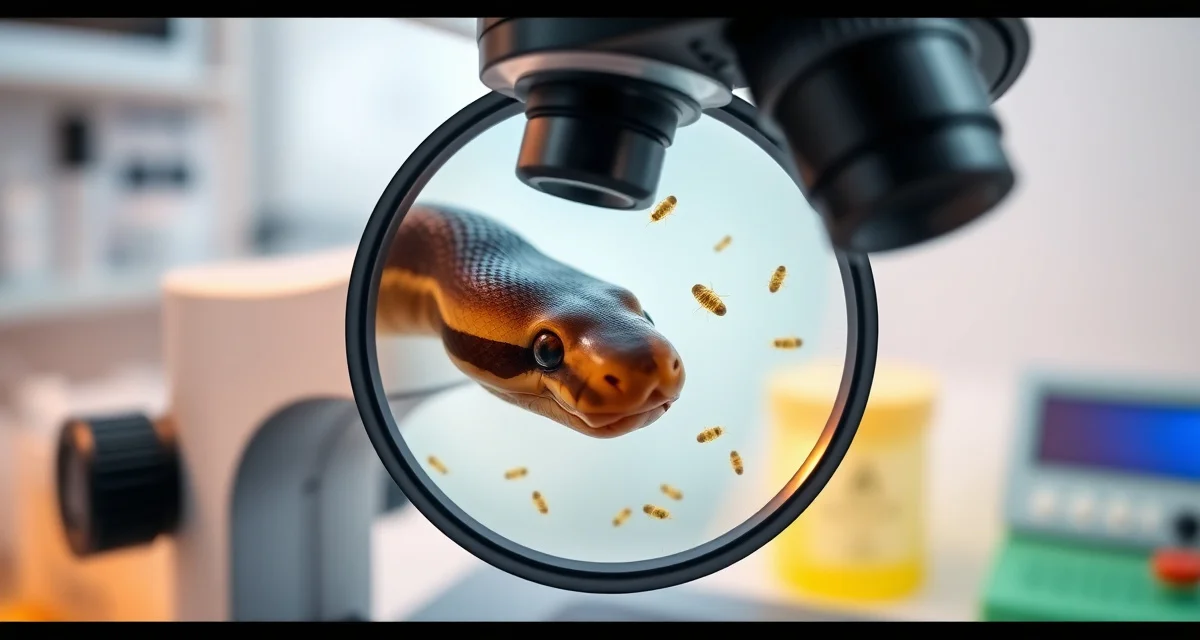
Ball Python Internal Parasites: Detection, Treatment, and Prevention
By HatchLedger Editorial Team · Published 2025-04-25 · Updated Mar 13, 2026
Breeders using integrated software report 30% less time on administrative tasks, and systematic parasite screening is one area where having organized health records makes a real difference. Knowing when you last tested each animal, what the results were, and whether treatment was completed is essential for a serious collection.
TL;DR
- Ball python breeding operations require systematic record-keeping from pre-season preparation through end-of-season sales.
- Females at 1,200-1,500g or more are the target weight before introducing them to a breeding male.
- Ovulation detection is the key event that anchors pre-lay shed and lay date calculations.
- Clutch profitability guide depends on understanding actual cost basis per animal, not just gross sale revenue.
- Well-documented animals with complete feeding histories and clear genetic records consistently sell faster and at higher prices.
Internal parasites are more common in ball pythons than many keepers realize, particularly in animals with wild-caught lineage. Most captive-bred animals from established breeders with good hygiene practices have lower parasite burdens, but no collection is completely immune. Regular testing and prompt treatment protect your animals and your breeding stock.
Types of Internal Parasites in Ball Pythons
Nematodes (roundworms): The most common internal parasites in snakes. Include various species of ascarids (large roundworms), pinworms, and others. Transmission typically through feces-contaminated substrate or ingesting infected prey.
Cestodes (tapeworms): Less common in captive-bred ball pythons but occur in wild-caught or wild-caught-derived animals. Require intermediate hosts, which makes captive spread less likely.
Protozoa: Single-celled organisms including Coccidia, Entamoeba, and Cryptosporidium (covered in its own article). Some protozoa are normal flora in low numbers; others are consistently pathogenic.
Trematodes (flukes): Rare in captive ball pythons.
Signs of Internal Parasites
Parasite burden varies in severity. Light burdens may be subclinical (no obvious signs). Heavy burdens or particularly pathogenic species cause:
- Weight loss despite adequate feeding
- Loose or abnormal feces
- Mucus in feces
- Vomiting or regurgitation
- Lethargy
- Failure to thrive despite good husbandry
None of these are specific to parasites; they overlap with many other health conditions. That's why fecal testing rather than symptom observation is the appropriate diagnostic approach.
Fecal Testing
A fecal examination by a veterinarian or diagnostic lab is the only reliable way to detect internal parasites. Options:
Fecal flotation: The most common initial test. Fecal material is mixed with a solution that floats parasite eggs to the surface for microscopic identification. Detects eggs from nematodes and some protozoa.
Direct smear: Fresh fecal material examined directly. Better for detecting motile protozoa that wouldn't survive the flotation process.
PCR testing: Available for specific pathogens like Cryptosporidium. More sensitive than microscopy for some parasites.
For a complete parasite screen, request both flotation and direct smear.
When to Test
All new acquisitions: Before introducing any new animal to your collection, collect 2-3 separate fecal samples during quarantine and have them tested. The 60-90 day quarantine period gives multiple opportunities to collect samples.
Annual testing: Even for established collection animals, annual fecal testing catches parasites that have been acquired (from contaminated feeders or other sources) since the last test.
When clinical signs appear: Any animal showing signs consistent with parasites (weight loss, fecal abnormalities) should be tested promptly.
Post-treatment verification: 4-6 weeks after completing a parasite treatment course, re-test to confirm clearance.
Common Treatments
Fenbendazole (Panacur): Commonly used for nematodes (roundworms). Typically given orally, often over multiple doses with intervals. Dosing varies by species and parasite type; follow veterinary guidance.
Metronidazole: Used for certain protozoa (flagellate parasites, Entamoeba). Not appropriate for all parasites.
Praziquantel: For cestodes (tapeworms) if present.
Ivermectin: Can be used for certain nematodes but is not appropriate for all species of snake or all parasites. Use only under veterinary guidance.
Never treat with antiparasitic medications without veterinary direction and preferably without a specific diagnosis. Unnecessary antiparasitic treatment can cause harm, and the right drug depends on what parasite you're actually dealing with.
Post-Treatment Protocol
After completing any antiparasitic treatment:
- Thoroughly clean and disinfect the enclosure to reduce reinfection risk
- Dispose of all substrate and replace with fresh, clean material
- Retest 4-6 weeks post-treatment to confirm clearance
- Continue monitoring the animal's weight and fecal quality
If reinfection occurs despite treatment, investigate the source: contaminated substrate, infected feeders, or another animal in the collection shedding the same parasite.
Preventing Parasite Introduction
Source animals carefully: Wild-caught or recent imports have higher parasite burdens than established captive-bred animals. The closer to wild-caught an animal is in its lineage, the more important pre-introduction testing becomes.
Quarantine rigorously: New animals separated from your main collection during fecal testing can't transmit parasites to your established animals.
Substrate hygiene: Regular substrate replacement prevents fecal-oral transmission for species that can cycle this way.
Feeder hygiene: Live feeders can transmit certain parasites. Frozen/thawed feeders eliminate this risk for the feeding event itself, though contaminated live feeder colonies are less of a concern for animals eating pre-killed or frozen prey.
Tool hygiene: Feces on tongs, feeding tools, or hands can transmit parasites from one animal to another. Wash hands between animals and use clean tools.
HatchLedger's health records let you log fecal test dates, results, and treatment records for each animal, with the testing history immediately available for review during any health concern. This systematic documentation catches gaps in testing schedules and provides veterinarians with complete treatment history during consultations.
The HatchLedger reptile breeder software keeps test records linked to each animal's complete health history.
Frequently Asked Questions
What is the best approach to ball python internal parasite detection and prevention?
Test all new animals during quarantine with fecal flotation and direct smear before introducing them to your collection. Test established animals annually. Treat any confirmed parasite infection with veterinarian-prescribed medication at appropriate dosing, then retest to confirm clearance. Maintain substrate hygiene to reduce fecal-oral transmission risk.
How do professional breeders handle ball python internal parasite management?
Serious breeders treat parasite screening as a standard part of acquisition protocols, not something done only when an animal appears sick. They maintain fecal testing records for every animal in their collection, work with a reptile-knowledgeable veterinarian for diagnosis and treatment, and investigate the source of any parasite found to determine whether other animals in the collection may be affected.
What records should every reptile breeder maintain per animal?
At minimum: acquisition date and source, morph and genetic documentation, feeding log, weight history, any veterinary treatments, and breeding history including pairing dates, clutch of origin for captive-bred animals, and offspring records. These records serve your own management, buyer documentation, regulatory compliance, and long-term genetic tracking.
How should reptile breeders document genetics for buyers?
A complete genetic record for sale includes the animal's visual morph name, confirmed het genes and their basis (parentage documentation or proven-out production), possible het genes with probability percentages, hatch date, and parent morph information. Including clutch-of-origin records lets buyers independently verify the claims.
What is Ball Python Internal Parasites: Detection, Treatment, and Prevention?
Ball python internal parasite management is the practice of detecting, treating, and preventing harmful organisms—such as roundworms, pinworms, coccidia, and cryptosporidium—that live inside your snake. These parasites can cause weight loss, regurgitation, lethargy, and reproductive failure. A systematic approach combines regular fecal testing, veterinary diagnosis, appropriate antiparasitic medications, and strict enclosure hygiene to keep your collection healthy and your breeding program productive.
How much does Ball Python Internal Parasites: Detection, Treatment, and Prevention cost?
There is no fixed cost—expenses vary based on collection size and parasite type. A standard fecal float test typically runs $25–$60 per animal at a reptile vet. Medications like fenbendazole or metronidazole are relatively inexpensive, but treatment for cryptosporidium can be prolonged and costly. Budgeting $50–$150 per animal annually for routine screening is a reasonable baseline for a serious breeding operation.
How does Ball Python Internal Parasites: Detection, Treatment, and Prevention work?
The process starts with fecal testing—either a float, smear, or PCR panel—to identify the specific parasite. A reptile veterinarian then prescribes a targeted antiparasitic medication. Treatment duration varies: nematodes often resolve in one to two rounds of dewormer, while protozoan infections like crypto may require extended protocols. Enclosure sanitation and quarantine of affected animals run in parallel throughout the treatment cycle.
What are the benefits of Ball Python Internal Parasites: Detection, Treatment, and Prevention?
Systematic parasite management protects breeding animals from performance-reducing infections, reduces transmission across your collection, and improves overall hatch rates and juvenile vitality. Documented health records showing clean fecal results also increase buyer confidence and resale value. Catching a parasite burden early is far less costly than treating a severely compromised animal or losing a proven female breeder mid-season.
Who needs Ball Python Internal Parasites: Detection, Treatment, and Prevention?
Any ball python keeper with multiple animals should screen regularly, but breeders are at highest risk due to collection density. Animals with wild-caught lineage, recent imports, or unknown history are especially prone to carrying parasites. New acquisitions should always be quarantined and tested before introduction. Even established captive-bred collections benefit from annual fecal checks, particularly before the breeding season begins.
How long does Ball Python Internal Parasites: Detection, Treatment, and Prevention take?
Routine fecal testing takes days to process at a veterinary lab. Treatment timelines depend on the parasite: nematode protocols typically run two to four weeks with a follow-up fecal at 30 days. Protozoan infections like cryptosporidium can require months of management with no guaranteed cure. Full clearance confirmation—a clean fecal after treatment—should be documented before an animal re-enters the breeding rotation.
Related Articles
- Ball Python Respiratory Infections: Causes, Treatment, and Prevention
- Ball Python Stomatitis (Mouth Rot): Identification, Treatment, and Prevention
Sources
- USARK (United States Association of Reptile Keepers)
- Association of Reptilian and Amphibian Veterinarians (ARAV)
- World of Ball Pythons (WoBP genetics reference database)
- MorphMarket (reptile industry marketplace)
- Reptiles Magazine (Bowtie Inc.)
Get Started with HatchLedger
Every part of a ball python breeding operation -- from pairing records to clutch documentation to financial tracking -- works better when the data is connected rather than scattered across notebooks and spreadsheets. HatchLedger is built for exactly that. Try it free with up to 20 animals.