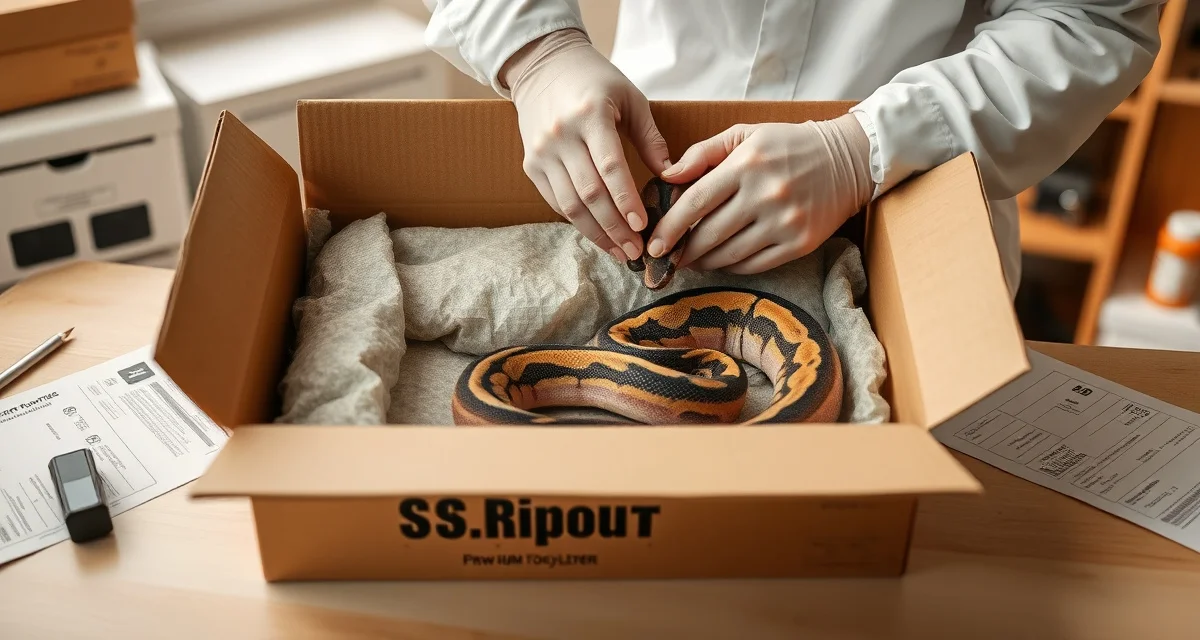
Ball Python Shipping and Transport: Safety Protocols for Breeders
Breeders using integrated software report 30% less time on administrative tasks, and sales documentation, including shipping records, is part of that administrative simplifying. A professional shipping operation with clear documentation protects both you and your buyers and is a notable factor in your reputation as a seller.
TL;DR
- Ball python breeding operations require systematic record-keeping from pre-season preparation through end-of-season sales.
- Females at 1,200-1,500g or more are the target weight before introducing them to a breeding male.
- Ovulation detection is the key event that anchors pre-lay shed and lay date calculations.
- Clutch profitability guide depends on understanding actual cost basis per animal, not just gross sale revenue.
- Well-documented animals with complete feeding histories and clear genetic records consistently sell faster and at higher prices.
Shipping live ball pythons is legal, well-established, and something most serious breeders do regularly. But it requires proper preparation, appropriate packaging, carrier compliance, and timing awareness. A poorly packed shipment that results in animal death is both a tragedy and a commercial disaster.
Legal Framework
Ball python shipping in the United States:
- Ball pythons are not federally restricted (not listed under CITES Appendix I or restricted under the Lacey Act)
- State restrictions vary. A handful of states have import restrictions on certain animals. Verify legality in the buyer's state before shipping.
- The US Fish and Wildlife Service has regulations on wildlife transport; standard captive-bred ball pythons are generally not affected
- Live animal shipping is regulated by carriers (FedEx, UPS) and requires compliance with their policies
Internationally, ball pythons require CITES permits and documentation. International shipping is notably more complex than domestic and is beyond the scope of this guide.
Carrier Options
FedEx: The most commonly used carrier for live reptile shipping by hobby breeders. FedEx Priority Overnight is the standard service (delivery by 10:30am or noon next day). FedEx has a live animal policy that technically requires shippers to have a shipper agreement. Many breeders ship without formal agreement; understand the risk involved.
UPS: Also accepts live animals under their policy. Similar considerations as FedEx.
USPS: Does not accept live animals as standard mail. Do not use USPS for live reptile shipping.
The carrier situation has become more complex over recent years as policies have tightened. Check the current policies for whichever carrier you use, as these change.
Packaging Requirements
Proper packaging is non-negotiable. A ball python that arrives dead from improper packaging is a reputational and financial loss.
Container for the animal:
- Cloth snake bags (pillowcases or commercial snake bags) are the most common inner container
- Deli cups with ventilation holes work well for hatchlings
- The animal container should allow the snake to coil naturally without notable extra space
Insulation:
- Styrofoam box, minimum 1-inch thick walls, inside a sturdy cardboard outer box
- Styrofoam keeps temperatures stable during transit
Temperature management:
- Heat packs (40-hour or 72-hour) for cold weather shipping
- Cool packs or no heat packs for hot weather (be cautious about shipping in extreme heat)
- Place heat packs in the corner of the styrofoam box, not directly against the snake bag
- Test your heat pack in your packaging before shipping; different packaging configurations hold temperature differently
Labeling:
- Mark the box: "Live Reptiles," "This Side Up," "Keep Away From Extreme Temperatures"
- Include your return address and the buyer's shipping address clearly
Temperature Windows for Shipping
The most dangerous shipping condition is temperature extremes during transit:
Cold weather shipping: Heat packs are necessary when ambient temperatures at origin, destination, or along the route will be below 45-50F. 40-hour heat packs are sufficient for overnight transit under most conditions. 72-hour packs provide additional buffer.
Hot weather shipping: High temperatures during transit kill snakes faster than cold. When ambient temperatures exceed 85-90F in transit, shipping without an insulated box and cool packs is risky. Some breeders avoid shipping entirely during the hottest summer weeks (when overnight lows exceed 80F in many regions).
Safe shipping window: Most experienced breeders ship when both origin and destination temperatures will remain between 45-85F throughout the transit window, using appropriate heat or cool packs to maintain safe conditions within the box.
Check the weather forecast at origin and destination before shipping. Don't ship into an incoming cold front or heat wave.
Shipping Day Preparation
Feed the snake 5-7 days before shipping: A freshly-fed snake under shipping stress may regurgitate in transit. Allow time for complete digestion.
Water before shipping: Allow the snake to drink on shipping day and confirm it's well-hydrated.
Pack the morning of the shipping day: FedEx/UPS pickups or drop-offs should happen as early in the day as possible to maximize transit time.
Confirm buyer's address and contact: Before shipping, confirm the buyer's physical address and that someone will be present for delivery. Packages left outside in extreme temperatures can kill an animal that survived transit correctly.
Documentation with Each Shipment
Send the buyer:
- Tracking number immediately upon drop-off
- Estimated delivery time
- Instructions to be home for delivery
- Brief care instructions or feeding history for the animal
For the animal record in your own files, note:
- Ship date
- Carrier and tracking number
- Buyer name and address
- Animal ID shipped
HatchLedger's sale records include shipping information fields for tracking numbers and delivery confirmation. Connecting the shipping record to the sale and the animal's records gives you a complete transaction trail.
Arrival Policy and Live Arrival Guarantees
Most professional breeders offer a live arrival guarantee with clearly stated terms. Common terms:
- "Live arrival guaranteed when shipped via FedEx/UPS Priority Overnight"
- Buyer must be present for delivery or have arranged a safe delivery location
- Buyer must contact seller within 1-2 hours of delivery with any DOA or health concerns
- Seller requires photographic or video documentation of any deceased animal
A clear, written live arrival policy protects both parties and sets expectations. A buyer who accepts your shipping policy and then isn't home for delivery doesn't have the same claim as a buyer who follows instructions and receives a DOA.
Handling Refusals and Failed Deliveries
If a package is refused or can't be delivered and returns to you, monitor it carefully when it arrives back. A returned package may have experienced temperature extremes during its additional transit time. Have an isolation enclosure ready for any returned animal and monitor for 48-72 hours.
The HatchLedger reptile breeder software keeps shipping records connected to sale records, so any follow-up actions (refunds, reshipping, health monitoring) are linked to the original transaction.
Frequently Asked Questions
What is the best approach to ball python shipping and transport?
Use FedEx or UPS Priority Overnight, pack in insulated styrofoam inside sturdy cardboard, use appropriate heat or cool packs based on transit temperatures, don't feed the snake within 5-7 days of shipping, and confirm the buyer will be present for delivery. Check temperatures at origin and destination before shipping and avoid shipping into extreme weather.
How do professional breeders handle ball python shipping safety?
Experienced breeders have standardized packaging configurations they've tested, ship only during safe temperature windows, always verify buyer availability before shipping, and have clear written live arrival policies. They track every shipment and maintain communication with buyers from the moment the package ships through confirmed delivery.
What records should every reptile breeder maintain per animal?
At minimum: acquisition date and source, morph and genetic documentation, feeding log, weight history, any veterinary treatments, and breeding history including pairing dates, clutch of origin for captive-bred animals, and offspring records. These records serve your own management, buyer documentation, regulatory compliance, and long-term genetic tracking.
How should reptile breeders document genetics for buyers?
A complete genetic record for sale includes the animal's visual morph name, confirmed het genes and their basis (parentage documentation or proven-out production), possible het genes with probability percentages, hatch date, and parent morph information. Including clutch-of-origin records lets buyers independently verify the claims.
Sources
- USARK (United States Association of Reptile Keepers)
- Association of Reptilian and Amphibian Veterinarians (ARAV)
- World of Ball Pythons (WoBP genetics reference database)
- MorphMarket (reptile industry marketplace)
- Reptiles Magazine (Bowtie Inc.)
Get Started with HatchLedger
Every part of a ball python breeding operation -- from pairing records to clutch documentation to financial tracking -- works better when the data is connected rather than scattered across notebooks and spreadsheets. HatchLedger is built for exactly that. Try it free with up to 20 animals.