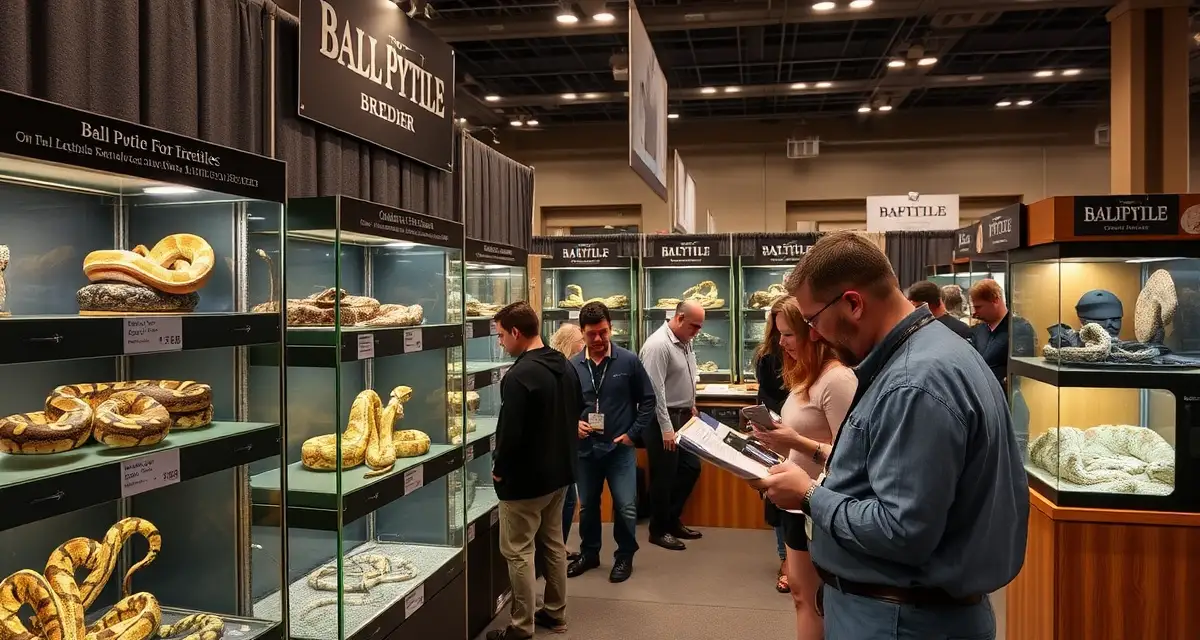
Ball Python Show and Expo Sales Strategy: Advanced Breeder Guide
Breeders using integrated software report 30% less time on administrative tasks, which is time you can redirect into expo preparation that actually moves more animals. The breeders who consistently do well at shows aren't just showing up with animals; they're executing a strategy.
TL;DR
- Ball python breeding operations require systematic record-keeping from pre-season preparation through end-of-season sales.
- Females at 1,200-1,500g or more are the target weight before introducing them to a breeding male.
- Ovulation detection is the key event that anchors pre-lay shed and lay date calculations.
- Clutch profitability guide depends on understanding actual cost basis per animal, not just gross sale revenue.
- Well-documented animals with complete feeding histories and clear genetic records consistently sell faster and at higher prices.
Reptile expos remain one of the most efficient sales channels for ball python breeders. The in-person format removes shipping concerns, allows buyers to assess animals directly, and creates an impulse purchase environment that online listings can't replicate. But the shows where you cover your expenses and the shows where you do four figures in profit above costs are separated by preparation and execution.
Choosing Which Shows to Attend
Not every show is worth attending. Evaluate shows based on:
Attendance size: Larger shows bring more potential buyers, but also more competing vendors. Regional reptile-focused shows often perform better than generic pet fairs for specialty morphs.
Table cost and location: A premium table spot near the entrance costs more but often outperforms back-corner tables by a notable margin. Factor table cost into your break-even calculation.
Animal restrictions: Some venues have restrictions on venomous or certain exotic animals. Verify ball pythons are permitted (they almost always are, but verify).
Repeat attendance data: If you've attended before, you know whether the crowd quality and size justify the investment. New shows are a calculated gamble.
Season: Fall and winter shows tend to draw more serious hobbyist buyers. Summer shows attract more casual visitors who often don't buy.
Pre-Show Preparation
Animal selection: Choose animals that sell well in person. Common advice: your best-looking animals, your most unusual animals, and some affordable entry-level animals for casual buyers. A table with only $500+ animals will have fewer transactions than one with a range.
Consider which animals photograph well and will draw people to your table from a distance. A striking albino or high-white pied creates foot traffic that leads to conversations about other animals.
Animal condition: All show animals should have eaten recently (but not within 48 hours), be in good shed (not in pre-shed opacity, which looks unhealthy to buyers), and be at appropriate weight. Don't show animals that are underweight or have visible health issues.
Packaging and transport: Use secure, ventilated deli cups or bags. Clearly label each animal with morph, sex, age, and price. Bags or cups that tip over, open, or confuse the animal during transport create stressed animals at the show, which reduces sale potential.
Pricing sheets: Have clear, readable price cards for every animal. Ambiguous pricing creates awkward conversations and sometimes drives buyers away.
Documentation: Bring feeding records for animals buyers ask about. Serious buyers at expos often ask how many feeds, whether it's on frozen/thawed, and what the animal's recent history is. Having this immediately available closes more sales than "I think it's been eating for a few months."
Table Setup and Presentation
Your table is your storefront. Presentation matters:
Organization: Group animals logically. Hatchlings together, adults together, or group by morph category. Don't create visual chaos that makes buyers feel overwhelmed.
Height variation: Elevate some containers to create visual interest. Flat tables of identical tubs are less engaging than a display with varied heights.
Signage: A banner or sign with your operation name, social media handles, and website makes you memorable and professional. Buyers who don't purchase immediately need a way to find you afterward.
Clean presentation: White or light-colored display backgrounds make animals' colors pop. Dirty or cluttered display areas signal lower quality to buyers.
Business cards: Have cards ready for everyone who engages seriously even if they don't buy. Email lists built at shows become customers over the following months.
Pricing for Shows
Show pricing can differ from your online pricing for good reason:
No shipping premium: You don't have to build overnight shipping costs into your price. Many buyers are willing to pay slightly more at a show for the convenience of taking the animal home immediately, but you're also competing with every other vendor in the room.
Move-at-price vs. hold-for-online: If an animal has been sitting online for 4 months at $400 and you're not getting interest, a show at $300-320 might be the right place to sell it. Shows have urgency that online listings don't.
Volume consideration: If you have 20 hatchlings from one clutch, selling 15 at the show at $180 each and the remaining 5 online at $200-220 might be better total revenue than trying to sell all 20 online at $200 over several months.
Buyer Conversations
The most productive expo conversation follows a pattern:
- Let buyers approach and examine your animals without immediately hovering
- When they show sustained interest, introduce yourself and the animal
- Volunteer relevant information: "That's a pastel spider, she's feeding every 7 days on frozen/thawed, 8 consecutive meals"
- Answer questions directly and honestly
- If the buyer is seriously interested but hesitant, offer the additional information that addresses their hesitation (health history, feeding documentation)
Don't oversell. Buyers who feel pressured often walk away. Buyers who feel informed and respected often commit.
Post-Show Follow-Up
Collect contact information from serious buyers who didn't purchase. A text or email 48-72 hours after the show ("Hi, we spoke at [show] about the clown pied female. She's still available if you're interested") recovers some of the sales that slip through on show day.
Animals that didn't sell need to be assessed. Did the price need adjustment? Was the animal in ideal show condition? Was it the right animal for that show's audience? Use this data for the next show.
Track every sale from every show in HatchLedger's sale records. Show sales connected to clutch P&L records tell you whether shows generate better margin than online sales channels, after accounting for table fees and travel.
The HatchLedger reptile breeder software lets you compare revenue by sales channel, helping you make informed decisions about where to concentrate your sales efforts.
Frequently Asked Questions
What is the best approach to ball python show and expo sales strategy?
Select animals carefully for show condition and visual impact, have clear pricing and documentation ready for every animal, set up a professional and organized table, and target shows with proven attendance from serious buyers. Price to move inventory while maintaining margin, and collect contact information from interested buyers who don't purchase on the day.
How do professional breeders handle reptile expo sales?
Experienced show vendors know their audience for each show and bring animals calibrated to that crowd. They have complete feeding and health documentation immediately accessible for every animal, use show attendance to build their contact list for future online sales, and track per-show sales data to evaluate which shows are worth the investment.
What records should every reptile breeder maintain per animal?
At minimum: acquisition date and source, morph and genetic documentation, feeding log, weight history, any veterinary treatments, and breeding history including pairing dates, clutch of origin for captive-bred animals, and offspring records. These records serve your own management, buyer documentation, regulatory compliance, and long-term genetic tracking.
How should reptile breeders document genetics for buyers?
A complete genetic record for sale includes the animal's visual morph name, confirmed het genes and their basis (parentage documentation or proven-out production), possible het genes with probability percentages, hatch date, and parent morph information. Including clutch-of-origin records lets buyers independently verify the claims.
Sources
- USARK (United States Association of Reptile Keepers)
- Association of Reptilian and Amphibian Veterinarians (ARAV)
- World of Ball Pythons (WoBP genetics reference database)
- MorphMarket (reptile industry marketplace)
- Reptiles Magazine (Bowtie Inc.)
Get Started with HatchLedger
Every part of a ball python breeding operation -- from pairing records to clutch documentation to financial tracking -- works better when the data is connected rather than scattered across notebooks and spreadsheets. HatchLedger is built for exactly that. Try it free with up to 20 animals.