Ball Python Post-Ovulation Care: Advanced Breeder Guide
By HatchLedger Editorial Team · Published 2025-03-04 · Updated Mar 13, 2026
Breeders using integrated software report 30% less time on administrative tasks, which frees you up to focus on the hands-on care that matters most during the post-ovulation period. The 30-60 days between ovulation and egg laying are critical for developing a healthy clutch, and what you do during this window directly affects egg quality, clutch size, and hatchling viability.
TL;DR
- Ball python breeding operations require systematic record-keeping from pre-season preparation through end-of-season sales.
- Females at 1,200-1,500g or more are the target weight before introducing them to a breeding male.
- Ovulation detection is the key event that anchors pre-lay shed and lay date calculations.
- Clutch profitability guide depends on understanding actual cost basis per animal, not just gross sale revenue.
- Well-documented animals with complete feeding histories and clear genetic records consistently sell faster and at higher prices.
Once ovulation is confirmed, your female transitions from a breeding project into a pregnant animal with specific physiological needs. The approach that works during the breeding season doesn't necessarily work here.
Feeding Post-Ovulation
Most gravid females will stop eating shortly after ovulation, if they haven't already. The developing eggs take up notable body space, compressing the digestive tract and making feeding physiologically difficult and uncomfortable.
Don't force the issue. Offer food every 10-14 days, but don't stress the female if she refuses. It's completely normal for a gravid female to fast through the entire post-ovulation period and into the early post-lay recovery.
If your female does continue eating post-ovulation, offer smaller prey than normal. A prey item that she'd normally eat easily can become a problem when her body cavity is occupied by developing eggs. Stick to feeders that are roughly the same width as her head, not the standard 1.5x head width you'd use for a non-gravid animal.
Temperature and Thermoregulation
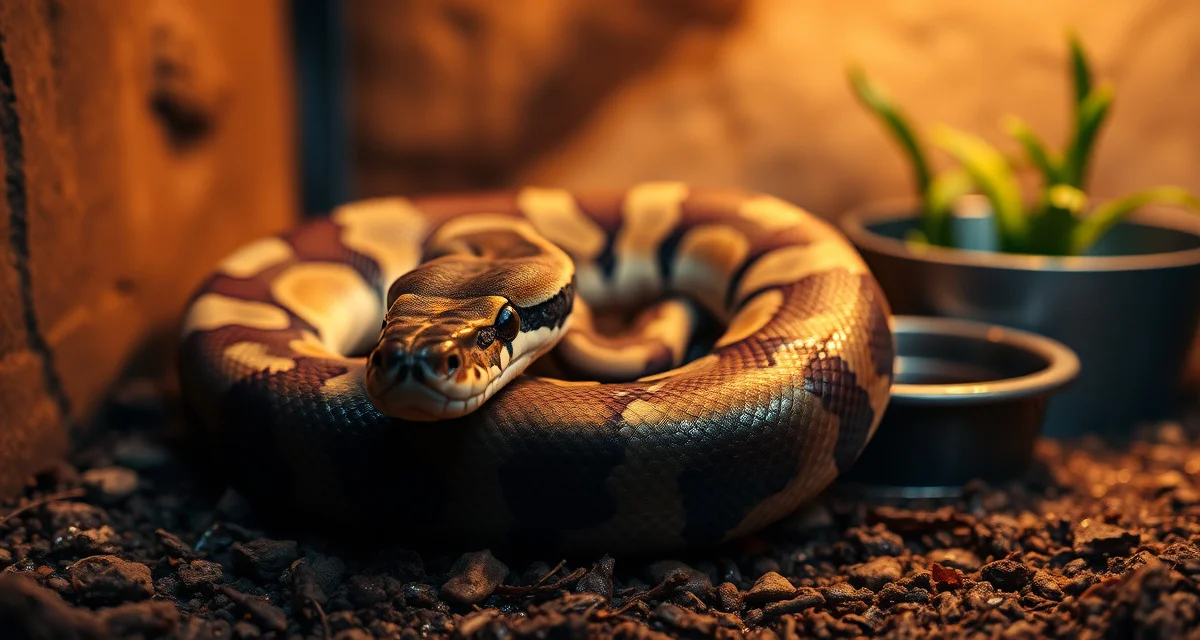
Post-ovulation females need access to higher temperatures than you typically provide. The developing eggs benefit from elevated maternal body temperature, and you'll often see gravid females spending dramatically more time on or very near the heat source.
Raise your ambient temps slightly, with a basking spot of 92-94F available. Make sure the hot spot covers enough surface area that the female can warm her entire body length, not just her head and anterior third. Many breeders use ceramic heat emitters or radiant heat panels during this period rather than heat tape or under-tank heaters, simply because they create a larger warm zone.
Some females will bask almost constantly, only moving away from the heat to drink or explore briefly at night. This is normal and beneficial. Don't interpret constant basking as a husbandry problem.
Humidity and Hydration
Keep a large water bowl accessible at all times. Gravid females often drink more than usual. Some breeders mist the enclosure lightly to increase ambient humidity, particularly in the weeks approaching the pre-lay shed.
Proper hydration affects the quality of the eggs. Dehydrated females can produce eggs with thinner shells or reduced fluid content, which impacts incubation outcomes. Make sure your female is drinking regularly.
Enclosure Adjustments
You don't need to dramatically change the enclosure, but a few adjustments help:
- Add a second hide if you don't already have two, positioned at opposite ends of the thermal gradient
- Ensure the enclosure is secure and escape-proof, as gravid females sometimes become more active and exploratory
- Reduce handling to the minimum necessary, which means health checks only
- Keep the enclosure in a low-traffic, low-noise area to minimize stress
Gravid females are more defensive than normal in many cases. Some animals that are typically placid become nippy post-ovulation. Respect that behavioral change and minimize unnecessary interaction.
Health Monitoring
Check on your gravid female daily, even if it's just a visual observation through the enclosure. You're looking for:
- Normal activity patterns, including regular basking and overnight exploration
- Drinking behavior
- Normal shedding cycle (the pre-lay shed will be the next shed event)
- No signs of respiratory infection, which gravid females are somewhat more susceptible to
- Appropriate body weight maintenance
Weigh the female every 2 weeks during the post-ovulation period. Weight changes during this time reflect egg development. A notable unexpected weight loss, separate from the gradual change you'd expect as eggs develop, warrants veterinary attention.
Stopping Pairings
There's debate about when to stop introducing the male after ovulation. Generally:
- Continue for 7-14 days post-ovulation to ensure fertilization
- Stop introductions when the female is clearly and consistently rejecting the male
- Once a female has gone into pre-lay shed preparation mode, stop all pairings
Continuing to introduce a male to a female who is visibly late-stage gravid causes unnecessary stress and doesn't improve fertilization outcomes.
Logging the Post-Ovulation Period
Every piece of data you collect during this phase helps you build a reproductive profile for this female. Log her last feeding date, any health observations, when she stops accepting the male, and especially when you notice behavioral changes that precede the pre-lay shed.
HatchLedger's breeding project tools let you create a timeline entry for each female with milestone dates: ovulation, last pairing, last feeding, pre-lay shed, and lay date. When you can compare these timelines across multiple seasons, you start to see each female's individual pattern with precision.
Preparing for the Pre-Lay Shed
The pre-lay shed is the signal that egg laying is imminent. It typically occurs 18-28 days post-ovulation. As you approach the 18-day mark, start watching for the typical signs of an approaching shed: milky eyes, dulling of the pattern, and increased restlessness.
At this point, make sure your nest box is set up and accessible. A gravid female who is about to shed and then lay needs her nest box ready. She may enter it directly after shedding to lay.
More details on pre-lay shed and nest box setup are covered separately, but the key is to have everything ready by day 16 post-ovulation so you're not scrambling when the shed happens.
If Something Goes Wrong
Dystocia, or egg-binding, is a medical emergency. Signs that a gravid female may be in distress include:
- Prolonged straining without laying (more than 48-72 hours of visible contractions)
- notable lethargy or non-responsiveness
- Visible masses that seem stuck and aren't moving
- Loss of cloacal tone
- Refusal to move even when gently disturbed
If you suspect dystocia, don't wait. Contact a reptile veterinarian immediately. Time is critical in these situations, and a delayed response notably reduces the chances of a successful outcome.
The HatchLedger reptile breeder platform includes health logging features that help you document any abnormal post-ovulation observations with timestamps, making veterinary consultations more productive.
Frequently Asked Questions
What is the best approach to ball python post-ovulation care?
The most important things are providing elevated basking temperatures (92-94F hotspot), ensuring constant access to clean water, minimizing stress and handling, and monitoring the female daily for health and behavioral changes. Keep feeding attempts low-pressure, offer smaller prey if she does eat, and have your nest box ready before the pre-lay shed occurs.
How do professional breeders handle ball python post-ovulation care?
Experienced breeders typically move gravid females to dedicated gravid enclosures where temperature and humidity can be optimized without affecting the rest of the collection. They log milestone dates meticulously, stop pairings within 2 weeks of ovulation, and have incubation equipment prepped before the expected lay date.
What records should every reptile breeder maintain per animal?
At minimum: acquisition date and source, morph and genetic documentation, feeding log, weight history, any veterinary treatments, and breeding history including pairing dates, clutch of origin for captive-bred animals, and offspring records. These records serve your own management, buyer documentation, regulatory compliance, and long-term genetic tracking.
How should reptile breeders document genetics for buyers?
A complete genetic record for sale includes the animal's visual morph name, confirmed het genes and their basis (parentage documentation or proven-out production), possible het genes with probability percentages, hatch date, and parent morph information. Including clutch-of-origin records lets buyers independently verify the claims.
What is Ball Python Post-Ovulation Care: Advanced Breeder Guide?
Ball Python Post-Ovulation Care: Advanced Breeder Guide is a comprehensive resource for experienced reptile breeders covering the critical 30-60 day window between ovulation and egg laying. It addresses feeding adjustments, environmental management, pre-lay shed tracking, and record-keeping practices that directly impact egg quality, clutch size, and hatchling viability. The guide helps breeders transition their care approach once ovulation is confirmed.
How much does Ball Python Post-Ovulation Care: Advanced Breeder Guide cost?
This is a free educational guide available on HatchLedger. There is no cost to access the article. HatchLedger does offer breeding management software that breeders reference for tracking ovulation dates, feeding records, and clutch data, with subscription options available separately for those seeking integrated record-keeping tools.
How does Ball Python Post-Ovulation Care: Advanced Breeder Guide work?
The guide walks breeders through post-ovulation care in sequential phases: adjusting or stopping feeding as the female goes gravid, optimizing enclosure temperatures and humidity, tracking the pre-lay shed as a key milestone, and calculating expected lay dates from confirmed ovulation. It also covers documentation practices that improve clutch outcomes and downstream animal sales.
What are the benefits of Ball Python Post-Ovulation Care: Advanced Breeder Guide?
Following this guide helps breeders improve hatchling viability, reduce clutch failures, and produce well-documented animals that sell faster at higher prices. Systematic tracking from ovulation through hatching also cuts administrative time by roughly 30%, freeing breeders to focus on hands-on husbandry during this physiologically demanding period for the female.
Who needs Ball Python Post-Ovulation Care: Advanced Breeder Guide?
This guide is written for intermediate to advanced ball python breeders who already understand basic husbandry and are actively running breeding projects. It is particularly useful for breeders managing multiple females simultaneously, those looking to improve clutch success rates, and anyone building a breeding operation where record-keeping and profitability tracking are priorities.
How long does Ball Python Post-Ovulation Care: Advanced Breeder Guide take?
The post-ovulation care period itself spans approximately 30-60 days from confirmed ovulation to egg laying. Reading and implementing the guide takes far less time. Breeders should begin applying its recommendations immediately upon confirming ovulation, as early environmental and feeding decisions during this window have the greatest impact on clutch health and hatchling outcomes.
Related Articles
- Ball Python Pairing Introductions and Male Management: Advanced Breeder Guide
- Ball Python Weight and Body Condition Scoring: Advanced Breeder Guide
Sources
- USARK (United States Association of Reptile Keepers)
- Association of Reptilian and Amphibian Veterinarians (ARAV)
- World of Ball Pythons (WoBP genetics reference database)
- MorphMarket (reptile industry marketplace)
- Reptiles Magazine (Bowtie Inc.)
Get Started with HatchLedger
Every part of a ball python breeding operation -- from pairing records to clutch documentation to financial tracking -- works better when the data is connected rather than scattered across notebooks and spreadsheets. HatchLedger is built for exactly that. Try it free with up to 20 animals.