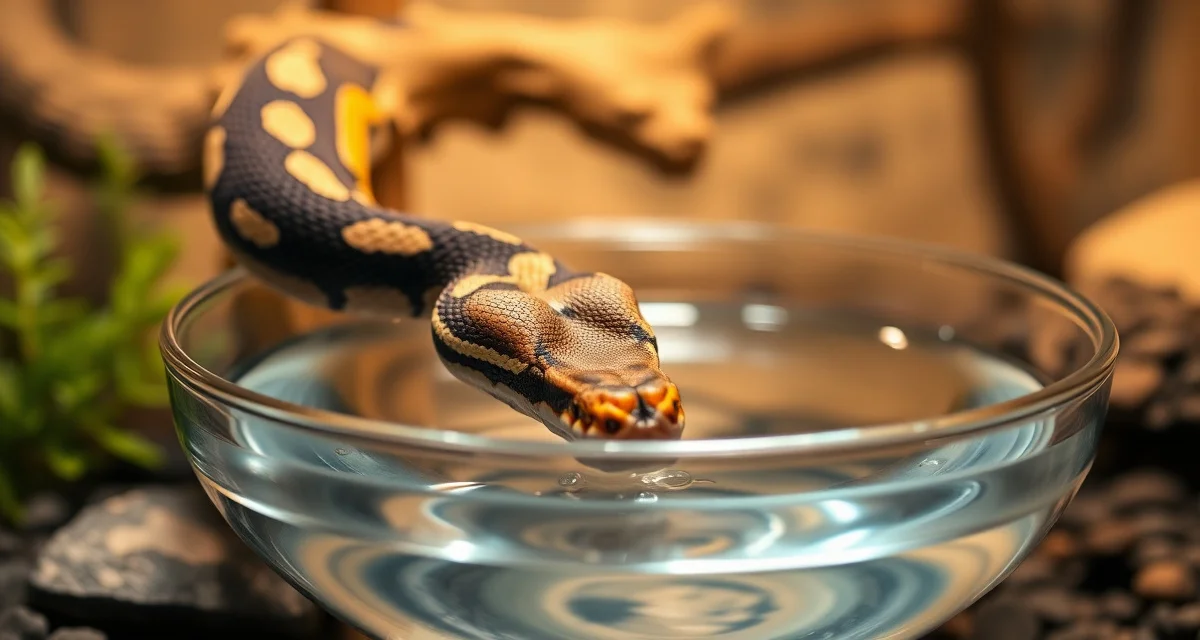
Ball Python Water and Hydration Management: Advanced Breeder Guide
Breeders using integrated software report 30% less time on administrative tasks, and water management is one of the most frequently neglected areas in otherwise good husbandry. Providing a water bowl isn't enough; the quality, temperature, size, placement, and replacement frequency of that water all affect your animals' hydration, shedding, and overall health.
TL;DR
- Ball python breeding operations require systematic record-keeping from pre-season preparation through end-of-season sales.
- Females at 1,200-1,500g or more are the target weight before introducing them to a breeding male.
- Ovulation detection is the key event that anchors pre-lay shed and lay date calculations.
- Clutch profitability guide depends on understanding actual cost basis per animal, not just gross sale revenue.
- Well-documented animals with complete feeding histories and clear genetic records consistently sell faster and at higher prices.
Dehydration is one of the most common underlying contributors to dysecdysis, poor body condition, and reduced breeding performance in captive ball pythons. Getting water management right is low-cost and high-impact.
Why Hydration Matters
Ball pythons obtain most of their water from drinking, with some contribution from metabolizing prey. Unlike desert species, they evolved in humid sub-Saharan African environments and have relatively high humidity requirements.
The effects of chronic mild dehydration:
- Poor shed quality (dry, fragmented sheds; retained eye caps)
- Reduced feeding response (dehydration often suppresses appetite)
- Thicker, stickier secretions (mucus membranes, feces, urates)
- Reduced egg quality in gravid females
- Impaired kidney function over extended periods
The effects of acute dehydration (sudden notable water loss):
- Sunken, dull eyes
- Skin that tents when gently lifted (doesn't immediately spring back)
- Wrinkled, loose-looking skin
- Extreme lethargy
Most captive ball pythons don't reach acute dehydration if water is provided consistently, but chronic mild dehydration is easy to overlook.
Water Bowl Selection
Size: The water bowl should be large enough for the ball python to fully enter if it chooses to. This isn't just about drinking; soaking behavior is a natural stress response and a shed-preparation behavior in many animals. A bowl that's too small to soak in denies the animal an option it may need.
For hatchlings, a shallow bowl wide enough to sit in works well. For adults, a bowl that comfortably holds the whole animal (large crocks, dog bowls, or dedicated reptile water bowls) is appropriate.
Material: Heavy ceramic crocks resist tipping. Stainless steel bowls are easy to clean and sanitize. Plastic bowls are lightweight but can harbor bacteria in scratches over time.
Stability: Ball pythons will investigate and sometimes climb on water bowls. A bowl that tips easily will leave animals without water (and will wet the substrate, creating a mess). Weighted or wide-based bowls resist tipping better.
Water Temperature
Ball pythons seem to prefer water that's cooler than ambient temperatures, particularly when soaking. Room-temperature water (68-75F) appears to be comfortable for drinking and soaking. Very hot water (above 90F) can cause burns or discomfort; don't place the water bowl directly over a heat source.
Place the water bowl on the cool side of the enclosure for two reasons: it keeps the water at an appropriate temperature (not evaporating rapidly from heat) and it gives the animal a reason to use both ends of the thermal gradient.
Water Change Frequency
Change water at minimum every 2-3 days, more frequently if the animal has defecated in it, soaked heavily (which can introduce notable bacteria), or if the enclosure is warmer than typical.
In practice: Inspect the water bowl at every interaction with each animal. If it's visibly soiled or turbid, change it immediately. If it looks clean, use your change schedule. Never go more than 3 days without changing water in a warm enclosure.
Bacteria grow faster in warm water. A water bowl that's acceptable at 70F ambient temperature in a cool room becomes a bacterial culture in a warm rack at 85F. Adjust your change frequency upward for animals in warmer environments.
Water Quality
Use clean, fresh tap water in most cases. Chlorinated municipal water is generally fine for ball pythons. If you're concerned about chlorine or chloramines, a simple carbon filter or leaving tap water in an open container for 24 hours allows chlorine to off-gas.
Well water in some areas contains high mineral content or potential contaminants. If you have well water and animals are showing unusual health issues, testing your water may be worthwhile.
Avoid distilled or RO (reverse osmosis) water long-term. These water types lack minerals and can cause electrolyte imbalances with extended use. Regular tap water is better than distilled.
When Animals Soak
Soaking behavior, an animal spending extended time in its water bowl, can indicate:
- Approaching shed (increasing humidity around the body)
- Attempting to drown mites (check carefully for mites)
- Overheating (cool side temperatures are too warm, or the animal can't find relief)
- Dehydration (trying to absorb water transdermally, though this is limited in snakes)
- Normal behavior (some individual animals just like to soak)
If an animal that doesn't normally soak suddenly starts spending a lot of time in the water bowl, investigate. Check for mites first (inspect the water bowl for floating mites). Check temperatures. Assess shed stage.
Gravid Females and Hydration
Gravid females are particularly prone to dehydration due to the metabolic demands of egg development. Ensure gravid females always have a large, fresh water bowl. Many drink noticeably more water than normal during gestation.
The quality of eggs is partly determined by the hydration status of the female. Dehydrated females may produce eggs with thinner shells or reduced fluid, which affects incubation outcomes.
Soaking for Hydration
If an animal appears dehydrated (sunken eyes, skin tenting), offer a supervised warm water soak (85-88F water, not deeper than mid-body height) for 20-30 minutes. Most dehydrated animals will drink during the soak.
Don't leave a dehydrated animal unsupervised in water. While drowning is unlikely in most circumstances, animals that are very weak can have difficulty keeping their heads up.
Repeat soaks every 2-3 days until the animal appears well-hydrated, then address the underlying husbandry issue that caused the dehydration.
Logging Water-Related Observations
Note in health records any time you observe:
- Soaking behavior that's unusual for the specific animal
- Water bowl changes needed due to contamination (note why: feces, heavy soaking, visible turbidity)
- Dehydration signs and soaking interventions
- Changes in drinking frequency you've noticed
HatchLedger's husbandry and health logs let you attach dated notes to each animal's record. A note like "noticed soaking behavior 3/15, checked for mites (negative), shed completed 3/20" creates a useful retrospective record.
The HatchLedger reptile breeder software keeps these observations linked to the animal's broader health and feeding history, making it easier to connect hydration observations with other health trends.
Frequently Asked Questions
What is the best approach to ball python water and hydration management?
Provide a water bowl large enough for the animal to soak in, placed on the cool side of the enclosure. Change water every 2-3 days minimum (more frequently in warm enclosures). Investigate any unusual soaking behavior for mites, temperature issues, or approaching shed. Gravid females need particular attention to water availability given increased hydration demands.
How do professional breeders handle ball python water management?
Production breeders check and change water bowls as a routine part of every care session rather than on a fixed schedule, which ensures water is always fresh regardless of what happened between planned change dates. They size water bowls appropriately for the animal's life stage and pay particular attention to hydration in gravid females and animals recovering from health issues.
What records should every reptile breeder maintain per animal?
At minimum: acquisition date and source, morph and genetic documentation, feeding log, weight history, any veterinary treatments, and breeding history including pairing dates, clutch of origin for captive-bred animals, and offspring records. These records serve your own management, buyer documentation, regulatory compliance, and long-term genetic tracking.
How should reptile breeders document genetics for buyers?
A complete genetic record for sale includes the animal's visual morph name, confirmed het genes and their basis (parentage documentation or proven-out production), possible het genes with probability percentages, hatch date, and parent morph information. Including clutch-of-origin records lets buyers independently verify the claims.
Sources
- USARK (United States Association of Reptile Keepers)
- Association of Reptilian and Amphibian Veterinarians (ARAV)
- World of Ball Pythons (WoBP genetics reference database)
- MorphMarket (reptile industry marketplace)
- Reptiles Magazine (Bowtie Inc.)
Get Started with HatchLedger
Every part of a ball python breeding operation -- from pairing records to clutch documentation to financial tracking -- works better when the data is connected rather than scattered across notebooks and spreadsheets. HatchLedger is built for exactly that. Try it free with up to 20 animals.