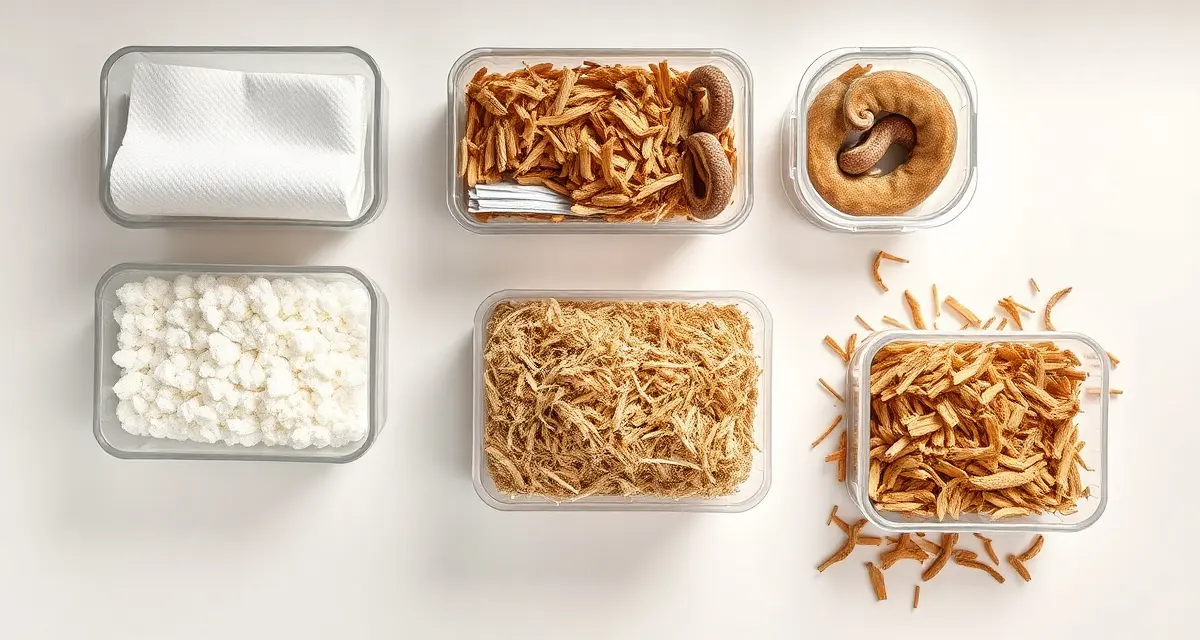
Ball Python Substrate Options for Breeders: Comparing Paper, Coco, Cypress, and More
Breeders using integrated software report 30% less time on administrative tasks, and standardizing your substrate choices across your collection is one of the ways you create that efficiency. When every animal in a rack section is on the same substrate, cleaning protocols are consistent, humidity management is predictable, and you're not making individual decisions for each tub.
TL;DR
- Ball python breeding operations require systematic record-keeping from pre-season preparation through end-of-season sales.
- Females at 1,200-1,500g or more are the target weight before introducing them to a breeding male.
- Ovulation detection is the key event that anchors pre-lay shed and lay date calculations.
- Clutch profitability guide depends on understanding actual cost basis per animal, not just gross sale revenue.
- Well-documented animals with complete feeding histories and clear genetic records consistently sell faster and at higher prices.
Substrate choice affects humidity retention, ease of cleaning, animal comfort, and cost. There's no universally "best" option; the right choice depends on your operation's scale, your climate, and your management priorities.
Paper Towel: The Production Standard
Paper towel is the most commonly used substrate in production ball python operations. Its advantages are practical:
Complete visual monitoring: Waste, urates, and any unusual secretions are immediately visible. Nothing is hidden in substrate.
Easy cleaning: Replace with new paper towels in under a minute. No waste from replacing large quantities of bulk substrate.
Eliminates impaction risk: No substrate pieces to accidentally ingest.
Disease monitoring: Any unusual discharge from mouth, cloaca, or respiratory system is visible immediately.
Low cost at scale: Even high-quality paper towels are inexpensive compared to buying enough bulk substrate to maintain 50-100 tubs.
Demerits: Lower humidity retention. In dry climates, you may need to mist more frequently or add a humid hide to maintain appropriate humidity levels. Not as aesthetically pleasing for display animals.
Most production breeders use paper towel for all rack animals and reserve more naturalistic substrates for display enclosures.
Newspaper: The Budget Option
Newspaper functions similarly to paper towel but is free or nearly free. The concerns are ink (modern newspaper ink is soy-based and generally considered safe, but worth noting) and the fact that it's harder to assess waste at a glance due to the printing.
Not commonly used in serious operations, but works fine as an occasional backup when paper towels run out.
Coconut Coir / Coco Fiber
Coconut coir is a naturalistic substrate made from compressed coconut husk fibers. It holds humidity extremely well, which makes it popular in humid climates and for animals that shed poorly.
Advantages:
- Excellent humidity retention
- Natural aesthetic
- Comfortable digging substrate (ball pythons occasionally burrow)
- Generally free of harmful chemicals
Disadvantages:
- Can hide waste, making health monitoring harder
- More expensive to maintain at scale compared to paper towel
- Needs complete replacement during cleaning
- Can grow mold if too damp
Coco coir works well for individual display enclosures where aesthetic and humidity management are priorities.
Cypress Mulch
Orchid bark cypress mulch is a popular choice for display setups and for keepers who want good humidity retention with a more naturalistic appearance.
Advantages:
- Naturally antimicrobial properties (cypress oils)
- Good humidity retention
- Ball pythons burrow in it naturally
- Attractive aesthetic
Disadvantages:
- Can harbor parasites (including mites) if not from a reliable source
- Hard to fully clean; usually requires replacement
- Can have size variability; small pieces are potential ingestion hazards
- More expensive at scale
The antimicrobial properties of cypress are genuinely useful but don't make it a substitute for proper hygiene. Any substrate can harbor pathogens if enclosures aren't cleaned appropriately.
Aspen Shavings
Aspen bedding is a classic small animal substrate that many snake keepers use. It's widely available, inexpensive, and holds shape for tunneling.
Important caveat: Aspen doesn't hold humidity well and can cause respiratory irritation when it gets wet. Ball pythons need moderate humidity, and aspen in humid conditions develops mold quickly. If you use aspen, keep humidity lower than you typically want for ball pythons, which then creates dysecdysis risk.
Aspen is more commonly seen in corn snake and ratsnake setups where lower humidity is appropriate. It's not ideal for ball pythons.
Bioactive Substrates
Bioactive setups use a living ecosystem (plants, springtails, isopods) to process waste, creating a self-maintaining environment that requires less frequent cleaning.
Advantages:
- Minimal cleaning required when properly established
- Excellent for animal well-being and enrichment
- Great aesthetic for display animals
Disadvantages:
- Higher setup cost and effort to establish
- Not practical for production rack systems
- Can harbor pathogens if the bioactive system isn't well-balanced
- Hides waste (need to rely on other health monitoring methods)
- Not suitable for isolating sick animals
Bioactive setups are appropriate for display animals and hatchlings you're keeping personally, not for production racks.
Rubber Mat / No Substrate
Some breeders use rubber mats or mesh liners instead of substrate. These are easy to clean but don't retain humidity and don't allow the animal any tactile variation in its environment.
Not widely recommended for long-term housing but sometimes used for short-term quarantine situations.
Making the Choice for Your Operation
Ask yourself:
- Scale: How many animals are you maintaining? Above 20-30 animals, operational efficiency heavily favors paper towel.
- Climate: In very dry climates, you may need a substrate with better humidity retention, or you'll compensate with more frequent misting regardless of substrate choice.
- Purpose: Display animals vs. production animals. Display animals benefit from naturalistic substrates; production animals benefit from paper towel's visibility and efficiency.
- Health priorities: If you have any animals with health concerns or new arrivals in quarantine, paper towel is always the right choice for monitoring.
Keep notes on any substrate changes and their effects on humidity, animal behavior, and shed quality. HatchLedger's husbandry notes let you log these observations per animal or per rack section, making it easy to compare outcomes across different substrate approaches.
Cleaning and Substrate Management
Regardless of substrate choice:
- Spot-clean waste within 24-48 hours of noticing it
- Do complete substrate changes on a regular schedule (weekly for paper towel, monthly for bulk substrates)
- Clean and disinfect the enclosure surfaces during complete substrate changes
- Never place new substrate over old contaminated material
A consistent cleaning schedule prevents bacterial buildup that can cause skin infections and respiratory issues.
The HatchLedger reptile breeder software can hold husbandry details including substrate type for each enclosure or rack, helping you standardize practices across a large collection and identify if substrate changes are associated with changes in shed quality or health observations.
Frequently Asked Questions
What is the best approach to ball python substrate selection for breeders?
Paper towel is the best choice for production rack systems because it enables complete waste visibility and quick cleaning. For display animals or individual setups where aesthetics and humidity management matter more, coconut coir or cypress mulch work well. Match your substrate to the purpose of the enclosure and your management capacity.
How do professional breeders handle ball python substrate choices?
Production breeders standardize on paper towel for racks because it makes cleaning fast and health monitoring thorough. Display or pet-quality setups may use more naturalistic options. The key is that whatever substrate is chosen is managed consistently with appropriate cleaning schedules and humidity monitoring.
What records should every reptile breeder maintain per animal?
At minimum: acquisition date and source, morph and genetic documentation, feeding log, weight history, any veterinary treatments, and breeding history including pairing dates, clutch of origin for captive-bred animals, and offspring records. These records serve your own management, buyer documentation, regulatory compliance, and long-term genetic tracking.
How should reptile breeders document genetics for buyers?
A complete genetic record for sale includes the animal's visual morph name, confirmed het genes and their basis (parentage documentation or proven-out production), possible het genes with probability percentages, hatch date, and parent morph information. Including clutch-of-origin records lets buyers independently verify the claims.
Sources
- USARK (United States Association of Reptile Keepers)
- Association of Reptilian and Amphibian Veterinarians (ARAV)
- World of Ball Pythons (WoBP genetics reference database)
- MorphMarket (reptile industry marketplace)
- Reptiles Magazine (Bowtie Inc.)
Get Started with HatchLedger
Every part of a ball python breeding operation -- from pairing records to clutch documentation to financial tracking -- works better when the data is connected rather than scattered across notebooks and spreadsheets. HatchLedger is built for exactly that. Try it free with up to 20 animals.