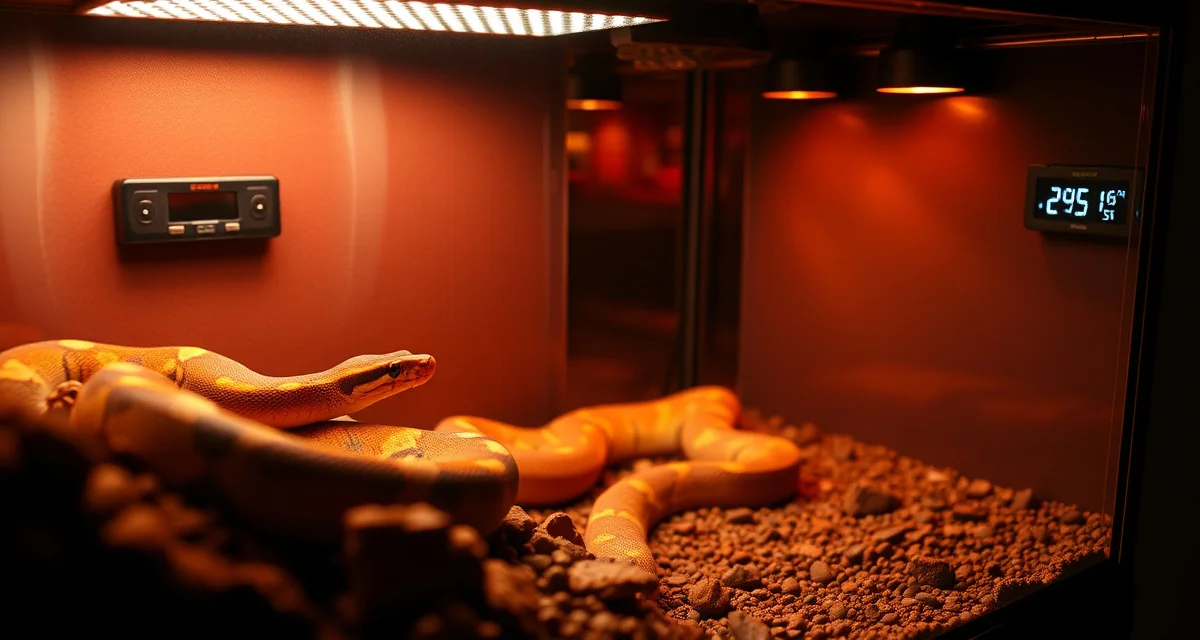
Ball Python Enclosure Temperature Gradients: Advanced Setup Guide
Breeders using integrated software report 30% less time on administrative tasks, and husbandry standardization is a key part of that. When every enclosure in your operation runs on verified, consistent temperature gradients, you spend less time troubleshooting feeding problems and health issues and more time on breeding and sales.
TL;DR
- Ball python breeding operations require systematic record-keeping from pre-season preparation through end-of-season sales.
- Females at 1,200-1,500g or more are the target weight before introducing them to a breeding male.
- Ovulation detection is the key event that anchors pre-lay shed and lay date calculations.
- Clutch profitability guide depends on understanding actual cost basis per animal, not just gross sale revenue.
- Well-documented animals with complete feeding histories and clear genetic records consistently sell faster and at higher prices.
Temperature management is the foundation of ball python husbandry. Get it wrong and almost everything else goes wrong too: feeding refusal, dysecdysis, reduced immune function, and poor breeding response. Get it right and the rest of husbandry falls into place much more easily.
Why Ball Pythons Need a Gradient
Ball pythons, like all reptiles, are ectothermic. They regulate their body temperature behaviorally, moving between warmer and cooler areas to achieve target physiological temperatures for different functions.
- Digestion: Requires warm temperatures (85-90F) for optimal gut motility. A ball python that eats and then retreats to a cool area may regurgitate because digestion is impaired.
- Immune function: Elevated temperature supports immune response. A sick snake may spend more time in the warmest area available.
- Thermoregulation: The ability to choose temperature is not a preference but a physiological necessity. A snake with access only to a single temperature cannot self-regulate and will suffer health consequences.
The gradient is not optional. A "hot side" and a "cool side" in every enclosure is a minimum viable setup.
Target Temperature Zones
Warm side / basking zone: 88-92F surface temperature. This is where the hide should be for most adult ball pythons, since they prefer to be warm and hidden simultaneously. Heat lamps create basking spots that are rarely used by ball pythons; they prefer belly heat or ambient warmth.
Ambient cool side: 76-82F. This is the temperature the snake retreats to when it needs to cool down. Having this option is critical for avoiding chronic overheating.
Nighttime temperatures: Ball pythons tolerate a temperature drop at night. Ambient temperatures down to 72-74F at night are acceptable and beneficial. Don't let temps drop below 70F for extended periods.
Breeding season / cycling: During cooling protocols for breeding, you intentionally alter these ranges. See the cycling protocol guide for those specific targets.
Measuring Temperature Correctly
The most common husbandry mistake is trusting a single thermometer placed on the glass wall of an enclosure. Glass-mounted thermometers are measuring air temperature at the wall, not substrate surface temperature where the snake actually spends its time.
Use a temperature gun (infrared thermometer): Point it at the substrate surface in both the warm and cool zones. This gives you actual surface temperature where belly contact occurs.
Probe thermometers: A digital thermometer with a probe placed on the substrate gives continuous temperature readings at substrate level. Use one on the warm side and one on the cool side.
Verify after every change: Any time you adjust a thermostat, reposition heat equipment, or change enclosure layout, re-verify temperatures at substrate level. Don't assume the old readings still apply.
Heating Methods
Under-tank heaters (UTH) / heat pads: Provide belly heat similar to the warm substrate ball pythons would experience in their natural environment. Must be connected to a thermostat, not run directly from the outlet. Common option for individual enclosures.
Heat tape: The standard for rack systems. Runs along the bottom of rack shelves, connected to thermostats. Efficient for heating many enclosures simultaneously.
Radiant heat panels (RHP): Overhead heating that creates a warm ambient zone without the focused intensity of a heat lamp. Good for larger enclosures and for gravid females who benefit from full-body warmth. More expensive than heat tape but very reliable.
Ceramic heat emitters (CHE): Produce heat without light. Used with overhead setups and domes. Good supplemental heat source.
Deep heat projectors: Newer technology that penetrates deeper into the substrate, providing core warmth rather than just surface warmth. Some breeders report improved thermoregulation and digestion compared to surface heating.
Heat lamps / basking bulbs: Ball pythons rarely use basking spots in the traditional sense. If you use a heat lamp, ensure it creates ambient warmth rather than a point-source hot spot the snake can't escape.
Thermostats: Not Optional
Running heat tape, UTH, or any continuous heat source without a thermostat is a fire hazard and a husbandry failure. Heat tape in particular can reach dangerously high temperatures without thermostat control.
On/off thermostats: Basic but functional. Turn power on/off to maintain a set temperature. Results in some temperature oscillation.
Proportional thermostats (pulse-proportional): More precise control by varying power output rather than cycling on and off. Better for heat tape setups.
Dimming thermostats: Control heat by dimming (reducing voltage). Work well with ceramic and incandescent heat sources.
Quality thermostat brands with a proven track record in the reptile community: Herpstat, Spyder Robotics (Herpstat makers), Ranco, Inkbird.
Common Temperature Problems
Hot spots: Areas of the enclosure that exceed target temperature due to heat lamp positioning, heat tape edge effects, or UTH coverage irregularities. Identify with a temp gun by sweeping all substrate areas.
Cold spots: Areas that fall below the gradient due to distance from heat source, enclosure design, or inadequate heat output. A snake retreating to the warmest available spot that's still too cool is in a chronic husbandry failure state.
Night-time temperature crashes: If your room temperature drops notably at night and you're not using a thermostat that compensates, your enclosure temperatures may crash. Verify nighttime temperatures in your specific environment.
Thermostat probe placement: The thermostat probe location determines what temperature the thermostat is trying to maintain. If the probe is too close to the heat source, it will shut off heat before the substrate reaches target temperature. If it's too far, it will overheat the substrate. Experiment with probe placement and verify with an independent temp gun.
Documentation and Husbandry Notes
HatchLedger's animal records include husbandry notes fields where you can log thermostat settings, verified substrate temperatures, and any temperature-related observations. When you troubleshoot a feeding problem or a health issue, having the husbandry settings on record means you can evaluate whether temperature might be contributing.
For a large collection, standardizing on specific temperature settings for each rack or enclosure type and documenting those settings makes maintenance and troubleshooting much more efficient.
Humidity and Temperature Interaction
Temperature affects humidity. In a well-sealed enclosure, higher temperatures cause faster moisture evaporation and can drive humidity down. Understanding the relationship helps you maintain both parameters simultaneously.
If you're having trouble maintaining humidity, check whether your heating method is too direct or too intense. A heat source that creates very high local temperatures evaporates moisture quickly, requiring more frequent humidity management.
The HatchLedger reptile breeder software lets you log both temperature and humidity observations together, making it easier to see if adjusting one affects the other.
Frequently Asked Questions
What is the best approach to ball python enclosure temperature gradients?
Maintain a warm side substrate surface temperature of 88-92F and a cool side ambient of 76-82F in every enclosure. Verify temperatures with a temp gun at substrate level rather than trusting glass-mounted thermometers. Use a quality thermostat for all heat sources and re-verify temperatures after any setup change.
How do professional breeders handle ball python enclosure temperature gradients?
Production breeders standardize their thermal setup across entire rack systems, using commercial-grade thermostats and verified heat tape configurations tested before loading animals. They verify temperatures with probe thermometers rather than relying on thermostat displays alone, and they document their setup parameters so any team member can verify and maintain the correct conditions.
What records should every reptile breeder maintain per animal?
At minimum: acquisition date and source, morph and genetic documentation, feeding log, weight history, any veterinary treatments, and breeding history including pairing dates, clutch of origin for captive-bred animals, and offspring records. These records serve your own management, buyer documentation, regulatory compliance, and long-term genetic tracking.
How should reptile breeders document genetics for buyers?
A complete genetic record for sale includes the animal's visual morph name, confirmed het genes and their basis (parentage documentation or proven-out production), possible het genes with probability percentages, hatch date, and parent morph information. Including clutch-of-origin records lets buyers independently verify the claims.
Sources
- USARK (United States Association of Reptile Keepers)
- Association of Reptilian and Amphibian Veterinarians (ARAV)
- World of Ball Pythons (WoBP genetics reference database)
- MorphMarket (reptile industry marketplace)
- Reptiles Magazine (Bowtie Inc.)
Get Started with HatchLedger
Every part of a ball python breeding operation -- from pairing records to clutch documentation to financial tracking -- works better when the data is connected rather than scattered across notebooks and spreadsheets. HatchLedger is built for exactly that. Try it free with up to 20 animals.