How to Build a Breeding Rack System for Ball Pythons: Advanced Setup Guide
By HatchLedger Editorial Team · Published 2025-06-08 · Updated Mar 13, 2026
Setting up a dedicated breeding rack system is one of the most impactful decisions you'll make as a serious ball python breeder. A well-designed rack lets you house dozens of animals safely, monitor each one individually, and maintain the environmental consistency that drives breeding success. Breeders using integrated software report 30% less time on administrative tasks when their rack management connects directly to their animal records.
TL;DR
- Ball python breeding operations require systematic record-keeping from pre-season preparation through end-of-season sales.
- Females at 1,200-1,500g or more are the target weight before introducing them to a breeding male.
- Ovulation detection is the key event that anchors pre-lay shed and lay date calculations.
- Clutch profitability guide depends on understanding actual cost basis per animal, not just gross sale revenue.
- Well-documented animals with complete feeding histories and clear genetic records consistently sell faster and at higher prices.
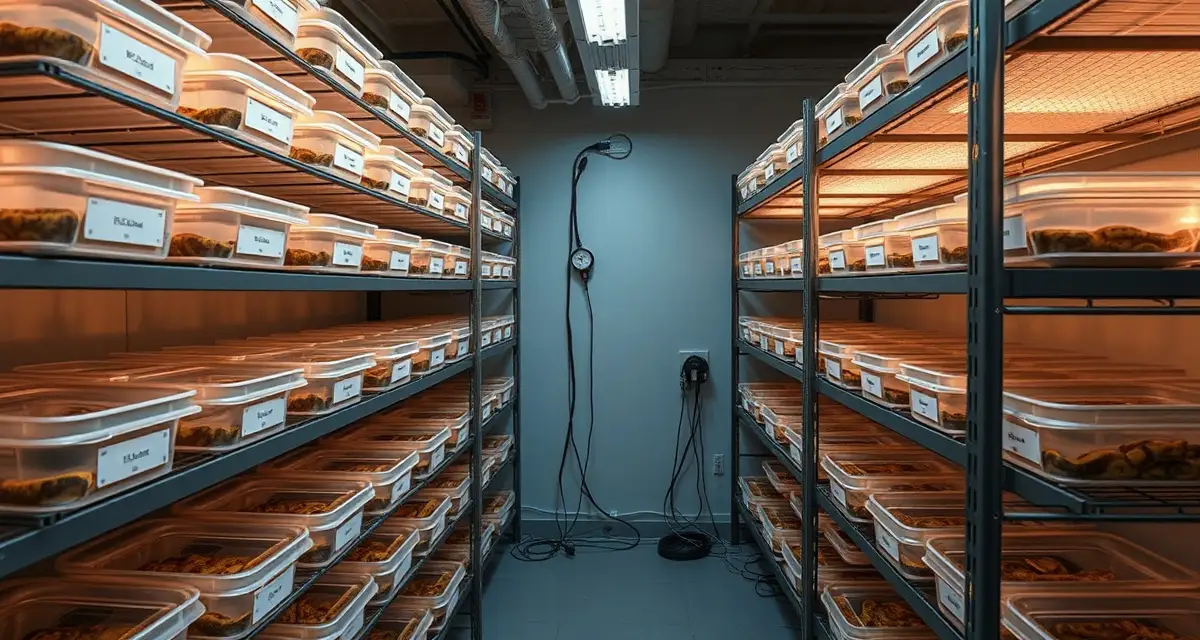
The difference between hobbyist setups and a production breeding room usually comes down to the rack system. Whether you're housing 20 animals or 200, understanding how to size your racks, configure your heat sources, and track each tub separately will determine how efficiently your breeding season runs.
Choosing the Right Rack Size and Tub Configuration
Ball pythons are housed in tubs sized to their body length, not their girth. A common mistake new breeders make is over-sizing tubs, which can stress snakes that prefer tight, secure spaces. For adults in breeding rotation, a 41-quart tub typically works well for females up to about 2,000 grams. Large females pushing 3,000 grams often do better in 56-quart tubs or custom setups.
Your rack brand matters more than most breeders admit early on. Freedom Breeder and Animal Plastics are two of the most widely used manufacturers in the US. Both use radiant heat panels (RHP) that mount under each shelf and heat the back third of the tub from below. This belly heat setup is critical for digestion and helps females maintain follicle development during breeding season.
When planning your rack configuration, think about airflow. Tubs need ventilation strips drilled into the front lip. Many breeders also drill small holes along the sides. Stagnant air increases respiratory risk, especially during humid months.
Heat Control and Temperature Gradients
Proper temperature gradients are non-negotiable. Your warm side should sit between 88-92F, with the ambient cool side falling around 76-80F. Ball pythons will self-regulate by moving between zones, so if your entire tub runs hot, the animals have no escape route.
Use a proportional thermostat, not a simple on/off controller, for your heat panels. Proportional thermostats like the Herpstat or Spyder Robotics Herpstat series pulse power to the RHP rather than cycling it fully on and off. This delivers more stable temperatures and extends the life of your heat panels considerably.
Probe placement matters. Put your thermostat probe at the surface level of the warm side, not at rack height. Test each shelf individually when you first set up your rack because heat distribution varies shelf by shelf in most rack systems.
Organizing Your Rack for Breeding Season
During breeding season, your rack organization directly affects how efficiently you run your pairings. Most breeders keep males in a separate rack or dedicated section and move them to female tubs for introductions. Keeping a clear physical layout -- males on one rack, females on another -- prevents accidental introductions and makes it easier to pull animals quickly.
Label each tub with a unique animal ID, not just a name or morph. If you have three Pastels in your collection, relying on morph labels alone leads to errors. Numbered IDs tied to your records in HatchLedger ensure you always pull the right animal.
During the breeding season, you'll be checking tubs frequently for shed cycles, ovulation signs, and feeding response changes. A consistent walk-through routine -- ideally at the same time daily -- helps you catch changes early. Females that go off feed or start spending more time in the warm zone are often showing early signs of follicle development.
Humidity Management in Rack Systems
Rack systems can be tricky for humidity because individual tubs hold humidity differently depending on substrate type and ventilation hole size. Coco fiber and cypress mulch retain moisture better than paper towels, which many breeders use for easy cleaning between sheds.
For breeding females, slightly elevated humidity -- around 60-70% -- supports healthy shed cycles and reduces stress. A humid hide on the cool side gives the animal a place to regulate moisture without soaking the entire tub substrate. During shedding, incomplete sheds are often traced back to insufficient ambient humidity or a missing humid hide.
Monitor humidity with a digital hygrometer rather than relying on substrate observation alone. Keep a log of any incomplete sheds, skin retained on eyes or tail tips, and the corrective action you took. Over time this data helps you identify which animals need specific management adjustments.
Record Keeping Across a Large Rack System
Once your collection grows past 30-40 animals, paper records or spreadsheets become a bottleneck. You need to know at a glance which female was last paired, when she last fed, whether she's pre-ovulation or post-ovulation, and what clutch history she carries.
HatchLedger connects your husbandry logs to clutch P&L, so you can track each rack position's contribution to your annual revenue. Instead of digging through notebooks at the end of the season, your records are timestamped and searchable. You can pull up any animal's complete feeding history, pairing log, and shed record in seconds.
Consistency in record keeping pays off most when something goes wrong -- a failed clutch, a struggling hatchling, an animal that won't take a feeding. Your historical data tells you whether this is a pattern or an isolated incident, and that changes how you respond.
Setting Up for Long-Term Scale
If you plan to grow your breeding program over multiple seasons, design your rack room for expansion from the start. Wire your electrical circuits to handle the load of a full room of racks, not just your current setup. Each 6-shelf rack running full RHPs draws significant amperage, and underpowered circuits are a fire risk.
Think about workflow paths through your room. You should be able to reach every tub without moving another rack. Leave enough aisle space to walk comfortably while carrying a tub or a bucket for water changes. Small ergonomic decisions made at setup save a lot of fatigue over a multi-month breeding season.
Keep a room temperature log throughout the season. Ambient room temperature directly affects your thermostat's work and can shift your warm-side temps unexpectedly during summer heat or winter cold snaps.
Frequently Asked Questions
What is the best approach to building a ball python breeding rack system?
Start with a quality commercial rack from a reputable manufacturer like Freedom Breeder or Animal Plastics. Use proportional thermostats on your heat panels, size tubs appropriately to each animal's body length, and organize your racks so males and females are housed separately. Label every tub with a unique animal ID that connects to your breeding records. Plan your electrical setup before you fill the room -- underpowered circuits are the most common infrastructure mistake in growing breeding operations.
How do professional breeders manage rack systems efficiently?
Professional breeders build consistent daily routines: same walk-through time each day, standardized feeding schedules, and a clear labeling system that ties physical rack positions to digital records. They use dedicated breeding software to log feeding responses, shed cycles, and pairing dates rather than relying on memory or scattered notebooks. When all husbandry data connects to a single system, it's much easier to spot patterns, identify underperforming animals, and make informed decisions about who to pair each season.
What software helps manage a ball python rack and breeding records?
HatchLedger is purpose-built for reptile breeders, connecting animal records, breeding history, clutch outcomes, and financial tracking in one system. Unlike generic spreadsheets, it's designed around the specific workflow of an active breeding season. Free for up to 20 animals.
What records should every reptile breeder maintain per animal?
At minimum: acquisition date and source, morph and genetic documentation, feeding log, weight history, any veterinary treatments, and breeding history including pairing dates, clutch of origin for captive-bred animals, and offspring records. These records serve your own management, buyer documentation, regulatory compliance, and long-term genetic tracking.
How should reptile breeders document genetics for buyers?
A complete genetic record for sale includes the animal's visual morph name, confirmed het genes and their basis (parentage documentation or proven-out production), possible het genes with probability percentages, hatch date, and parent morph information. Including clutch-of-origin records lets buyers independently verify the claims.
What is How to Build a Breeding Rack System for Ball Pythons: Advanced Setup Guide?
A ball python breeding rack system is a structured housing solution that allows breeders to efficiently manage multiple animals in individual tubs within a single unit. This advanced setup guide covers rack sizing, heat source configuration, tub management, and record-keeping integration. It bridges the gap between hobbyist enclosures and production-level breeding rooms, helping breeders house anywhere from 20 to 200 animals with consistent environmental control and streamlined daily care routines.
How much does How to Build a Breeding Rack System for Ball Pythons: Advanced Setup Guide cost?
Building a ball python breeding rack system varies widely in cost depending on scale and materials. A basic DIY rack using melamine or PVC can cost $150–$400, while commercial racks range from $300 to over $1,000 per unit. Heat tape, thermostats, and tubs add $50–$200 more. A mid-scale operation housing 40–60 animals might invest $1,500–$3,000 upfront, with costs offset over time through improved breeding efficiency and reduced labor.
How does How to Build a Breeding Rack System for Ball Pythons: Advanced Setup Guide work?
A breeding rack system works by stacking individual tubs in a frame, with heat tape or heat cable running along the back or bottom of each shelf to create a warm side gradient. A thermostat regulates temperature across rows. Each tub houses one animal, making feeding, cleaning, and health monitoring simple. When paired with breeding management software like HatchLedger, breeders can log feeding, weights, and breeding events directly tied to each rack position.
What are the benefits of How to Build a Breeding Rack System for Ball Pythons: Advanced Setup Guide?
A well-built breeding rack system delivers consistent temperatures critical for triggering breeding behavior, reduces daily husbandry time through streamlined tub access, and maximizes space efficiency in a breeding room. Breeders using integrated rack management with digital records report up to 30% less time on administrative tasks. Standardized housing also makes it easier to spot health issues early, maintain accurate weight tracking, and ensure females reach the 1,200–1,500g target weight before introduction to males.
Who needs How to Build a Breeding Rack System for Ball Pythons: Advanced Setup Guide?
This guide is designed for serious ball python breeders transitioning beyond individual enclosures into a scalable, production-oriented setup. It's ideal for hobbyists expanding their collection past 10–15 animals, small-scale commercial breeders managing multiple morphs and pairings, and anyone looking to systematize their breeding season. If you're tracking ovulations, clutch profitability, and genetics across dozens of animals, a dedicated rack system with proper record-keeping infrastructure is an essential next step.
How long does How to Build a Breeding Rack System for Ball Pythons: Advanced Setup Guide take?
Building a basic breeding rack system takes one to two weekends for a DIY build, including cutting materials, assembling the frame, installing heat tape, and wiring thermostats. Commercial racks can be assembled in a few hours. Getting the full system dialed in—stable temperatures, correct humidity gradients, and animals settled—typically takes two to four weeks. Integrating rack positions with breeding software like HatchLedger can be completed in a single session once animals are assigned to tubs.
Related Articles
- Ball Python Enclosure Temperature Gradients: Advanced Setup Guide
- Ball Python Clown Morph Breeding Projects: Advanced Breeder Guide
- Ball Python Pre-Lay Shed and Nest Box Setup: Advanced Breeder Guide
- Ball Python Cinnamon and Black Pastel Morph Guide: Advanced Breeding Projects
Sources
- USARK (United States Association of Reptile Keepers)
- Association of Reptilian and Amphibian Veterinarians (ARAV)
- World of Ball Pythons (WoBP genetics reference database)
- MorphMarket (reptile industry marketplace)
- Reptiles Magazine (Bowtie Inc.)
Get Started with HatchLedger
Every part of a ball python breeding operation -- from pairing records to clutch documentation to financial tracking -- works better when the data is connected rather than scattered across notebooks and spreadsheets. HatchLedger is built for exactly that. Try it free with up to 20 animals.