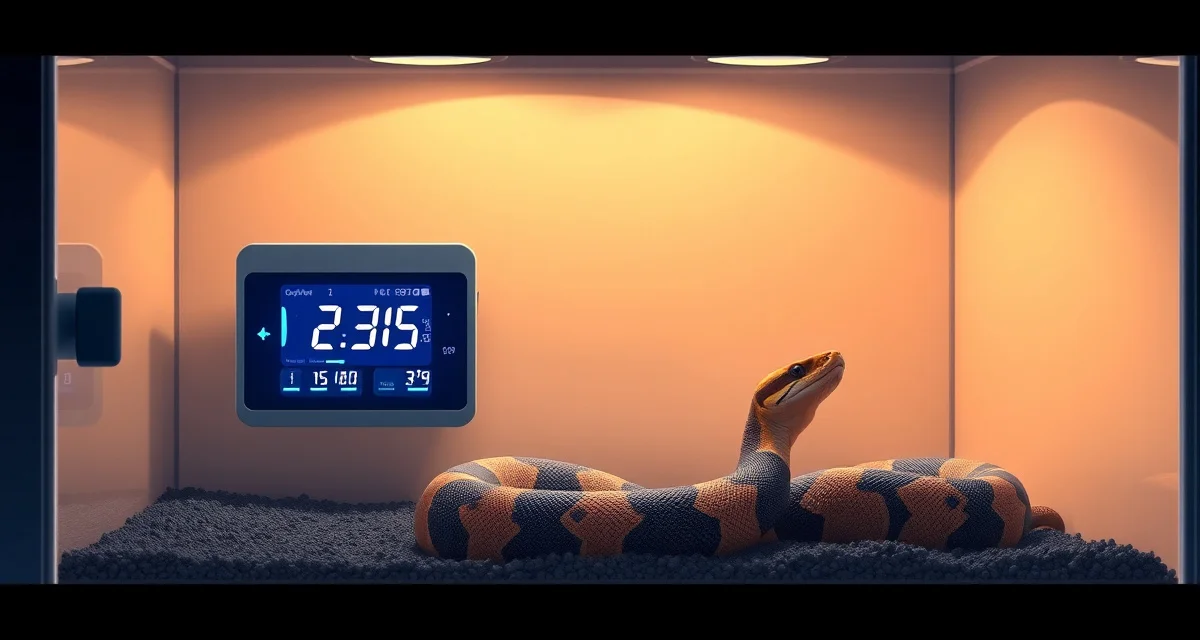
Ball Python Cooling and Cycling Protocols: Advanced Breeder Guide
Breeders using integrated software report 30% less time on administrative tasks, and nowhere does that efficiency matter more than during cycling season when you're managing temperature schedules across dozens of animals simultaneously. Getting your cooling protocol right is the foundation of a successful breeding season, and the details matter far more than most newer breeders realize.
TL;DR
- Ball python breeding operations require systematic record-keeping from pre-season preparation through end-of-season sales.
- Females at 1,200-1,500g or more are the target weight before introducing them to a breeding male.
- Ovulation detection is the key event that anchors pre-lay shed and lay date calculations.
- Clutch profitability guide depends on understanding actual cost basis per animal, not just gross sale revenue.
- Well-documented animals with complete feeding histories and clear genetic records consistently sell faster and at higher prices.
Ball pythons in the wild experience seasonal temperature variation in sub-Saharan Africa, and while they're not true hibernators, that variation is the primary reproductive trigger. Your captive cooling protocol needs to mimic that natural cycle closely enough to get your animals into breeding condition without compromising their health.
Understanding Why Cooling Works
The cooling protocol works through hormonal signaling. When ambient temperatures drop, it triggers gonadal development in both males and females. Males start producing sperm and become sexually active. Females begin follicular development. Without this thermal cue, most animals simply won't respond to introductions, and you'll waste pairing opportunities.
The exact mechanism involves the hypothalamic-pituitary-gonadal axis responding to photoperiod and temperature changes together. This is why dropping temps alone, without adjusting light cycles, gives inconsistent results for some breeders.
When to Start Cooling
Most breeders in North America start their cooling protocols in October or November, timing the temperature drop to coincide with natural seasonal cues. You want your females at a healthy body weight before you start, typically 1,500g or above for standard females, though larger morphs like pastels and pieds can start cycling at 1,200-1,300g if they're in excellent condition.
Feed your breeding animals aggressively through the summer to build up fat reserves. A female that goes into cycling underweight will often reabsorb follicles or fail to produce viable eggs even if she does ovulate.
Temperature Drop Protocol
The standard approach is a gradual reduction rather than an abrupt change:
Weeks 1-2: Drop ambient temps from your normal 88-90F hot spot to 82-84F. Night temps can go to 75-76F.
Weeks 3-4: Hot spot around 80-82F. Night temps 72-74F. Reduce feeding frequency here.
Month 2-3: Maintain a consistent "cool" period with ambient temps around 78-80F during the day and 70-72F at night. Many breeders drop the hot spot entirely or reduce it to 76-78F during this phase.
This gradual approach reduces the stress response compared to sudden drops and keeps your animals eating through the early stages of the protocol.
Photoperiod Adjustments
Reduce day length from your normal 12-14 hours to 8-10 hours during the cool period. This complements the temperature change and produces better results, especially with females who have been difficult to cycle in previous seasons.
Automated timers make this easy to manage. Mark the date you changed the timer so you can replicate the exact protocol next year if it worked.
Feeding During Cooling
This is where opinions vary among experienced breeders. The two main schools of thought:
Continue reduced feeding: Offer prey every 3-4 weeks instead of weekly or biweekly. Use smaller prey items. This maintains body condition without adding weight during a period when digestion is slower.
Stop feeding entirely: Some breeders stop feeding altogether after the temperature drop stabilizes, mimicking the natural food scarcity of the dry season. This works well with animals that are already at a healthy weight.
The risk with continuing to feed is that a cooled animal's digestive system runs slower, and an uneaten prey item in the enclosure overnight can stress the snake. If you're leaving prey, supervise the feeding and remove anything not eaten within 30 minutes.
Managing Males vs. Females
Males typically respond to cooling more quickly than females. You'll often see males become restless, cruising the enclosure and flicking their tongues constantly, within 3-4 weeks of starting the cool. That's your cue that they're ready.
Females take longer, often 6-8 weeks before follicular development is detectable via palpation. Don't rush introductions just because the male is ready. A female that isn't developed yet won't respond positively and may become defensive.
Some breeders keep males separate from the temperature drop cycle entirely, cooling only females and bringing males in at room temperature once the females are ready. This prevents males from losing too much weight during an extended cycling period.
How Long to Hold the Cool Period
Most protocols run 6-10 weeks for the full cool period before beginning to warm back up and introduce animals. Shorter cool periods of 4-6 weeks can work with proven animals that cycle reliably, but first-year breeders or females that have been difficult to cycle generally need the full duration.
Tracking the exact dates and temperatures of your cycling protocol is something you'll reference every year. HatchLedger's breeding project management tools let you log temperature schedules against pairing outcomes so you can see which protocol variations produced the best results across multiple seasons.
Warming Back Up
The warm-up phase is just as important as the cooling phase. Increase temps gradually over 2-3 weeks, mirroring the gradual approach of the cool-down. Resume normal feeding as temps normalize.
It's during the warm-up that you'll introduce pairs for the first time. The temperature change combined with the presence of the male (or female pheromones) completes the hormonal cascade that triggers mating behavior.
Monitoring Health Throughout
Check your animals more frequently during cycling. A cooled ball python that develops a respiratory infection can decline quickly because its immune system is operating at reduced capacity. Signs to watch for include wheezing, bubbling around the mouth or nostrils, lethargy beyond normal cooling behavior, and any open-mouth breathing.
Weigh animals at the start of the cool period and every 2-3 weeks throughout. A female losing more than 5% of body weight during cooling is a concern. Losing 10% or more means you should warm her back up and address the weight loss before attempting to breed her.
Tools like HatchLedger's reptile breeder software let you log those weight checks against feeding records so you can spot trends before they become problems.
Cycling Difficult Animals
Some females simply don't respond to standard protocols. For these animals, try:
- Extending the cool period to 10-12 weeks
- Increasing the temperature differential (cooler nights, warmer days)
- Adding a hormonal assist via a veterinarian if you've tried two full seasons without success
- Evaluating whether the animal has an underlying health issue affecting reproductive function
First-year females cycling for the first time are the most unpredictable. Many experienced breeders don't attempt to breed females in their first year of eligibility, instead waiting until year two to ensure the animal is fully mature and conditioned.
Frequently Asked Questions
What is the best approach to ball python cooling and cycling protocols?
The most effective approach combines a gradual temperature drop from normal husbandry temps (88-90F) down to 78-80F ambient over 2-4 weeks, paired with a photoperiod reduction from 12-14 hours to 8-10 hours. Hold the cool period for 6-10 weeks while monitoring body weight every 2-3 weeks, then warm back up gradually before introducing pairs.
How do professional breeders handle ball python cooling and cycling protocols?
Professional breeders track exact dates, temperatures, and animal weights throughout the entire cycling protocol, then compare that data against breeding outcomes season over season. They also pre-condition females with aggressive feeding through summer to ensure optimal body weight before cooling begins, and they keep separate records for males and females since their cycling timelines differ.
What records should every reptile breeder maintain per animal?
At minimum: acquisition date and source, morph and genetic documentation, feeding log, weight history, any veterinary treatments, and breeding history including pairing dates, clutch of origin for captive-bred animals, and offspring records. These records serve your own management, buyer documentation, regulatory compliance, and long-term genetic tracking.
How should reptile breeders document genetics for buyers?
A complete genetic record for sale includes the animal's visual morph name, confirmed het genes and their basis (parentage documentation or proven-out production), possible het genes with probability percentages, hatch date, and parent morph information. Including clutch-of-origin records lets buyers independently verify the claims.
Sources
- USARK (United States Association of Reptile Keepers)
- Association of Reptilian and Amphibian Veterinarians (ARAV)
- World of Ball Pythons (WoBP genetics reference database)
- MorphMarket (reptile industry marketplace)
- Reptiles Magazine (Bowtie Inc.)
Get Started with HatchLedger
Every part of a ball python breeding operation -- from pairing records to clutch documentation to financial tracking -- works better when the data is connected rather than scattered across notebooks and spreadsheets. HatchLedger is built for exactly that. Try it free with up to 20 animals.