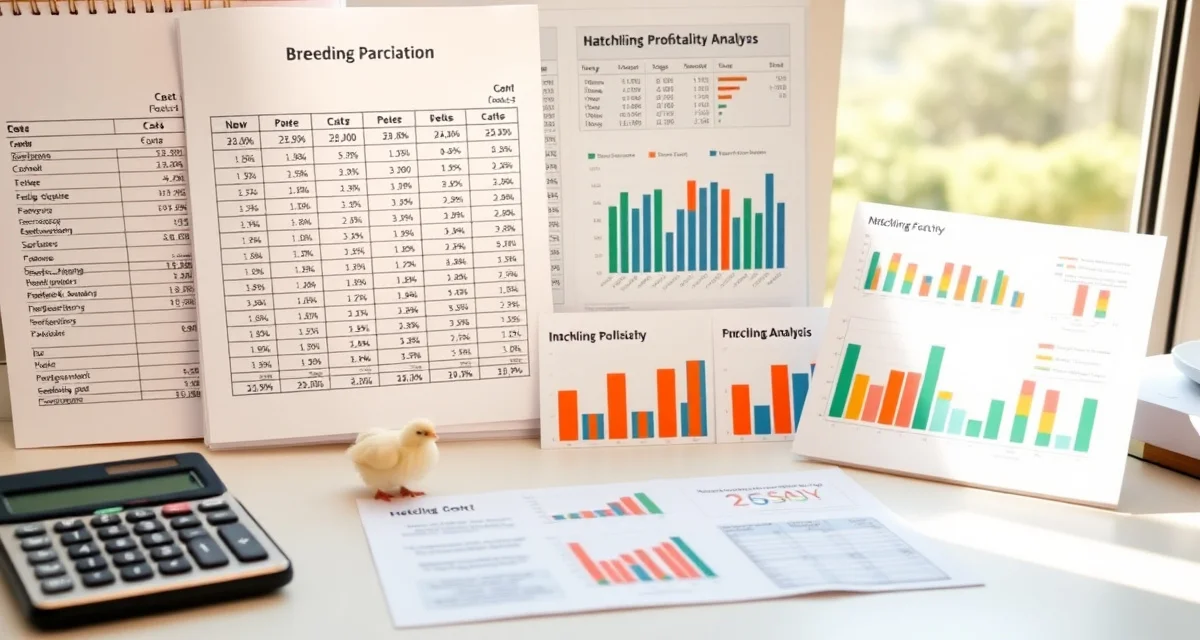
Calculating Cost Per Hatchling for Ball Python Breeding Profitability
Most ball python breeders have only a rough sense of whether their program is actually profitable. They know their revenue from sales, but the cost side - the true cost of producing each hatchling - is often dramatically underestimated. Breeders using integrated software report 30% less time on administrative tasks, which matters when managing the financial tracking that real profitability analysis requires.
TL;DR
- Ball python breeding operations require systematic record-keeping from pre-season preparation through end-of-season sales.
- Females at 1,200-1,500g or more are the target weight before introducing them to a breeding male.
- Ovulation detection is the key event that anchors pre-lay shed and lay date calculations.
- Clutch profitability guide depends on understanding actual cost basis per animal, not just gross sale revenue.
- Well-documented animals with complete feeding histories and clear genetic records consistently sell faster and at higher prices.
Understanding your cost per hatchling is the foundation of making good business decisions: which breeding combinations make money, which are breaking even, and which are quietly subsidized by the combinations that work.
What Goes Into Cost Per Hatchling
Animal acquisition costs: The purchase price of your breeding animals, amortized over their expected productive life. A female purchased for $1,500 who produces 10 clutches over her career contributes $150 per clutch to cost. Divide by average clutch size (say, 6 hatchlings) and you're looking at $25 per hatchling just from acquisition cost.
Prey and feeding: The ongoing cost of feeding all animals in your program - breeding stock, holdbacks, hatchlings, and waiting animals. Track this by month and divide by the number of hatchlings produced in the season to get a per-hatchling cost for prey.
Housing and equipment: Racks, enclosures, thermostats, heat tape, incubators, humidity equipment, lay boxes, egg boxes, substrate, and replacement costs for any of the above. These are capital expenses that spread over multiple seasons.
Electricity: Climate control for your breeding room, heat tape power consumption, incubator electricity. This is often ignored but adds up meaningfully in a dedicated breeding room running year-round.
Veterinary costs: Health checks, Crypto testing, parasite treatments, emergency care. Even if you have no major health events in a season, you should budget for this as an expected expense category.
Shipping and supplies: Shipping boxes, heat packs, tape, deli cups, snake bags, and other consumables for animal care and sale preparation.
Software and tools: Subscription costs for MorphMarket, HatchLedger, and other tools used in your program.
Time: This is genuinely hard to quantify but matters if you're evaluating whether breeding is worth it compared to other uses of your time. Tracking hours and comparing against net profit gives you an effective hourly rate.
How to Calculate Cost Per Hatchling
Simple approach:
- Total all breeding-related expenses for the season (feeding, supplies, vet, etc.)
- Add a reasonable amortized share of equipment and animal acquisition costs
- Divide by the total number of hatchlings produced
Example:
- Season expenses (feeding, supplies, vet, software): $3,200
- Amortized animal costs: $800
- Amortized equipment costs: $400
- Total cost: $4,400
- Hatchlings produced: 30
- Cost per hatchling: $147
This means every hatchling that sells for less than $147 is a loss before profit, and every one above that is margin.
Where the Numbers Surprise Breeders
Parent animal costs are higher than expected: A $500 Pastel female seems cheap until you realize she's contributing her acquisition cost to every animal she produces. High-value parent animals require high-value offspring to be profitable.
Feeding a growing collection is expensive: If you're holding 20 animals year-round at an average of $10/month in prey each, that's $2,400/year just in prey costs, before any other expense.
Hatchlings that don't sell have carrying costs: A hatchling that sits unsold for 6 months costs prey, time, and space during that period. Sell-through rate matters as much as per-unit margin.
Using Cost Data to Make Better Decisions
Once you know your cost per hatchling, you can evaluate:
- Which breeding combinations produce enough revenue per hatchling to cover costs and generate profit?
- Are there pairings that produce mainly low-value animals you're selling at or below cost?
- Should you scale up (if profitable), scale back (if not), or change your morph focus (if certain combinations are more profitable)?
Connect all of this financial data to your production records in HatchLedger's integrated system. For tools that combine husbandry tracking with financial records, see the reptile breeder software comparison.
Frequently Asked Questions
What is the best approach to calculating ball python breeding cost per hatchling?
Track all expenses in a dedicated breeding ledger: prey, supplies, vet, electricity, software, shipping materials, and a reasonable amortization of equipment and animal acquisition costs. Divide by hatchlings produced for a per-unit cost baseline. This tells you what you need to sell hatchlings for to cover costs, which is the starting point for any profitability analysis.
How do professional breeders handle ball python breeding profitability calculations?
Established breeders typically maintain a simple ledger with income and expense categories, giving them a seasonal P&L. Many evaluate profitability by pairing combination to understand which specific projects are generating positive returns vs. which are subsidized by other combinations. This information drives project selection decisions for subsequent seasons.
What software helps manage ball python breeding cost and profitability records?
HatchLedger is purpose-built for reptile breeders, connecting animal records, breeding history, clutch outcomes, and financial tracking in one system. Unlike generic spreadsheets, it's designed around the specific workflow of an active breeding season. Free for up to 20 animals.
What records should every reptile breeder maintain per animal?
At minimum: acquisition date and source, morph and genetic documentation, feeding log, weight history, any veterinary treatments, and breeding history including pairing dates, clutch of origin for captive-bred animals, and offspring records. These records serve your own management, buyer documentation, regulatory compliance, and long-term genetic tracking.
How should reptile breeders document genetics for buyers?
A complete genetic record for sale includes the animal's visual morph name, confirmed het genes and their basis (parentage documentation or proven-out production), possible het genes with probability percentages, hatch date, and parent morph information. Including clutch-of-origin records lets buyers independently verify the claims.
Sources
- USARK (United States Association of Reptile Keepers)
- Association of Reptilian and Amphibian Veterinarians (ARAV)
- World of Ball Pythons (WoBP genetics reference database)
- MorphMarket (reptile industry marketplace)
- Reptiles Magazine (Bowtie Inc.)
Get Started with HatchLedger
Every part of a ball python breeding operation -- from pairing records to clutch documentation to financial tracking -- works better when the data is connected rather than scattered across notebooks and spreadsheets. HatchLedger is built for exactly that. Try it free with up to 20 animals.