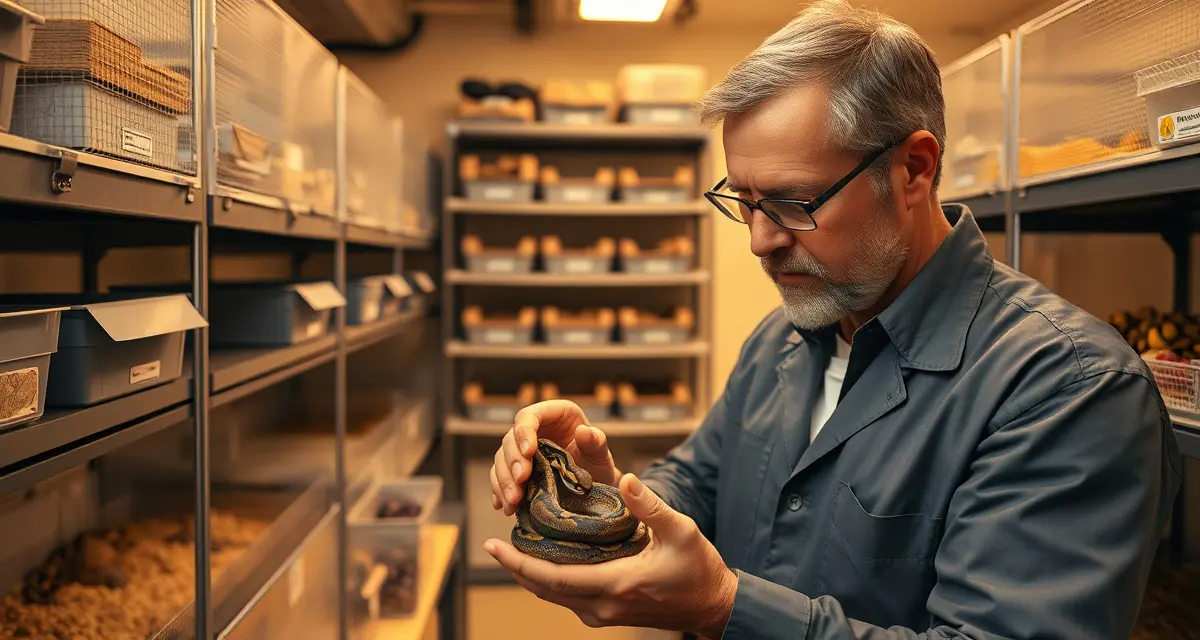
Holdbacks vs. Selling Hatchlings: How to Make the Right Decision
Every season brings the same question: which animals do you keep, and which do you sell? Holdbacks - animals you retain from your own production for future breeding - are the engine of a long-term breeding program. But holding too many animals ties up capital, space, and resources. Getting holdback selection right is one of the most important strategic decisions in a breeding program. Breeders using integrated software report 30% less time on administrative tasks, giving you more time for the careful evaluation these decisions require.
TL;DR
- Ball python breeding operations require systematic record-keeping from pre-season preparation through end-of-season sales.
- Females at 1,200-1,500g or more are the target weight before introducing them to a breeding male.
- Ovulation detection is the key event that anchors pre-lay shed and lay date calculations.
- Clutch profitability guide depends on understanding actual cost basis per animal, not just gross sale revenue.
- Well-documented animals with complete feeding histories and clear genetic records consistently sell faster and at higher prices.
Why Holdbacks Matter
Every holdback is a multi-year investment. From hatch to first reproduction, most ball pythons require at minimum 2.5-3 years of care before they produce anything. The feeding costs, space, equipment, and time during that period are the carrying cost of the holdback.
A well-selected holdback more than earns back those costs over its breeding career. A poorly selected holdback costs years of resources without meaningfully advancing your program.
Criteria for Selecting Holdbacks
Genetic purpose: The most important question. Does this animal serve a specific role in your breeding projects? An animal you select as a holdback should be needed for a pairing you have planned. "This is a nice animal" isn't sufficient justification for a holdback if you don't have a breeding use for it.
Phenotype quality: For co-dominant morphs where expression quality matters (Pastel, Fire, Yellow Belly), select holdbacks with the best visual expression in the clutch. This is how line breeding toward better expression works in practice.
Sex: Female holdbacks are generally more valuable long-term because females are the production animals. However, if you need a specific male for a project and don't have one, holding a quality male makes sense.
Health and feeding: Hold animals that are eating reliably and are in excellent health. Don't hold problem feeders or animals with health complications as breeding animals unless there's a specific genetic reason that outweighs the concern.
Market value: A hatchling worth $800 as a juvenile represents capital you're tying up for 3 years. If selling it now and buying a more appropriate holdback for $1,200 in a year would be more efficient, that's worth considering.
The Two-Year Hold vs. Immediate Sell Question
Some animals are obvious immediate sells - they don't fit your project needs, they're duplicates of what you already have, or they're common morphs with declining value. These animals are best sold young when they're most marketable.
Some animals are obvious holdbacks - they're the specific combination you've been working toward, they fill a gap in your breeding inventory, or they represent a significant step in a multi-year project.
The difficult middle ground: animals that might be useful but aren't definitively needed. For these, consider:
- How urgent is your need for this specific genetic combination?
- What's the opportunity cost of holding this animal vs. the capital you'd free up by selling?
- If you sell this animal, how easy would it be to acquire something similar in a year or two?
Monitoring Holdbacks as They Develop
A holdback that doesn't develop appropriately becomes an expensive lesson. Monitor all holdbacks:
- Monthly weight checks through the growth period
- Feeding consistency - any prolonged feeding issues warrant reassessment
- Health status - a holdback with recurring health problems may not be a reliable breeding animal
A holdback who isn't hitting growth targets or isn't feeding reliably by 18 months should be reassessed. Sometimes the honest call is selling a holdback that isn't developing as hoped rather than continuing to invest in an animal that won't perform as a breeder.
Tracking Holdbacks in Your Records
Every holdback should be flagged in your records with:
- The specific project role it's intended for
- The expected breeding season for first use
- Current condition and development notes
Track holdbacks in HatchLedger's breeding management system where their growth history, feeding records, and intended project role are all connected to their animal record. For tools that support holdback planning alongside production records, see the reptile breeder software comparison.
Frequently Asked Questions
What is the best approach to deciding between holding back vs. selling ball python hatchlings?
Every holdback should have a specific, defined role in a project you have planned. The genetic purpose comes first; the other criteria (phenotype quality, sex, health) refine which specific animal to select when multiple candidates exist. Avoid holding animals out of general optimism that they might be useful someday - that approach inflates your collection without advancing your program.
How do professional breeders handle holdback selection in their ball python programs?
Experienced breeders make holdback decisions relative to their multi-year project plan. They know before a clutch hatches what they're hoping to hold from it, which makes selection decisions faster and more objective. They also review their holdback inventory annually and sell animals they no longer need for their projects rather than accumulating a collection that doesn't align with their current direction.
What software helps manage ball python holdback records and project planning?
HatchLedger is purpose-built for reptile breeders, connecting animal records, breeding history, clutch outcomes, and financial tracking in one system. Unlike generic spreadsheets, it's designed around the specific workflow of an active breeding season. Free for up to 20 animals.
What records should every reptile breeder maintain per animal?
At minimum: acquisition date and source, morph and genetic documentation, feeding log, weight history, any veterinary treatments, and breeding history including pairing dates, clutch of origin for captive-bred animals, and offspring records. These records serve your own management, buyer documentation, regulatory compliance, and long-term genetic tracking.
How should reptile breeders document genetics for buyers?
A complete genetic record for sale includes the animal's visual morph name, confirmed het genes and their basis (parentage documentation or proven-out production), possible het genes with probability percentages, hatch date, and parent morph information. Including clutch-of-origin records lets buyers independently verify the claims.
Sources
- USARK (United States Association of Reptile Keepers)
- Association of Reptilian and Amphibian Veterinarians (ARAV)
- World of Ball Pythons (WoBP genetics reference database)
- MorphMarket (reptile industry marketplace)
- Reptiles Magazine (Bowtie Inc.)
Get Started with HatchLedger
Every part of a ball python breeding operation -- from pairing records to clutch documentation to financial tracking -- works better when the data is connected rather than scattered across notebooks and spreadsheets. HatchLedger is built for exactly that. Try it free with up to 20 animals.