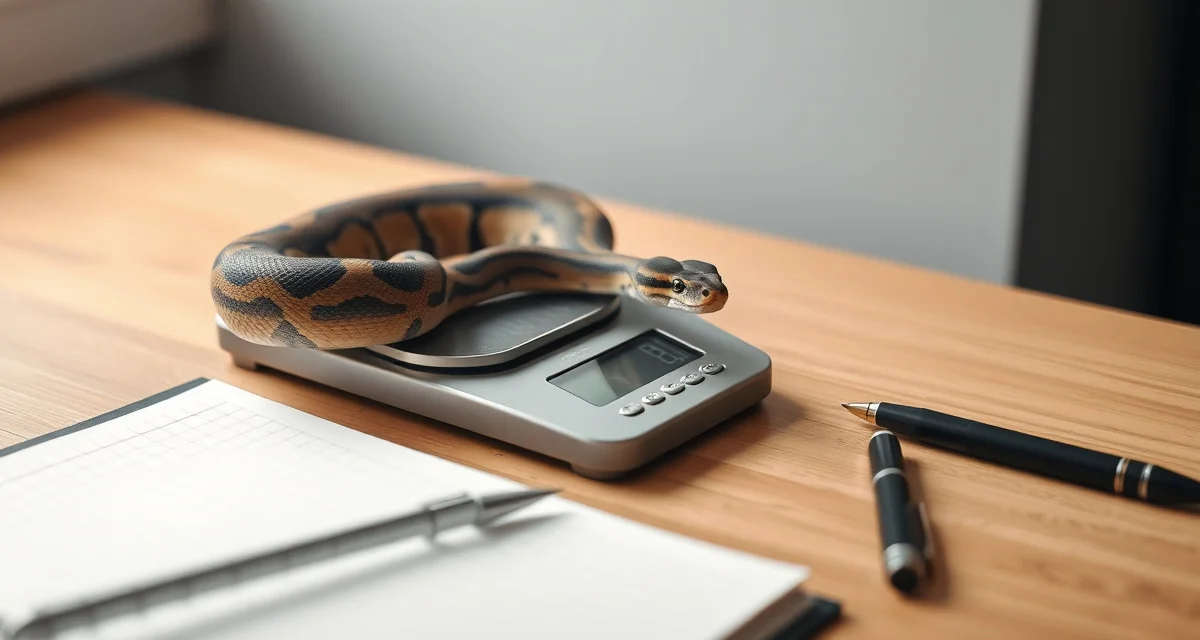
Ball Python Weight and Body Condition Scoring: Advanced Breeder Guide
Breeders using integrated software report 30% less time on administrative tasks, and weight tracking is one of the most efficient health monitoring tools available. A digital kitchen scale and a consistent logging habit give you an early warning system for health problems, feeding issues, and reproductive readiness, all from a single data point collected monthly.
TL;DR
- Ball python breeding operations require systematic record-keeping from pre-season preparation through end-of-season sales.
- Females at 1,200-1,500g or more are the target weight before introducing them to a breeding male.
- Ovulation detection is the key event that anchors pre-lay shed and lay date calculations.
- Clutch profitability guide depends on understanding actual cost basis per animal, not just gross sale revenue.
- Well-documented animals with complete feeding histories and clear genetic records consistently sell faster and at higher prices.
Weight numbers in isolation don't tell you much. A 1,200g female could be healthy and well-conditioned or notably underweight depending on her frame size. The combination of weight data over time and body condition scoring gives you a complete picture.
Why Weight Tracking Matters
A single weight tells you where an animal is. A series of weights tells you which direction it's heading. That trend line is what you're actually managing.
An adult female holding steady at 1,800g through summer feeding season, dropping to 1,650g during breeding season, and coming back up to 1,700g by spring is healthy and following a predictable seasonal pattern. A female who weighed 1,800g in August and is down to 1,400g by November has lost nearly 400g in 3 months without the expected seasonal cause, and that's a flag that needs investigation.
Tracking weight per animal, per date, in a consistent log is the difference between catching that decline in November when it's actionable versus noticing in January that something looks wrong.
Equipment
Use a digital scale with a tare function. A kitchen scale accurate to 1-2g works well for hatchlings and juveniles. For adults, a postal or parcel scale with a 10-15 lb capacity is more practical.
Weigh animals in a clean, lidded container placed on the scale. Tare the container first, then place the snake inside. Use the same container for the same animal each time to keep the process consistent and reduce stress.
For very small hatchlings (20-40g), use a scale accurate to 0.1g to capture meaningful changes.
Weighing Frequency by Life Stage
Hatchlings (0-6 months): Weigh every 1-2 weeks. Rapid growth at this stage means early problem detection requires frequent measurements. You want to catch a hatchling that's declining before it's lost notable reserves.
Juveniles (6-18 months): Monthly weighing is usually sufficient unless there's a known feeding issue. Weigh at every feeding during the first few months after establishing feeding.
Adults (18 months+): Monthly during feeding season, monthly during breeding season. During extended fasts (breeding season or normal seasonal slowdowns), weigh every 2-3 weeks to monitor the rate of weight change.
Gravid females: Weigh every 2 weeks from confirmation of gravid status through egg laying. Weight gain during gestation reflects egg development; unexpected weight loss is a flag.
Body Condition Scoring
The body condition score (BCS) is a qualitative assessment of fat reserves, separate from absolute weight. Ball python BCS is typically assessed on a 1-5 scale:
1 (Emaciated): Spine clearly visible and protruding, distinct "keel" from the spine, no visible fat reserves. Ribs are visible. Head appears large relative to neck.
2 (Thin): Spine visible but not sharply protruding. Slight flattening of the dorsal surface indicates minimal fat reserves. Clearly underweight but not yet at emergency status.
3 (Ideal): Spine not visible but palpable with gentle pressure. Body is rounded and smooth in cross-section, roughly circular when viewed from the front. Good muscle tone.
4 (Overweight): Spine difficult to palpate. Body wider than tall in cross-section, somewhat rectangular. Some visible fat deposits.
5 (Obese): Spine impossible to palpate through deep fat deposits. Very wide body with visible fat creases. Movement may be impaired. True obesity is relatively rare in well-managed ball pythons.
Most healthy breeding animals should be maintained at BCS 3. A female ready for cycling should be at BCS 3, ideally with some reserves toward 3.5. A BCS of 2 is too thin to safely breed; consider delaying breeding for that female and prioritizing weight gain.
Weight as a Breeding Readiness Indicator
General minimum weight guidelines for breeding (these are starting points, not absolute rules):
- Standard ball python females: 1,400-1,500g minimum before cycling
- Smaller morph lines (some pastels, fires): 1,200g may be acceptable with ideal body condition
- Larger morph lines (cinnamon-based, GHI): may need 1,600-1,800g to be in ideal breeding condition
These minimums exist because gravid females fast during development and lose 20-35% of their pre-breeding body weight between the start of cycling and post-lay recovery. A female who enters the breeding season at 1,400g and loses 25% ends up at roughly 1,050g post-lay, which is a challenging recovery position. A female who starts at 1,800g and loses 25% is at 1,350g post-lay, a much more comfortable position.
Growth Rate Monitoring
For juveniles, growth rate data is valuable for identifying underperformers (animals not growing at expected rates despite eating well, suggesting a health issue) and for anticipating when animals will reach breeding size.
Track average weight gain per month for each juvenile. Compare to the collection average or to published growth curves. An animal notably below average growth rate despite good appetite warrants investigation.
Connecting Weight to Feeding Records
Weight data is most meaningful when viewed alongside feeding history. A weight loss that coincides with documented feeding refusals has an obvious cause. A weight loss in an animal that's been accepting food needs a different kind of investigation.
HatchLedger's animal records keep weight history and feeding logs for each animal in the same record, making it easy to see both data streams together. A quick review before breeding season tells you which females have been eating well and gaining appropriately versus which ones need more conditioning time.
Population-Level Weight Analysis
With records for your entire collection, you can run population-level analysis: what's the average weight gain per month for your hatchling cohort from this season? How do different morph lines compare in growth rate? What's the average female weight at first successful breeding?
This kind of analysis is impossible from physical notebooks and difficult from spreadsheets but straightforward with purpose-built software. HatchLedger's reptile breeder platform gives you aggregate views across your collection that individual record-keeping can't provide.
Recording and Using the Data
Set a consistent schedule: weigh everyone on the first Sunday of each month, for example. Consistency makes trend analysis valid. Irregular weighing intervals create confusing data that's hard to interpret.
Record weight in grams, not ounces. The reptile hobby and veterinary community both use grams, and it's a finer unit that captures small changes more meaningfully in lighter animals.
Note any circumstances that might affect the weight reading: was the animal just post-meal? Did you weigh before or after defecating? Note "post-feed" or "pre-feed" for consistency in your own records.
Frequently Asked Questions
What is the best approach to ball python weight and body condition scoring?
Weigh adults monthly and hatchlings every 1-2 weeks, tracking the trend over time rather than any single data point. Pair weight data with a visual body condition score (1-5 scale) to assess fat reserves. Set clear thresholds for minimum breeding weight for your females and flag animals whose weight trend is declining without a known cause.
How do professional breeders handle ball python weight and body condition scoring?
Experienced breeders use weight data as both a health monitoring tool and a breeding readiness indicator, maintaining detailed per-animal weight histories that let them spot developing problems months before they become critical. They also use weight data to evaluate growth performance across their hatchling cohort and identify juveniles that may need dietary adjustment.
What records should every reptile breeder maintain per animal?
At minimum: acquisition date and source, morph and genetic documentation, feeding log, weight history, any veterinary treatments, and breeding history including pairing dates, clutch of origin for captive-bred animals, and offspring records. These records serve your own management, buyer documentation, regulatory compliance, and long-term genetic tracking.
How should reptile breeders document genetics for buyers?
A complete genetic record for sale includes the animal's visual morph name, confirmed het genes and their basis (parentage documentation or proven-out production), possible het genes with probability percentages, hatch date, and parent morph information. Including clutch-of-origin records lets buyers independently verify the claims.
Sources
- USARK (United States Association of Reptile Keepers)
- Association of Reptilian and Amphibian Veterinarians (ARAV)
- World of Ball Pythons (WoBP genetics reference database)
- MorphMarket (reptile industry marketplace)
- Reptiles Magazine (Bowtie Inc.)
Get Started with HatchLedger
Every part of a ball python breeding operation -- from pairing records to clutch documentation to financial tracking -- works better when the data is connected rather than scattered across notebooks and spreadsheets. HatchLedger is built for exactly that. Try it free with up to 20 animals.