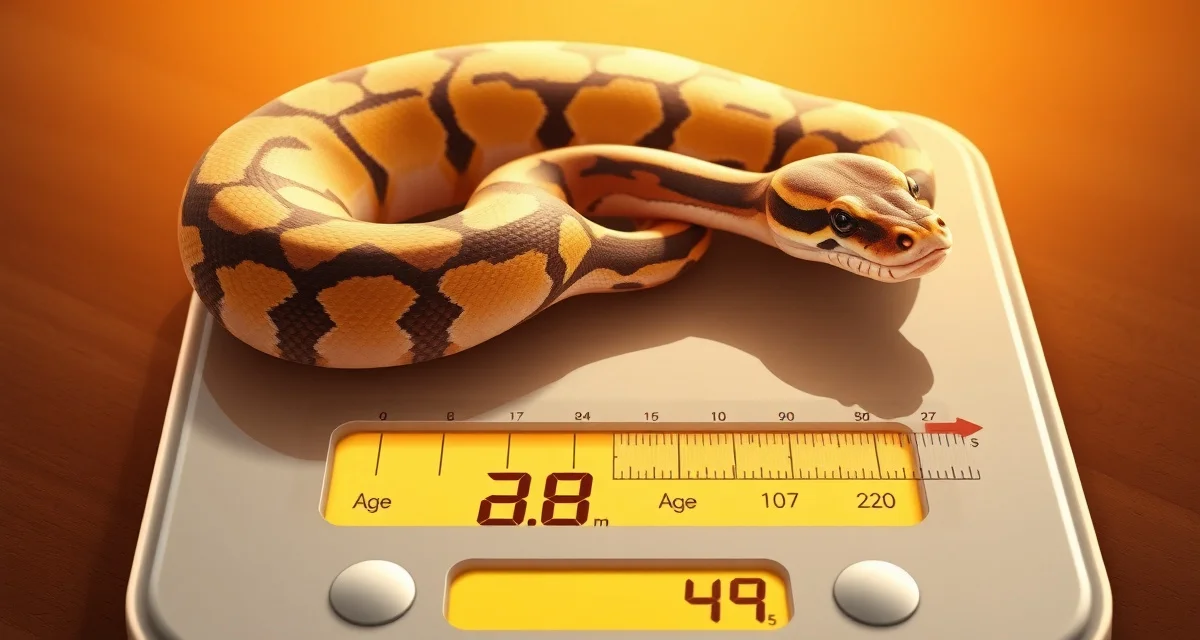
Age vs. Weight for Ball Python Breeding Readiness: Which Matters More?
By HatchLedger Editorial Team · Published 2025-06-22 · Updated Mar 13, 2026
This is one of the most frequently debated questions among new ball python breeders, and it has a clear answer: weight matters more than age, but age provides an important floor that weight alone can't substitute for. Understanding why both matter - and how to evaluate them together - keeps your animals healthy and your breeding program productive over the long term. Breeders using integrated software report 30% less time on administrative tasks, freeing up time to track the growth data that informs breeding readiness decisions.
TL;DR
- Ball python breeding operations require systematic record-keeping from pre-season preparation through end-of-season sales.
- Females at 1,200-1,500g or more are the target weight before introducing them to a breeding male.
- Ovulation detection is the key event that anchors pre-lay shed and lay date calculations.
- Clutch profitability guide depends on understanding actual cost basis per animal, not just gross sale revenue.
- Well-documented animals with complete feeding histories and clear genetic records consistently sell faster and at higher prices.
Why Weight Is the Primary Measure
Ball python breeding readiness is fundamentally physiological, not chronological. The female's body needs sufficient mass and muscle to:
- Develop viable follicles during the breeding cycle
- Sustain the energetic demands of follicular development and the pre-lay fasting period
- Produce eggs of appropriate quality and quantity
- Recover after laying without compromising long-term health
A female who has reached these physiological thresholds - generally expressed as reaching 1,200 grams at minimum (with 1,500 grams as a more conservative standard many experienced breeders use) - has the resources to breed successfully.
This is why weight is the go-to metric. It's measurable, objective, and directly reflects the physical readiness that matters.
Why Age Still Matters
Despite weight being primary, age serves as an important secondary floor for two reasons:
Sexual maturity is age-related, not just size-related. A female who has been fed very aggressively to reach 1,200 grams at 14 months may be at the right weight but may not yet have a fully mature reproductive system. Ball pythons develop sexually as they age, and the internal physiological readiness for reproduction follows a timeline that weight gain alone doesn't accelerate.
Fast weight gain creates its own problems. Animals that are pushed to target weight with very frequent, large meals are often obese rather than well-conditioned. Obesity creates breeding problems (poor egg development, dystocia risk) that undermine the apparent benefit of the fast weight gain.
The commonly cited age minimum - 2 years - provides reasonable confidence that an animal is sexually mature in addition to being at an appropriate weight.
When Weight and Age Disagree
Animal at 1,200+ grams but under 2 years: Consider waiting unless your program has a specific reason to breed early. The weight is there but physiological maturity may not be complete. First-time layers especially benefit from the additional maturation time.
Animal over 2 years but significantly underweight: Don't breed. Weight is the physiological requirement, and an underweight animal can't sustain the demands of reproduction. Prioritize conditioning and try again the following season.
Animal over 2 years and at or above target weight: This is your breeding-ready animal. Both criteria are met.
Older female who's at weight but hasn't bred before: Generally fine to breed. Age in a healthy, well-conditioned ball python doesn't impose an upper limit on first-time breeding in the way very young age creates a lower limit.
Body Condition as the Tie-Breaker
Weight and age together still don't tell the complete story. Body condition - the quality of the weight, not just the quantity - matters.
A female at 1,500 grams with:
- Good muscle tone along her back and sides
- Ribs palpable but not prominent
- No deep grooves alongside the spine
- A rounded but not tubular appearance
...is a better breeding candidate than a female at 1,500 grams who's obese (tubular cross-section, very round, minimal muscle definition) or underconditioned (thin, visible vertebrae, poor muscle tone).
Tracking Readiness in Your Records
Log weight measurements monthly for juvenile females you're growing toward breeding weight. Note the date they cross your target weight threshold. The combination of this date and their birth/hatch date tells you whether they've met both criteria.
Track this growth data in HatchLedger's animal records so you can see each animal's complete growth trajectory. For tools that support longitudinal weight tracking alongside breeding records, see the reptile breeder software comparison.
Frequently Asked Questions
What is the best approach to evaluating ball python age vs. weight for breeding readiness?
Use weight as the primary measure (1,200 grams minimum, 1,500 grams preferred) with age as a secondary floor (minimum 2 years, regardless of weight). When both criteria are met and body condition is good, the animal is a reasonable breeding candidate. When either criterion isn't met, wait rather than pushing the breeding timeline. The short-term cost of a delayed season is always lower than the long-term cost of breeding an underprepared animal.
How do professional breeders handle ball python breeding readiness evaluation?
Experienced breeders typically use 1,500 grams and 2 years as their combined minimum threshold and add a body condition assessment. They track growth trajectories so they can project when each juvenile female will be ready, which helps with breeding season planning. For first-time breeders, many add extra caution on the weight side - preferring 1,500-1,700 grams to give the female more resources for her first clutch.
What software helps manage ball python growth and breeding readiness records?
HatchLedger is purpose-built for reptile breeders, connecting animal records, breeding history, clutch outcomes, and financial tracking in one system. Unlike generic spreadsheets, it's designed around the specific workflow of an active breeding season. Free for up to 20 animals.
What records should every reptile breeder maintain per animal?
At minimum: acquisition date and source, morph and genetic documentation, feeding log, weight history, any veterinary treatments, and breeding history including pairing dates, clutch of origin for captive-bred animals, and offspring records. These records serve your own management, buyer documentation, regulatory compliance, and long-term genetic tracking.
How should reptile breeders document genetics for buyers?
A complete genetic record for sale includes the animal's visual morph name, confirmed het genes and their basis (parentage documentation or proven-out production), possible het genes with probability percentages, hatch date, and parent morph information. Including clutch-of-origin records lets buyers independently verify the claims.
What is Age vs. Weight for Ball Python Breeding Readiness: Which Matters More??
Weight matters more than age when determining ball python breeding readiness, but age sets a critical minimum floor. Females should reach 1,200–1,500g before introduction to a male, regardless of how old they are. A female who hits that weight at 18 months is more ready than a 3-year-old who hasn't. That said, breeders should never breed females under 18–24 months even if they've reached target weight, as skeletal and physiological maturity still require time.
How much does Age vs. Weight for Ball Python Breeding Readiness: Which Matters More? cost?
Evaluating ball python breeding readiness itself has no direct cost, but the decisions you make based on it have significant financial consequences. Breeding an underweight female risks failed clutches, egg binding, or long-term health damage — all expensive outcomes. Tracking weight milestones accurately, ideally with breeding management software, is a low-cost investment that protects high-value animals. Proper records also increase resale value by demonstrating documented growth histories to buyers.
How does Age vs. Weight for Ball Python Breeding Readiness: Which Matters More? work?
Breeding readiness assessment works by tracking two parallel metrics: weight and age. Weigh females regularly and log results over time to identify growth trends. Once a female approaches 1,200–1,500g and is at least 18–24 months old, she's a candidate for pairing. From there, monitor for ovulation — the key physiological event that anchors pre-lay shed timing and expected lay dates. Integrated record-keeping software helps breeders manage these calculations across multiple animals simultaneously.
What are the benefits of Age vs. Weight for Ball Python Breeding Readiness: Which Matters More??
Using weight as the primary readiness metric protects female health, improves clutch viability, and increases overall breeding program profitability. Females at appropriate weight produce more viable eggs, recover faster post-lay, and are less prone to egg binding. Combining weight tracking with age minimums reduces the risk of breeding animals that appear ready but lack full physiological maturity. Breeders who track this data systematically report fewer losses and stronger, more consistent clutch outcomes season over season.
Who needs Age vs. Weight for Ball Python Breeding Readiness: Which Matters More??
Any ball python breeder — from hobbyists producing one or two clutches annually to commercial operations managing dozens of females — needs to understand the age-versus-weight framework. New breeders especially benefit from clear numeric targets (1,200–1,500g minimum) rather than relying on vague age rules. Rescuers rehabilitating underfed adults, breeders acquiring animals without full histories, and anyone working with smaller morph lines where females may grow more slowly all need this guidance most urgently.
How long does Age vs. Weight for Ball Python Breeding Readiness: Which Matters More? take?
Reaching breeding weight varies by individual animal and feeding regimen. On an optimal feeding schedule, many females hit 1,200–1,500g between 18 and 36 months. Slower-growing individuals or those raised on lighter feeding schedules may take 3–4 years. There's no benefit to rushing — breeding an undersized female to save one season creates health risks and reduces long-term productivity. Patience, consistent weigh-ins, and accurate record-keeping yield better outcomes than forcing readiness on an arbitrary timeline.
Related Articles
- Ball Python Breeding Business Plan: Building a Sustainable Operation from the Ground Up
- Ball Python Cinnamon Morph Breeding Guide: Genetics, Combos, and What to Expect
Sources
- USARK (United States Association of Reptile Keepers)
- Association of Reptilian and Amphibian Veterinarians (ARAV)
- World of Ball Pythons (WoBP genetics reference database)
- MorphMarket (reptile industry marketplace)
- Reptiles Magazine (Bowtie Inc.)
Get Started with HatchLedger
Every part of a ball python breeding operation -- from pairing records to clutch documentation to financial tracking -- works better when the data is connected rather than scattered across notebooks and spreadsheets. HatchLedger is built for exactly that. Try it free with up to 20 animals.