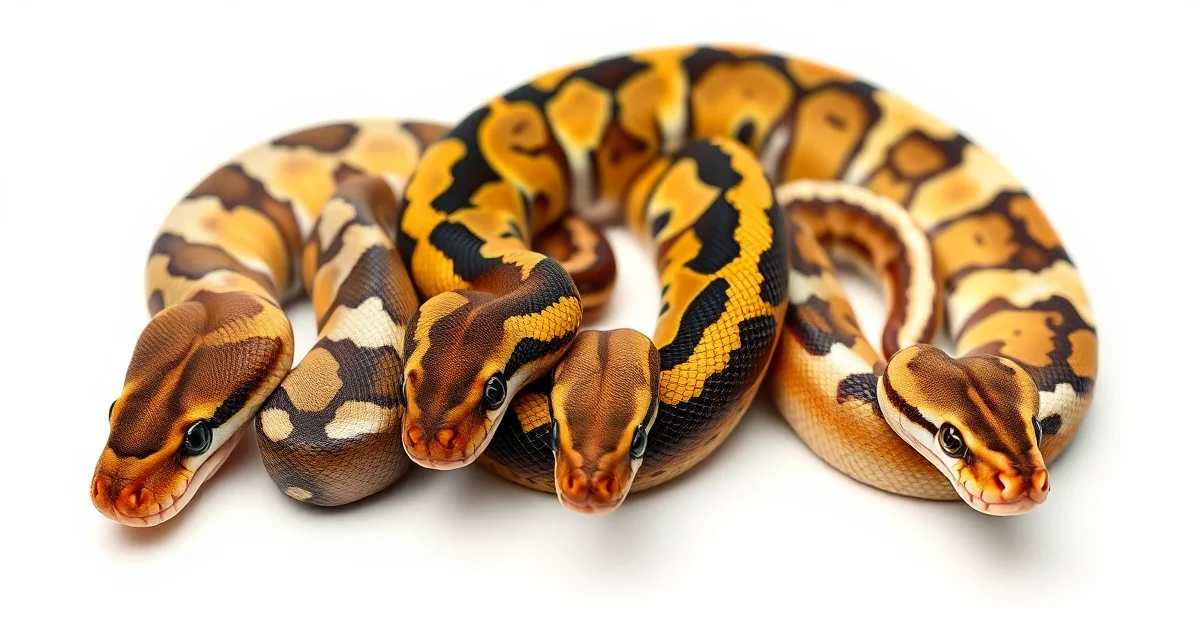
Ball Python Morph Naming Conventions: How They Work and Why Names Vary
If you've spent any time in ball python genetics discussions, you've noticed that the same morph sometimes goes by multiple names, different breeders use different terms for the same combination, and there are occasional heated debates about what something "should" be called. Understanding how morph naming works - and why it's sometimes inconsistent - helps you communicate clearly about genetics and make accurate claims in your records. Breeders using integrated software report 30% less time on administrative tasks, giving you more time to develop the genetic knowledge that accurate naming requires.
TL;DR
- Ball python breeding operations require systematic record-keeping from pre-season preparation through end-of-season sales.
- Females at 1,200-1,500g or more are the target weight before introducing them to a breeding male.
- Ovulation detection is the key event that anchors pre-lay shed and lay date calculations.
- Clutch profitability guide depends on understanding actual cost basis per animal, not just gross sale revenue.
- Well-documented animals with complete feeding histories and clear genetic records consistently sell faster and at higher prices.
How Ball Python Morphs Get Named
When a novel mutation is first identified in captivity, the breeder who produced and proved it typically names it. There's no central registry or regulatory body governing morph names in the ball python hobby. This is the root cause of most naming inconsistency.
A mutation may get:
- A descriptive name based on appearance ("Fire," "Lesser," "Butter")
- A trade name created by the discovering breeder ("Coral Glow," which is a trade name for Banana)
- Multiple names if different breeders discover the same mutation independently ("Banana" and "Coral Glow")
- Names that evolve as understanding of the genetics changes
Common Naming Conventions
Single morph names: Pastel, Cinnamon, Albino. These refer to specific genetic mutations.
Combination morph names: When two or more morphs are combined, the resulting animal often gets a combination name. Sometimes these combinations have their own dedicated names:
- Spider + Pastel = Bumblebee
- Pastel + Pinstripe = Lemon Blast
- Cinnamon + Pastel = Pewter
Sometimes they're just listed as the morph components: "Banana Pied" rather than a single combined name.
"Het" notation: An animal that carries a recessive gene but doesn't visually express it is described as "het [morph name]." Het Albino, het Pied, het Clown. "100% het" means confirmed to carry the gene; "66% het" or "pos het" means statistically possible but unconfirmed.
Super form notation: The homozygous version of a co-dominant is typically called "Super [Morph Name]": Super Pastel, Super Cinnamon. Exception: many super forms have their own distinct names (Ivory for super Yellow Belly, BEL for super Mojave/Lesser).
Sources of Naming Confusion
Same gene, different names: Banana and Coral Glow are the same genetic mutation, named independently by different breeders. Both terms remain in active use. When buying or selling, clarify: "Is this Banana (same as Coral Glow)?" if there's any ambiguity.
Different genes, similar appearances: Some morphs look similar but are genetically distinct. Cinnamon and Black Pastel look alike but are separate (though allelic) mutations. Without documentation, phenotype alone can't always distinguish them.
Complex allele names: When multiple alleles at the same locus are discovered, naming gets complicated. The Mojave/Lesser/Phantom/Russo complex has multiple alleles that affect the same locus, each with its own name.
Line names vs. genetic names: Some breeders name their specific lines differently from the standard community name. "XYZ Reptiles Fire" might be a branded line of Fire morphs with specific visual characteristics.
How to Communicate Clearly About Morphs
When listing or documenting animals:
- Use the genetic names that are most widely understood (Banana rather than Coral Glow if your audience is more familiar with Banana, or vice versa)
- When in doubt, list both names: "Banana (Coral Glow)"
- For allelic morphs, specify which allele: "Cinnamon" not just "Cinnamon/Black Pastel complex"
- For hets, specify confidence: "confirmed 100% het Pied" vs. "possible het Pied"
When buying animals:
- Ask for genetic documentation, not just a morph name
- Verify that the name being used matches the genetic description you expect
Morph Names in Your Records
Your animal records need to use morph names consistently. Pick a naming convention and stick to it throughout your records. When an animal has multiple possible names for the same gene (Banana/Coral Glow, for example), choose one and note the alternative in parentheses.
Document morph genetics with precision in HatchLedger's genetics records so your records are internally consistent and understandable to anyone reviewing them. For how different tools handle genetics documentation, see the reptile breeder software comparison.
Frequently Asked Questions
What is the best approach to ball python morph naming conventions?
Use the most widely recognized name for each morph in your market and be specific when naming is ambiguous (Banana/Coral Glow). Don't assume that because you call something one name, your buyer uses the same name. When documenting genetics in your records, pick a consistent naming convention and maintain it across all records. For allelic morphs and other genetically complex situations, specify exactly which allele or combination you're describing.
How do professional breeders handle ball python morph naming in their programs?
Established breeders typically use the naming conventions that are most common on MorphMarket and in the broader community for their market-facing communication, then maintain precise genetic documentation in their records. When selling internationally or across different hobby communities, they include alternative names for morphs that vary by region or breeder preference.
What software helps manage ball python morph naming and genetics records consistently?
HatchLedger is purpose-built for reptile breeders, connecting animal records, breeding history, clutch outcomes, and financial tracking in one system. Unlike generic spreadsheets, it's designed around the specific workflow of an active breeding season. Free for up to 20 animals.
What records should every reptile breeder maintain per animal?
At minimum: acquisition date and source, morph and genetic documentation, feeding log, weight history, any veterinary treatments, and breeding history including pairing dates, clutch of origin for captive-bred animals, and offspring records. These records serve your own management, buyer documentation, regulatory compliance, and long-term genetic tracking.
How should reptile breeders document genetics for buyers?
A complete genetic record for sale includes the animal's visual morph name, confirmed het genes and their basis (parentage documentation or proven-out production), possible het genes with probability percentages, hatch date, and parent morph information. Including clutch-of-origin records lets buyers independently verify the claims.
Get Started with HatchLedger
Every part of a ball python breeding operation -- from pairing records to clutch documentation to financial tracking -- works better when the data is connected rather than scattered across notebooks and spreadsheets. HatchLedger is built for exactly that. Try it free with up to 20 animals.