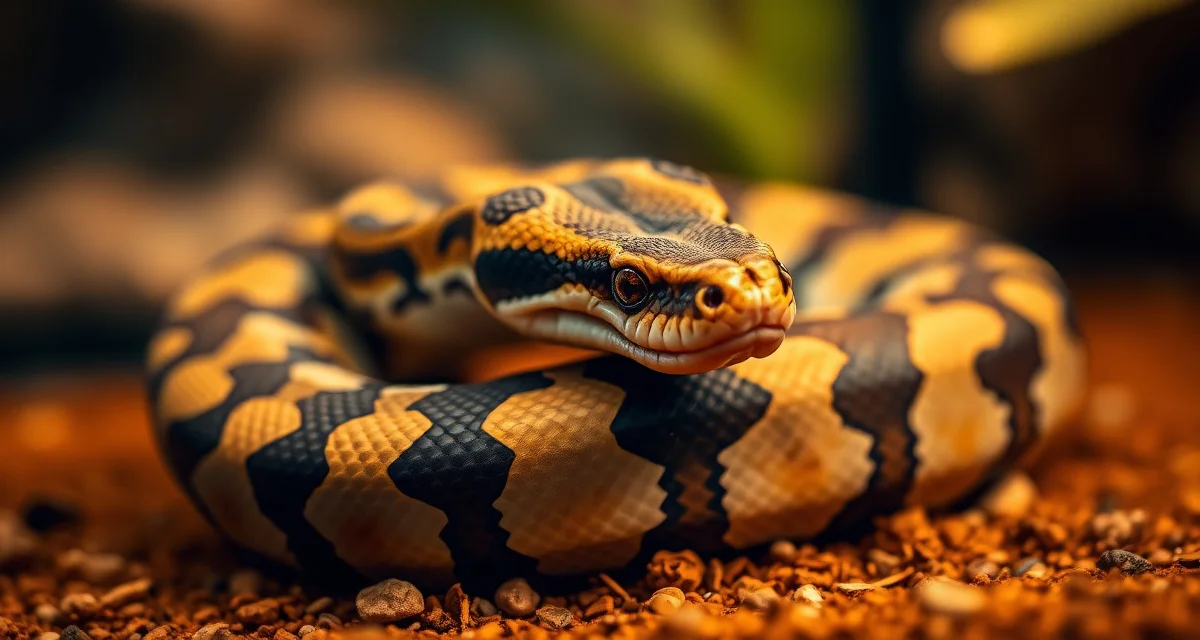
Female Ball Python Refusal to Breed: Causes and How to Fix It
By HatchLedger Editorial Team · Published 2025-06-13 · Updated Mar 13, 2026
One of the more frustrating situations in a breeding season is a female who simply won't cooperate. You introduce a proven male, he's interested, and she retreats, puffs up defensively, or simply ignores him entirely over multiple sessions. Before writing off a season, it's worth systematically troubleshooting the likely causes. Breeders using integrated software report 30% less time on administrative tasks, which frees you up for the methodical investigation that breeding refusal troubleshooting requires.
TL;DR
- Ball python breeding operations require systematic record-keeping from pre-season preparation through end-of-season sales.
- Females at 1,200-1,500g or more are the target weight before introducing them to a breeding male.
- Ovulation detection is the key event that anchors pre-lay shed and lay date calculations.
- Clutch profitability guide depends on understanding actual cost basis per animal, not just gross sale revenue.
- Well-documented animals with complete feeding histories and clear genetic records consistently sell faster and at higher prices.
What "Refusal to Breed" Actually Looks Like
Distinguishing refusal from different breeding behaviors:
Genuine breeding refusal: The female actively avoids the male, retreats to hides, shows defensive behavior when the male approaches, or shows no receptivity signs after multiple introduction sessions.
Pre-receptive female: The female isn't showing active refusal but isn't actively engaging either. This is often just a timing issue - she may not yet be in follicular development.
Post-receptive female: A female who has ovulated may show declining interest in further pairings. This is normal and appropriate after ovulation.
Distinguishing these states requires watching the interactions carefully rather than just logging "not interested."
Common Causes of Female Breeding Refusal
Wrong timing: The most common reason for apparent refusal is that the female isn't in the appropriate phase of her reproductive cycle yet. Follicular development needs to be active for a female to be receptive. If you start pairing in October but a specific female's follicular development doesn't progress until December, she won't be receptive in October regardless of how proven the male is.
Underconditioned female: A female below her target breeding weight or in poor body condition often won't cycle into breeding readiness. Her physiology prioritizes survival over reproduction.
Male compatibility issues: Some pairs simply don't mesh. A male who is very active and persistent may stress a particular female into defensive behavior rather than receptivity. Trying a different male sometimes produces a completely different result.
Cooling issues: If your cooling protocol wasn't implemented or wasn't deep enough, the hormonal cycling that primes females for breeding may not have been adequately triggered. A female who wasn't properly cycled may not reach a receptive state in a typical breeding season window.
Health issues: Parasites, respiratory infection, or other health problems suppress reproductive function. A female dealing with a subclinical health issue may cycle poorly or not at all.
Stress: High-stress environments (incorrect temperatures, inadequate hides, too much handling, other animals visible) can suppress breeding behavior even in otherwise healthy females.
Age: Very young females (under 2 years or under weight) won't cycle into breeding readiness. Very old females may have reduced or absent cycling.
Troubleshooting Steps
Work through these systematically before concluding the season is lost for that female:
- Check your timing. Are you in a window when her follicles should be developing? Have you palpated for follicular development? If follicles aren't present yet, more time - not more pairings - is the answer.
- Assess her condition. Is she at target breeding weight? If she's significantly underweight, a breeding season may need to be skipped.
- Try a different male. If your primary male shows no results after 4-6 sessions, introduce a different proven male.
- Check temperatures. Is the female's enclosure at appropriate temperatures? Is your cooling protocol adequate?
- Review stress factors. Is the female being handled frequently? Is there excessive noise or activity near her enclosure during pairing sessions?
- Consider a health check. If none of the above explains the refusal, a veterinary check may reveal a subclinical issue.
- Accept a skipped season. Some seasons, a female just doesn't cycle into breeding readiness. Forcing the issue with excessive pairing attempts doesn't overcome a physiological state - it just adds stress.
Logging Refusal Patterns Over Multiple Seasons
When a female consistently shows delayed or absent receptivity, your records across multiple seasons become the diagnostic tool. Does she consistently not show receptivity until January? Does she produce a clutch every other year rather than annually? Is refusal associated with seasons where she entered underweight?
Track all pairing attempt outcomes in HatchLedger's breeding records, including "not receptive" observations, so you can identify patterns over multiple seasons. For tools that support longitudinal breeding behavior tracking, see the reptile breeder software comparison.
Frequently Asked Questions
What is the best approach to female ball python refusal to breed?
Work through a systematic checklist: confirm timing (is she in follicular development?), check condition (is she at target weight?), try a different male, verify temperatures and cooling protocol, assess stress factors, and consider a health check if nothing obvious explains the issue. Accept that some females have later receptivity windows and adjust your pairing timing accordingly rather than trying harder within an unproductive window.
How do professional breeders handle ball python females that won't breed?
Experienced breeders first review their records to understand each female's historical receptivity pattern before concluding something is wrong in the current season. Many females have consistent individual patterns (later-cycling, biennial layers, etc.) that are only visible through multi-year records. For females showing a change from their historical pattern, breeders investigate the specific potential causes - weight, health, timing - before accepting a lost season.
What software helps manage ball python breeding refusal and pairing outcome records?
HatchLedger is purpose-built for reptile breeders, connecting animal records, breeding history, clutch outcomes, and financial tracking in one system. Unlike generic spreadsheets, it's designed around the specific workflow of an active breeding season. Free for up to 20 animals.
What records should every reptile breeder maintain per animal?
At minimum: acquisition date and source, morph and genetic documentation, feeding log, weight history, any veterinary treatments, and breeding history including pairing dates, clutch of origin for captive-bred animals, and offspring records. These records serve your own management, buyer documentation, regulatory compliance, and long-term genetic tracking.
How should reptile breeders document genetics for buyers?
A complete genetic record for sale includes the animal's visual morph name, confirmed het genes and their basis (parentage documentation or proven-out production), possible het genes with probability percentages, hatch date, and parent morph information. Including clutch-of-origin records lets buyers independently verify the claims.
What is Female Ball Python Refusal to Breed: Causes and How to Fix It?
Female ball python refusal to breed refers to a situation where a female actively avoids or rejects a male during breeding season. Signs include retreating to hides, defensive puffing, ignoring the male entirely, or showing aggression when approached. This is distinct from normal breeding pauses. Common causes include insufficient weight (below 1,200–1,500g), inadequate cooling cycles, stress, health issues, or poor timing relative to the female's reproductive cycle.
How much does Female Ball Python Refusal to Breed: Causes and How to Fix It cost?
Addressing female ball python breeding refusal has no fixed monetary cost—it primarily requires time, patience, and systematic troubleshooting. Expenses may arise if health issues require a vet visit, if you need to improve enclosure conditions, or if you invest in better temperature and humidity equipment. Using breeding management software can reduce administrative overhead, freeing more time for hands-on observation without adding significant cost to your operation.
How does Female Ball Python Refusal to Breed: Causes and How to Fix It work?
Fixing breeding refusal involves a methodical process: verify the female meets weight thresholds, confirm your cooling protocol is appropriate, assess enclosure conditions for stress factors, and review feeding history. Introduce the male under supervised pairings and track each session. If the female remains unresponsive, a health check is recommended. Systematic record-keeping helps identify patterns—such as whether refusal correlates with incomplete conditioning or a missed ovulation window.
What are the benefits of Female Ball Python Refusal to Breed: Causes and How to Fix It?
Troubleshooting breeding refusal helps you salvage what might otherwise be a lost season. Identifying the root cause—whether weight, health, stress, or timing—lets you make targeted corrections. Systematic record-keeping throughout the process builds a documented breeding history that increases animal value, helps detect issues earlier in future seasons, and supports better decision-making around pairing timing, clutch expectations, and overall herd management.
Who needs Female Ball Python Refusal to Breed: Causes and How to Fix It?
Ball python breeders of all experience levels encounter female breeding refusal at some point. It is especially relevant to those working with young females approaching breeding weight for the first time, breeders expanding their herd with new animals of unknown history, and anyone troubleshooting a low-production season. Breeders who maintain detailed records are better positioned to identify patterns and intervene early when a female shows signs of reluctance.
How long does Female Ball Python Refusal to Breed: Causes and How to Fix It take?
The timeline varies depending on the underlying cause. If refusal stems from insufficient weight or an incomplete cooling cycle, resolution may take weeks to months of preparation before re-attempting pairings. Health-related refusal depends on diagnosis and recovery. In some cases, simply adjusting pairing timing within the same season resolves the issue within a few sessions. Tracking ovulation is key—breeding attempts timed correctly around this event are significantly more likely to succeed.
Related Articles
- Ball Python Shedding Problems: Causes, Prevention, and Treatment
- Ball Python Egg Deformation: Causes and Incubation Adjustments
Sources
- USARK (United States Association of Reptile Keepers)
- Association of Reptilian and Amphibian Veterinarians (ARAV)
- World of Ball Pythons (WoBP genetics reference database)
- MorphMarket (reptile industry marketplace)
- Reptiles Magazine (Bowtie Inc.)
Get Started with HatchLedger
Every part of a ball python breeding operation -- from pairing records to clutch documentation to financial tracking -- works better when the data is connected rather than scattered across notebooks and spreadsheets. HatchLedger is built for exactly that. Try it free with up to 20 animals.