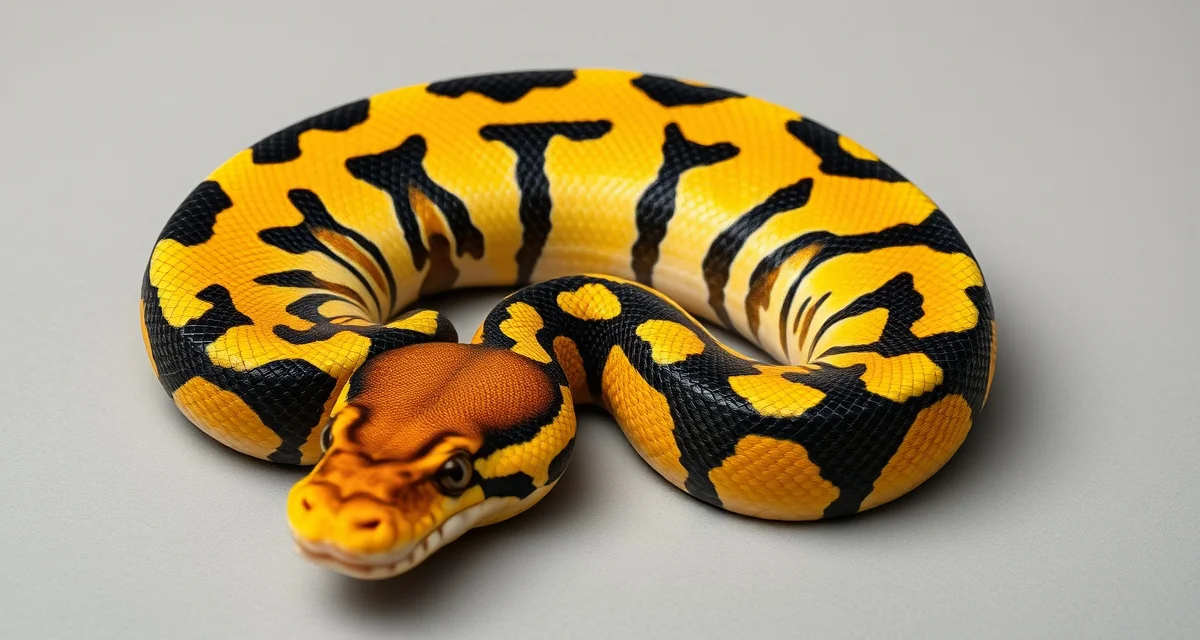
Producing Super Forms from Co-Dominant Ball Python Morphs
Super forms are the homozygous versions of co-dominant mutations - produced when an offspring inherits two copies of the same co-dominant gene, one from each parent. For most co-dominant morphs, the super form looks dramatically different from the het version and can be a striking commercial target in its own right. Breeders using integrated software report 30% less time on administrative tasks, which matters when you're tracking the co-dominant pairings that super form production requires.
TL;DR
- Ball python breeding operations require systematic record-keeping from pre-season preparation through end-of-season sales.
- Females at 1,200-1,500g or more are the target weight before introducing them to a breeding male.
- Ovulation detection is the key event that anchors pre-lay shed and lay date calculations.
- Clutch profitability guide depends on understanding actual cost basis per animal, not just gross sale revenue.
- Well-documented animals with complete feeding histories and clear genetic records consistently sell faster and at higher prices.
What Is a Super Form?
In genetics, a co-dominant mutation is one where one copy changes the phenotype (producing the typical morph appearance) and two copies produce a distinct, usually more dramatic appearance. The two-copy version is the super form or homozygous form.
Examples:
- Pastel (one copy) vs. Super Pastel (two copies)
- Mojave (one copy) vs. Super Mojave or BEL (two copies)
- Yellow Belly (one copy) vs. Ivory (two copies)
- Fire (one copy) vs. Super Fire (two copies, typically white animal)
Each super form has its own distinctive visual characteristics, but they share the production mechanism: both parents must contribute one copy of the mutation.
How to Produce Super Forms
To produce a super form, you need at least one parent that carries two copies of the co-dominant gene (a super form itself), or both parents must carry one copy each (the standard morph).
Pairing two het morphs (standard x standard):
- 25% super form
- 50% standard morph
- 25% normal
Pairing a super form x standard morph:
- 50% standard morph
- 50% super form
Pairing two super forms:
- 100% super form offspring
The most efficient path to super form production depends on what animals you have available. If you already have a super form, pairing it to any animal with the same co-dominant gene gives 50% super form production from that clutch.
Super Forms Worth Targeting
Super Pastel: Extremely bright, nearly fluorescent yellow with dramatically reduced pattern. Common but consistently popular as a combination partner and visually striking on its own.
Super Mojave / Blue Eyed Leucistic (BEL): Completely white ball python with blue eyes. The BEL is one of the most commercially desirable animals regularly produced. Super Mojave, Super Lesser, and Mojave/Lesser (one of each allele) all produce BEL.
Ivory (Super Yellow Belly): Pale ivory coloration with a thin dorsal stripe. Striking in its own right and effective as a base for many combinations.
Super Fire / Super Vanilla: Dramatically white or light-colored animals. The Super Fire is often nearly completely white.
Super Cinnamon / Super Black Pastel: As noted in the genetics articles, these super forms frequently show spinal kinking and are generally not bred deliberately by responsible breeders.
Planning Super Form Production
Before deciding to target a super form, consider:
- Is the super form visually distinct from the standard morph? Some super forms are dramatically different (BEL, Ivory). Others are modestly different. The commercial value of the super form depends partly on this distinction.
- What does the super form produce in further pairings? A super form that guarantees all offspring carry at least one copy of the gene is useful as a breeding animal, not just a showpiece.
- Does producing the super form require troublesome pairings? Avoid pairings that risk lethal or neurologically impaired super forms (Cinnamon x Cinnamon, Spider x Spider homozygous).
- Is the super form worth the 25% production rate cost? Getting 25% super forms from standard x standard pairings means 75% of the clutch isn't what you're targeting. Is that 75% also saleable?
Log your super form production targets and outcomes in HatchLedger's genetics and project records. For how different platforms handle genetics project documentation, see the reptile breeder software comparison.
Frequently Asked Questions
What is the best approach to producing ball python super forms from co-dominant morphs?
Identify which super form is your target and ensure both parent animals carry at least one copy of the relevant co-dominant gene. The most efficient production uses a super form parent paired to a standard morph parent (50% super form production). If you don't have a super form yet, pairing two standard morphs gives 25% super forms. Avoid targeting super forms with welfare problems (super Cinnamon/Black Pastel kinking, super Spider lethality).
How do professional breeders handle super form production in ball python programs?
Experienced breeders who target specific super forms typically acquire or produce the standard morph first, then select the best super form from a clutch to use as a foundation breeding animal for subsequent seasons. The super form becomes a breeding tool as much as a product - pairing the BEL or Ivory back to other morphs produces 50% of its class in the offspring. They track super form production rates by pairing to verify outcomes match expected ratios.
What software helps manage ball python super form genetics records?
HatchLedger is purpose-built for reptile breeders, connecting animal records, breeding history, clutch outcomes, and financial tracking in one system. Unlike generic spreadsheets, it's designed around the specific workflow of an active breeding season. Free for up to 20 animals.
What records should every reptile breeder maintain per animal?
At minimum: acquisition date and source, morph and genetic documentation, feeding log, weight history, any veterinary treatments, and breeding history including pairing dates, clutch of origin for captive-bred animals, and offspring records. These records serve your own management, buyer documentation, regulatory compliance, and long-term genetic tracking.
How should reptile breeders document genetics for buyers?
A complete genetic record for sale includes the animal's visual morph name, confirmed het genes and their basis (parentage documentation or proven-out production), possible het genes with probability percentages, hatch date, and parent morph information. Including clutch-of-origin records lets buyers independently verify the claims.
Sources
- USARK (United States Association of Reptile Keepers)
- Association of Reptilian and Amphibian Veterinarians (ARAV)
- World of Ball Pythons (WoBP genetics reference database)
- MorphMarket (reptile industry marketplace)
- Reptiles Magazine (Bowtie Inc.)
Get Started with HatchLedger
Every part of a ball python breeding operation -- from pairing records to clutch documentation to financial tracking -- works better when the data is connected rather than scattered across notebooks and spreadsheets. HatchLedger is built for exactly that. Try it free with up to 20 animals.