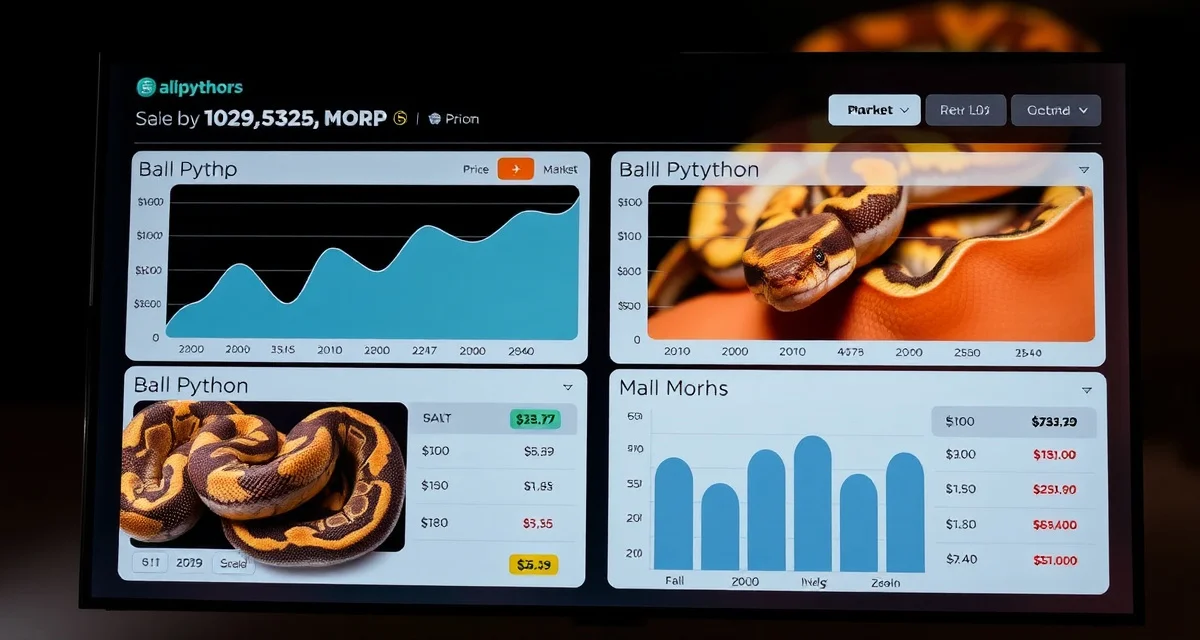
Ball Python Morph Pricing Trends: How to Research and Use Market Data
By HatchLedger Editorial Team · Published 2025-06-13 · Updated Mar 13, 2026
The ball python morph market moves constantly. A combination that commanded $800 three years ago might sell for $250 today. A morph that was uncommon five years ago may now be in widespread production. Understanding why prices move and how to track current market data is one of the most commercially important skills for any breeding operation that sells animals. Breeders using integrated software report 30% less time on administrative tasks, giving you time for the market research that keeps your pricing current.
TL;DR
- Ball python breeding operations require systematic record-keeping from pre-season preparation through end-of-season sales.
- Females at 1,200-1,500g or more are the target weight before introducing them to a breeding male.
- Ovulation detection is the key event that anchors pre-lay shed and lay date calculations.
- Clutch profitability guide depends on understanding actual cost basis per animal, not just gross sale revenue.
- Well-documented animals with complete feeding histories and clear genetic records consistently sell faster and at higher prices.
Why Ball Python Prices Change
Production increases: When a morph that was once rare is produced by many breeders at scale, supply increases and prices fall. Pastel, which was a premium morph a decade ago, now sells for $40-80 because it's in virtually every breeding program.
Demand trends: Some morphs gain popularity through social media, prominent breeders showcasing them, or appearance in high-profile collections. Others fall out of fashion. Demand shifts affect what buyers are willing to pay.
Combination complexity: Simple, widely produced combinations decline in value faster than complex combinations that require multiple generations and rare base animals to produce.
Economic conditions: The reptile market isn't immune to broader economic trends. Consumer spending affects discretionary purchases like high-end reptiles.
New morphs: When genuinely new mutations are established and priced at premium rates, this ripples through the market as breeders price related combinations accordingly.
Where to Research Current Prices
MorphMarket (morphmarket.com): The most important pricing resource. Search for the specific combination you're researching. Look at active listings and, if available, recently sold listings. Pay attention to animal age, sex (females are worth more), and condition. Listings that have been active for 60+ days at a high price aren't selling at that price.
Online reptile communities and forums: Facebook groups for ball python breeders, Reddit's r/ballpython, and dedicated ball python forums have active discussions where breeders share what's selling and at what price.
Reptile expos: Attending an expo as a buyer-observer (even without purchasing) gives you real transaction price data. What are established breeders actually moving animals at?
Asking other breeders: Most experienced breeders are willing to give general guidance on current market rates for specific combinations, particularly if you're asking about an area they don't directly compete in.
Reading the Data Correctly
Active listing price ≠ market price. A seller can list an animal at any price. What matters is what actually sells.
Time on market matters. An animal that's been listed for 3 months at $800 is not a $800 animal; it's an animal trying to be a $800 animal without success.
Condition and documentation quality affect price. A well-photographed, documented, healthy animal in prime condition will sell above the average for its morph. A poorly presented animal will sell below average.
Female vs. male premium. Always compare female prices to females and male prices to males.
Identifying Rising vs. Falling Morphs
Signs a morph is likely declining in value:
- Many breeders producing it at scale (check how many MorphMarket listings exist)
- Been in wide production for several years
- Social media interest declining
- Prices on active listings trending downward compared to historical norms
Signs a morph may be rising or holding value:
- Still relatively few producers
- Recently established or popularized
- High social media engagement in the reptile community
- Limited production due to multi-generation recessive requirements
This analysis helps you make project planning decisions. Investing in a project that targets a declining morph combination for a 3-year timeline means you may be entering a market that's further below today's prices by the time your animals are ready to sell.
Track your actual sale prices by morph and date in HatchLedger's sales records, creating your own market dataset from your real transactions. This personal sales history, combined with broader market research, gives you the most accurate picture for your specific operation. For tools that support sales tracking alongside production records, see the reptile breeder software comparison.
Frequently Asked Questions
What is the best approach to researching ball python morph pricing trends?
Use MorphMarket as your primary source, focusing on sold listings and currently active listings that are successfully moving (not those sitting for months). Cross-reference with expo pricing and community discussions. Track your own actual sale prices across seasons to build a personal price history. Treat list prices as asking prices, not market prices, until you see evidence the market is paying them.
How do professional breeders handle ball python morph market research?
Established breeders typically review MorphMarket pricing quarterly and adjust their asking prices accordingly. They attend expos partly for the market intelligence they provide. They also think 1-3 years ahead, evaluating whether the combinations they're starting now will be in surplus or shortage by the time the animals are ready for market. Project planning that ignores current pricing trends can result in producing animals that don't cover their production costs.
What software helps manage ball python morph sale price tracking?
HatchLedger is purpose-built for reptile breeders, connecting animal records, breeding history, clutch outcomes, and financial tracking in one system. Unlike generic spreadsheets, it's designed around the specific workflow of an active breeding season. Free for up to 20 animals.
What records should every reptile breeder maintain per animal?
At minimum: acquisition date and source, morph and genetic documentation, feeding log, weight history, any veterinary treatments, and breeding history including pairing dates, clutch of origin for captive-bred animals, and offspring records. These records serve your own management, buyer documentation, regulatory compliance, and long-term genetic tracking.
How should reptile breeders document genetics for buyers?
A complete genetic record for sale includes the animal's visual morph name, confirmed het genes and their basis (parentage documentation or proven-out production), possible het genes with probability percentages, hatch date, and parent morph information. Including clutch-of-origin records lets buyers independently verify the claims.
What is Ball Python Morph Pricing Trends: How to Research and Use Market Data?
Ball Python Morph Pricing Trends: How to Research and Use Market Data is a practical guide for reptile breeders covering how and why ball python morph prices fluctuate over time. It explains the forces behind price changes—such as increased production, shifting demand, and genetic saturation—and teaches breeders how to track current market data systematically. The goal is to help breeding operations price their animals competitively and profitably using real market intelligence rather than guesswork.
How much does Ball Python Morph Pricing Trends: How to Research and Use Market Data cost?
Researching ball python morph pricing is free if you use publicly available tools like marketplace listings, breeder forums, and reptile expos. However, the real cost is time—staying current requires ongoing monitoring of platforms like Morphmarket and tracking sold listings, not just asking prices. Breeders who invest in record-keeping software reduce administrative time by around 30%, freeing more hours for the market research that directly impacts how accurately they price and sell animals.
How does Ball Python Morph Pricing Trends: How to Research and Use Market Data work?
Effective morph pricing research works by combining multiple data sources: monitoring active and completed listings on reptile marketplaces, tracking expo sales results, following breeder announcements about new production animals, and analyzing which combos are gaining or losing popularity. You cross-reference these signals against your own cost basis—feed, housing, health care, and breeder acquisition costs—to determine whether a morph can be sold profitably at current market rates.
What are the benefits of Ball Python Morph Pricing Trends: How to Research and Use Market Data?
Understanding morph pricing trends helps breeders avoid underpricing high-value animals or overstocking morphs that are declining in value. It enables smarter pairing decisions, better clutch planning, and more confident sales conversations with buyers. Breeders with documented animals—complete feeding histories and clear genetic records—consistently sell faster and at higher prices. Market awareness also helps identify emerging demand before a morph becomes saturated, giving early producers a significant pricing advantage.
Who needs Ball Python Morph Pricing Trends: How to Research and Use Market Data?
Any ball python breeder who sells animals commercially needs to understand morph pricing trends. This includes hobbyist breeders scaling up, established operations managing multiple projects, and newer breeders entering the market. It's especially critical for breeders producing combination morphs, where value depends heavily on current demand for specific genetic pairings. Even small-scale breeders benefit from understanding why prices move so they can time sales strategically and set expectations with buyers.
How long does Ball Python Morph Pricing Trends: How to Research and Use Market Data take?
Researching morph pricing is an ongoing process, not a one-time task. Initial research to understand a morph's market position takes a few hours of reviewing recent listings and sales history. Staying current requires regular check-ins—ideally monthly—especially before breeding season when pairing decisions lock in your future inventory. Tracking price trends over a full season gives you the clearest picture of whether a morph is appreciating, stable, or declining in market value.
Related Articles
- Ball Python Clown Morph Breeding Guide: Recessive Genetics and Top Combos
- Ball Python Enchi Morph: Breeding Guide, Top Combos, and Genetic Ratios
Sources
- USARK (United States Association of Reptile Keepers)
- Association of Reptilian and Amphibian Veterinarians (ARAV)
- World of Ball Pythons (WoBP genetics reference database)
- MorphMarket (reptile industry marketplace)
- Reptiles Magazine (Bowtie Inc.)
Get Started with HatchLedger
Every part of a ball python breeding operation -- from pairing records to clutch documentation to financial tracking -- works better when the data is connected rather than scattered across notebooks and spreadsheets. HatchLedger is built for exactly that. Try it free with up to 20 animals.