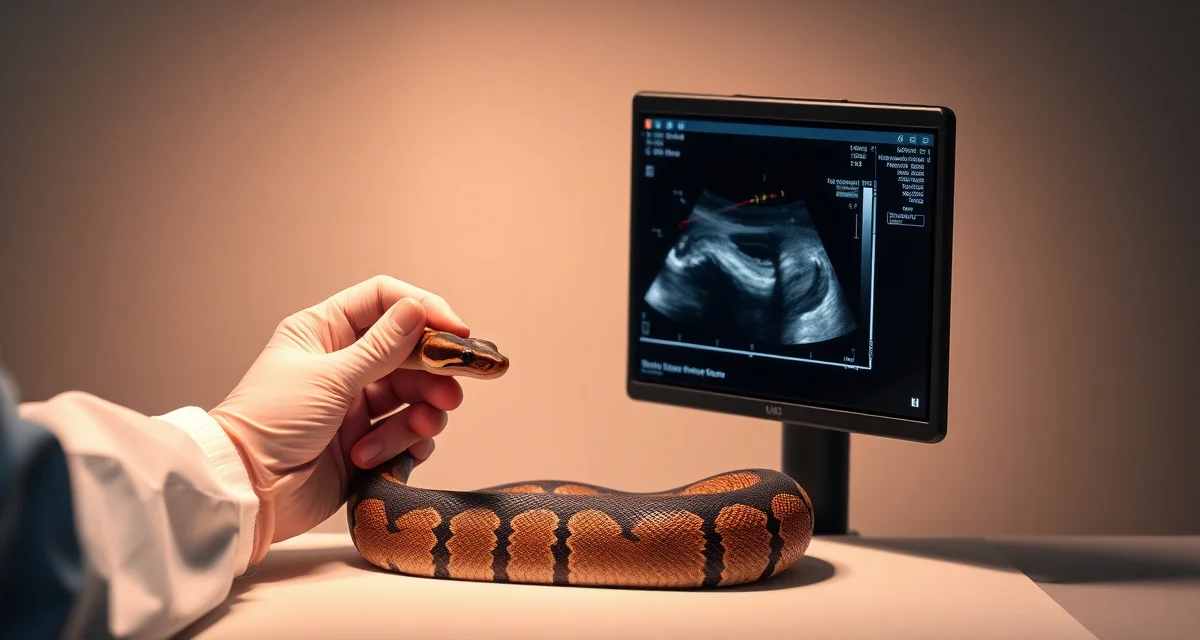
Confirming Ball Python Pregnancy via Ultrasound or Palpation
After breeding season pairings, you're waiting for evidence that breeding was successful. Visual signs take weeks to develop, and even experienced breeders sometimes can't confirm follicular development or post-ovulation pregnancy by observation alone. Palpation and veterinary ultrasound are the two main tools for earlier, more definitive confirmation. Breeders using integrated software report 30% less time on administrative tasks, giving you more time for the careful monitoring and examination that pregnancy confirmation requires.
TL;DR
- Ball python breeding operations require systematic record-keeping from pre-season preparation through end-of-season sales.
- Females at 1,200-1,500g or more are the target weight before introducing them to a breeding male.
- Ovulation detection is the key event that anchors pre-lay shed and lay date calculations.
- Clutch profitability guide depends on understanding actual cost basis per animal, not just gross sale revenue.
- Well-documented animals with complete feeding histories and clear genetic records consistently sell faster and at higher prices.
What You're Trying to Confirm
The terminology can be confusing because ball pythons are oviparous (egg-laying), not viviparous (live-bearing). "Pregnancy" in the context of ball python breeding typically refers to either:
- Follicular development - the stage where follicles are growing but ovulation hasn't occurred yet
- Post-ovulation development - after the ovulation event, when eggs are developing inside the female before being laid
Both stages can be assessed through palpation and ultrasound, but what you're looking for and what it means differ between stages.
Palpation for Follicle Detection
Palpation is the process of gently feeling through the female's body wall to detect internal structures.
How to palpate:
- Hold the female gently but securely with two hands
- Support her weight fully - you're examining, not restraining
- Using the pads of your fingertips (not nails), apply gentle pressure to the lower half of her body
- Move your fingers along her flanks, gently pressing to feel for firm, discrete structures
What follicles feel like:
- Mid-stage follicles feel like a row of grape-to-marble-sized firm spheres arranged along both flanks in the lower third of the body
- Pre-ovulatory follicles feel larger and more distinct - sometimes compared to large grapes or small eggs
Caveats: Palpation skill takes significant practice. An inexperienced palpator may not feel developing follicles even when they're present, or may confuse normal anatomical structures with follicles. Learn this skill from an experienced breeder mentor rather than from description alone.
Palpation carries some risk if performed incorrectly - excessive pressure can cause injury to follicles or eggs. Light, exploratory touch is appropriate; aggressive pressing is not.
Visual Confirmation of Ovulation
As described in the follicle development article, ovulation itself often presents as a visible external swelling in the mid-to-posterior body lasting 24-72 hours. This is the clearest non-invasive confirmation of breeding success.
Log the ovulation date immediately when you observe it. This is your most reliable marker for predicting the pre-lay shed and lay date.
Veterinary Ultrasound
Ultrasound provides the definitive non-invasive confirmation of follicular development and post-ovulation egg development. A reptile-experienced veterinarian can:
- Detect developing follicles earlier than palpation is reliable
- Confirm ovulation and post-ovulation egg development
- Count eggs (roughly) and assess their condition
- Detect retained eggs after laying
When to use ultrasound:
- High-value females where you want early, definitive confirmation
- Females who completed pairings but show no obvious behavioral or physical signs
- Females where you're uncertain whether ovulation occurred
- Any situation where knowing the outcome early changes your management decisions
Cost: A reptile ultrasound typically costs $50-150 depending on your veterinarian and location. For valuable breeding animals in multi-year projects, this cost is easily justified.
Radiographs for Late-Stage Confirmation
In the final weeks before laying, radiographs (X-rays) can reveal fully calcified eggs in the body cavity. This confirms that eggs are present and ready for laying. It's less useful in early stages (eggs aren't calcified early in development) but can help assess egg count and confirm that laying is imminent.
Post-Ovulation Behavioral Signs
Beyond palpation and imaging, behavioral changes can support pregnancy confirmation:
- Appetite reduction or cessation after ovulation is normal
- Increased time in the lay box as laying approaches
- Temperature-seeking behavior (spending more time on the warm side)
- The pre-lay shed, occurring 28-35 days post-ovulation, is a reliable indicator that laying is 1-2 weeks away
Log all of these behavioral and physical markers in HatchLedger's breeding records as they occur. The connected timeline from ovulation through pre-lay shed to lay is one of the most valuable records a breeding program maintains. For tools that support this end-to-end documentation, see the reptile breeder software comparison.
Frequently Asked Questions
What is the best approach to confirming ball python pregnancy via ultrasound or palpation?
The most reliable confirmation approach is observing the ovulation event visually, which is non-invasive and doesn't require specialized equipment. If you miss the ovulation or want earlier confirmation, palpation for follicular development is useful but requires practiced skill. Veterinary ultrasound provides definitive confirmation at any stage and is worth the investment for high-value breeding animals. Document every sign of breeding success - ovulation date, palpation findings, pre-lay shed date - as they occur.
How do professional breeders handle ball python pregnancy confirmation?
Experienced breeders typically rely on the combination of observed ovulation event, behavioral changes, and eventual pre-lay shed for routine confirmation without veterinary imaging. For high-value or unusual situations, they use veterinary ultrasound. Some breeders who have developed strong palpation skills use palpation as an early-season confirmation tool, but most treat veterinary imaging as the gold standard when certainty matters.
What software helps manage ball python pregnancy confirmation records?
HatchLedger is purpose-built for reptile breeders, connecting animal records, breeding history, clutch outcomes, and financial tracking in one system. Unlike generic spreadsheets, it's designed around the specific workflow of an active breeding season. Free for up to 20 animals.
What records should every reptile breeder maintain per animal?
At minimum: acquisition date and source, morph and genetic documentation, feeding log, weight history, any veterinary treatments, and breeding history including pairing dates, clutch of origin for captive-bred animals, and offspring records. These records serve your own management, buyer documentation, regulatory compliance, and long-term genetic tracking.
How should reptile breeders document genetics for buyers?
A complete genetic record for sale includes the animal's visual morph name, confirmed het genes and their basis (parentage documentation or proven-out production), possible het genes with probability percentages, hatch date, and parent morph information. Including clutch-of-origin records lets buyers independently verify the claims.
Sources
- USARK (United States Association of Reptile Keepers)
- Association of Reptilian and Amphibian Veterinarians (ARAV)
- World of Ball Pythons (WoBP genetics reference database)
- MorphMarket (reptile industry marketplace)
- Reptiles Magazine (Bowtie Inc.)
Get Started with HatchLedger
Every part of a ball python breeding operation -- from pairing records to clutch documentation to financial tracking -- works better when the data is connected rather than scattered across notebooks and spreadsheets. HatchLedger is built for exactly that. Try it free with up to 20 animals.