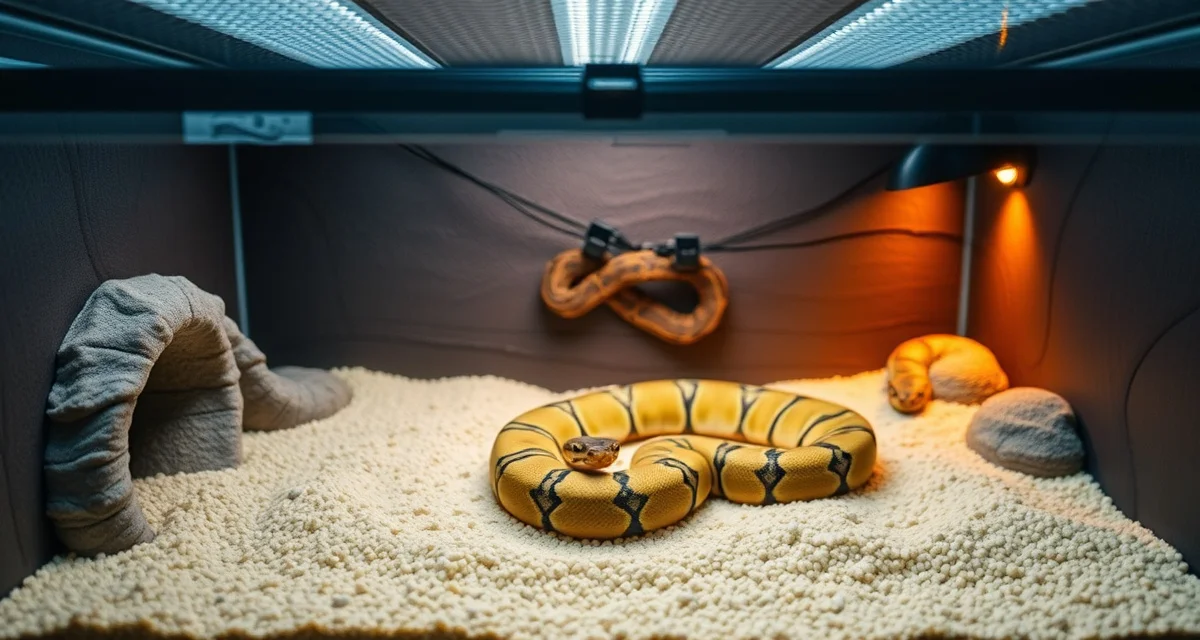
Ball Python Enclosure Setup for Breeding Programs: Optimizing for Performance
The way you house your breeding animals directly affects their breeding performance. Ball pythons in suboptimal enclosures - wrong temperature gradients, inadequate hides, poor humidity - are stressed animals. Stressed animals breed less reliably, produce smaller clutches, and are more susceptible to the health issues that sideline breeding programs. Breeders using integrated software report 30% less time on administrative tasks, giving you more time to focus on the husbandry details that produce results.
TL;DR
- Ball python breeding operations require systematic record-keeping from pre-season preparation through end-of-season sales.
- Females at 1,200-1,500g or more are the target weight before introducing them to a breeding male.
- Ovulation detection is the key event that anchors pre-lay shed and lay date calculations.
- Clutch profitability guide depends on understanding actual cost basis per animal, not just gross sale revenue.
- Well-documented animals with complete feeding histories and clear genetic records consistently sell faster and at higher prices.
Temperature Requirements for Breeding Animals
Temperature gradients matter differently for breeding animals than for pets. The key temperatures:
Hot spot (warm hide area): 88-92°F surface temperature. This is where animals thermoregulate after feeding and during digestion. Breeding females especially need access to appropriate warm temperatures during follicular development.
Cool side: 76-80°F ambient. Ball pythons need a temperature gradient to regulate their body temperature. Enclosures without a cool side prevent proper thermoregulation.
Breeding season adjustment: If you're implementing a cooling cycle, lower these by 8-12°F during the cooling period (see the brumation article for details).
Nighttime temperature: Ball pythons are more active at night, and nighttime temperatures can drop a few degrees from daytime without issue - but should not drop below 75°F for breeding animals.
Enclosure Size for Breeding Females
Breeding females grow to 3-5 kg and need appropriately sized enclosures. The old "length = enclosure length" guideline is the minimum, not the target.
For an adult breeding female at 4 feet long, a reasonable enclosure would be:
- 48" long x 24" deep x 18" high, or equivalent area
- Large enough to accommodate a proper temperature gradient
- Large enough for a standard hide on both ends
- Large enough to accommodate a lay box in the pre-lay period
Rack systems (see the rack system management article) are widely used in breeding programs for their space efficiency, but individual enclosures with more space are preferred by some breeders for large females.
Hide Setup
Every ball python enclosure needs at least two hides: one on the warm side and one on the cool side. This allows the animal to be fully enclosed and secure at any temperature along the gradient.
For breeding animals:
- Hides should be snug enough that the animal can feel the walls when curled inside
- Both hides must be completely opaque
- Replace hides that have become brittle, cracked, or difficult to clean
A ball python that can't retreat to a proper hide is a stressed ball python. A stressed ball python doesn't breed as reliably.
Humidity Management
Ball pythons need ambient humidity of 50-60% and access to a higher-humidity area (60-80%) for shedding. For breeding females, humidity management matters more during the breeding season:
- A humid hide (container with slightly damp sphagnum moss) should be available, especially during pre-lay period
- Humidity for the lay box itself should be near 80%
- Ensure water bowls are full and at an appropriate size for the animal
Humidity that's chronically too low causes recurring poor sheds, which means more handling stress and health issues during breeding season.
Substrate Options
Several substrates work well for breeding animals:
Paper towels or newsprint: Easy to spot-clean, low parasite risk, good for visual monitoring of health issues (you can see what's in the enclosure). Used heavily in rack systems.
Aspen shaving: Allows some natural burrowing behavior, reasonable humidity retention. Avoid cedar and pine, which are toxic.
Cypress mulch: Good humidity retention, naturalistic. More difficult to spot-clean than paper towels.
Coconut coir/husk: Similar to cypress, good humidity retention.
For breeding programs with multiple animals, paper towel substrate is common because of ease of cleaning and visual monitoring, even if it's less naturalistic.
Water and Hygiene
Clean, fresh water should always be available. Change water every 2-3 days minimum, or whenever visibly soiled. A dirty water bowl is a common source of bacterial exposure.
Water bowls should be large enough for the animal to soak if desired - soaking behavior increases in gravid females.
Disinfect bowls weekly with a reptile-safe disinfectant, not just rinse.
Logging Enclosure Changes
When you modify a breeding animal's enclosure setup (change hide, adjust thermostat, modify humidity), log it. If breeding performance or health changes correlate with an enclosure change, having that note in the record connects the dots.
Track enclosure notes alongside animal records in HatchLedger's breeding management system. For how tools handle combined husbandry and breeding records, see the reptile breeder software comparison.
Frequently Asked Questions
What is the best approach to ball python enclosure setup for breeding programs?
Maintain a proper temperature gradient (88-92°F warm side, 76-80°F cool side), provide completely opaque hides on both ends, manage humidity at 50-60% with a higher-humidity option available, and ensure fresh water is always accessible. Enclosure size should be appropriate for the animal - small enclosures and inadequate hides create stress that reduces breeding performance. Keep enclosures clean and any changes documented in your records.
How do professional breeders handle enclosure setup for their ball python breeding collections?
Experienced breeders optimize for consistency and efficiency. Many use PVC or similar enclosures that hold humidity and temperature well with less effort than glass. They maintain regular cleaning schedules and check thermostats and hides periodically to ensure nothing has degraded. For large collections, rack systems with consistent temperature control are standard. The goal is providing appropriate conditions consistently with minimal daily effort.
What software helps manage ball python enclosure records in a breeding program?
HatchLedger is purpose-built for reptile breeders, connecting animal records, breeding history, clutch outcomes, and financial tracking in one system. Unlike generic spreadsheets, it's designed around the specific workflow of an active breeding season. Free for up to 20 animals.
What records should every reptile breeder maintain per animal?
At minimum: acquisition date and source, morph and genetic documentation, feeding log, weight history, any veterinary treatments, and breeding history including pairing dates, clutch of origin for captive-bred animals, and offspring records. These records serve your own management, buyer documentation, regulatory compliance, and long-term genetic tracking.
How should reptile breeders document genetics for buyers?
A complete genetic record for sale includes the animal's visual morph name, confirmed het genes and their basis (parentage documentation or proven-out production), possible het genes with probability percentages, hatch date, and parent morph information. Including clutch-of-origin records lets buyers independently verify the claims.
Sources
- USARK (United States Association of Reptile Keepers)
- Association of Reptilian and Amphibian Veterinarians (ARAV)
- World of Ball Pythons (WoBP genetics reference database)
- MorphMarket (reptile industry marketplace)
- Reptiles Magazine (Bowtie Inc.)
Get Started with HatchLedger
Every part of a ball python breeding operation -- from pairing records to clutch documentation to financial tracking -- works better when the data is connected rather than scattered across notebooks and spreadsheets. HatchLedger is built for exactly that. Try it free with up to 20 animals.