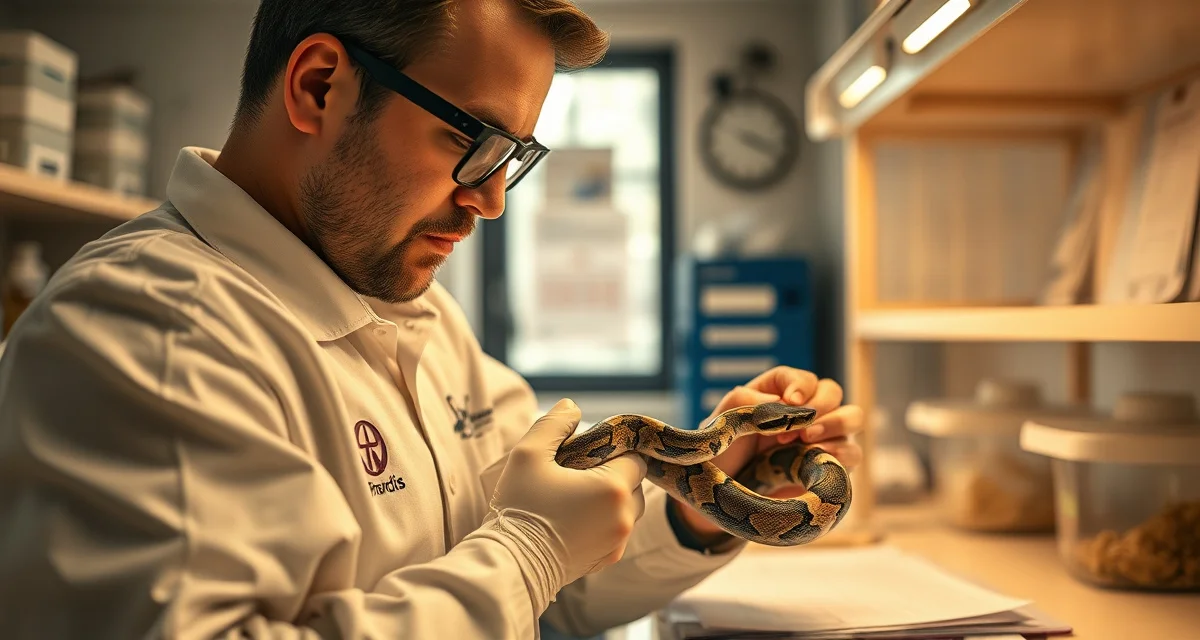
Ball Python Health Checks and Preventive Care: Advanced Breeder Guide
Breeders using integrated software report 30% less time on administrative tasks, freeing up attention for hands-on care. Preventive health monitoring in a production breeding operation isn't optional; it's how you avoid losing animals and clutches to problems that were detectable weeks before they became critical.
TL;DR
- Ball python breeding operations require systematic record-keeping from pre-season preparation through end-of-season sales.
- Females at 1,200-1,500g or more are the target weight before introducing them to a breeding male.
- Ovulation detection is the key event that anchors pre-lay shed and lay date calculations.
- Clutch profitability guide depends on understanding actual cost basis per animal, not just gross sale revenue.
- Well-documented animals with complete feeding histories and clear genetic records consistently sell faster and at higher prices.
The approach that works for a single pet ball python doesn't scale to a collection of 50-200 animals. You need systematic, scheduled checks with a clear protocol for what you're looking for and a fast way to record what you find.
Building a Health Check Routine
Schedule health checks as a dedicated activity, separate from feeding. A quick visual observation during feeding isn't sufficient for a collection; it's too easy to miss subtle early signs when you're focused on offering prey.
A thorough health check for an adult ball python takes 3-5 minutes. For a 60-animal collection, that's 3-4 hours per month for a full check of everyone. Most breeders do a quick scan (30-60 seconds) of every animal weekly and a thorough check of each animal monthly.
What to Check
Skin condition:
- Any retained shed, particularly around the eyes (spectacles/eye caps), tail tip, and between scales
- Unusual texture or coloration that wasn't there before
- Any wounds, abrasions, or burns from heat tape contact
- Signs of mite infestation: tiny moving dots on the skin or around the eyes, or soaking behavior in an animal that doesn't normally soak
Eyes:
- Clarity (clear eyes outside of shed cycles)
- Any retained eye caps (opaque after a shed when they should have cleared)
- Any unusual discharge or asymmetry
Mouth:
- Open-mouth breathing at rest (respiratory concern)
- Any mucus or unusual discharge
- Check the inside of the mouth briefly: pink, healthy gums vs. redness, swelling, or "cottage cheese" appearance that suggests stomatitis (mouth rot)
Body condition:
- Visible spine, hip bones, or neck fold suggesting underweight
- Asymmetrical swelling that might indicate infection or cystic disease
- Healthy muscle tone vs. unusual laxity
Respiratory:
- Any audible wheezing or clicking during respiration
- Star-gazing posture (head and neck tilted up and back) can indicate neurological or respiratory issues
- Excessive mucus visible in the mouth
Cloacal area:
- Cleanliness (retained feces or urates can indicate a bowel issue)
- Any swelling, prolapse, or unusual coloration
Using Your Scale
Weigh every animal monthly, more frequently for hatchlings and juveniles. Record the weight. This is one of your most sensitive indicators of health.
A healthy adult ball python maintaining weight within a normal range during feeding season and losing weight gradually (but not excessively) during a seasonal fast is normal. An animal losing weight rapidly, or losing weight when it should be gaining, flags for closer attention.
Set a threshold for yourself: something like "any animal that loses more than 15% of its body weight over 30 days gets a health assessment." Having that rule written down means you'll apply it consistently rather than relying on whether you happen to notice a particular animal looks thin.
Quarantine Protocol for New Animals
Every animal entering your collection, regardless of source (trusted breeder, show purchase, trade), should spend 60-90 days in quarantine before contact with your existing animals.
During quarantine:
- House in a separate room or at minimum a separate rack far from your main collection
- Use dedicated tools (tongs, water bowls, cleaning supplies) that don't go to the main collection
- Observe for respiratory symptoms, mites, cryptosporidiosis symptoms (chronic regurgitation, chronic wasting), and IBD signs
- Consider a fecal examination for parasites, particularly for wild-caught or wild-caught-derived animals
Cryptosporidiosis is particularly devastating in collection settings because it spreads easily and there's no reliable cure. It's worth a $40-60 fecal test at your vet to confirm a new animal is clean before introducing it.
Respiratory Infections
Respiratory infections (RI) are common in collections and can spread if not caught early. Early signs:
- Wheezing, clicking, or bubbling sounds during breathing
- Open-mouth breathing at rest
- Mucus around the nostrils or in the mouth
- Lethargy disproportionate to cooling season
- Reduced feeding response
Ball python RIs range from mild bacterial infections, treatable with antibiotics, to more severe fungal or viral causes that are harder to treat. Any animal showing respiratory symptoms should be moved to a separate clean enclosure (avoid spreading to adjacent tub-mates) and seen by a veterinarian.
Increase temperature slightly for an animal suspected of respiratory infection: slightly elevated temps (88-90F ambient rather than 78-82F) support the immune response. Make sure the animal has access to water.
Mite Management
Ophionyssus natricis (the snake mite) is a notable concern in collection settings because mites spread easily between enclosures and are difficult to fully eliminate once established.
Early detection matters. At weekly checks, look for:
- Tiny moving black or reddish-brown dots on the snake or in the water bowl (mites drown in water)
- Soaking behavior in an animal that doesn't normally soak
- Unusual irritability or restlessness
Treatment protocol upon detection:
- Remove and thoroughly clean the infested tub/enclosure
- Treat the animal (Provent-a-Mite or veterinary prescribed treatment)
- Inspect all adjacent animals and their enclosures
- Treat the room or rack section with an appropriate acaricide
- Repeat treatment in 10-14 days to catch hatching eggs
Full mite eradication in a collection typically requires 2-3 treatment cycles and very thorough cleaning.
Logging Health Observations
Every health observation, whether normal or concerning, should be logged with the date. "Eyes clear, body condition good, slight resistance to handling" is a useful observation. "Right eye appears slightly cloudy outside of shed cycle" is an actionable flag.
HatchLedger's animal health records are designed for exactly this: logging dated health observations linked to specific animals, separate from feeding and weight records. When you do take an animal to the vet, you can pull up the complete health history and hand the veterinarian a coherent timeline.
Finding a Reptile Veterinarian Before You Need One
Establish a relationship with a reptile-experienced veterinarian before you have an emergency. Not all veterinarians are comfortable treating snakes, and even fewer have notable ball python experience.
Ask around in your local reptile community, check with herpetological societies, and look for vets who specifically list reptiles as a specialty. Schedule a "wellness visit" for a healthy animal to meet the vet and assess their knowledge. This is much better than finding out at 11pm during an emergency that your nearest vet doesn't see snakes.
Frequently Asked Questions
What is the best approach to ball python health checks and preventive care?
Establish a regular health check schedule (quick weekly visual scan plus monthly hands-on assessment), weigh every animal monthly and compare to baseline, quarantine all new animals for 60-90 days, and build a relationship with a reptile veterinarian before emergencies arise. Log all health observations with dates so you can identify trends early.
How do professional breeders handle ball python health checks and preventive care?
Experienced breeders in large operations develop systematic protocols that can be executed efficiently across a large collection, often color-coding animals by health status for quick visual assessment. They take any respiratory or digestive symptoms seriously and move affected animals to isolation immediately, and they do regular fecal testing on new acquisitions regardless of source reputation.
What records should every reptile breeder maintain per animal?
At minimum: acquisition date and source, morph and genetic documentation, feeding log, weight history, any veterinary treatments, and breeding history including pairing dates, clutch of origin for captive-bred animals, and offspring records. These records serve your own management, buyer documentation, regulatory compliance, and long-term genetic tracking.
How should reptile breeders document genetics for buyers?
A complete genetic record for sale includes the animal's visual morph name, confirmed het genes and their basis (parentage documentation or proven-out production), possible het genes with probability percentages, hatch date, and parent morph information. Including clutch-of-origin records lets buyers independently verify the claims.
Sources
- USARK (United States Association of Reptile Keepers)
- Association of Reptilian and Amphibian Veterinarians (ARAV)
- World of Ball Pythons (WoBP genetics reference database)
- MorphMarket (reptile industry marketplace)
- Reptiles Magazine (Bowtie Inc.)
Get Started with HatchLedger
Every part of a ball python breeding operation -- from pairing records to clutch documentation to financial tracking -- works better when the data is connected rather than scattered across notebooks and spreadsheets. HatchLedger is built for exactly that. Try it free with up to 20 animals.