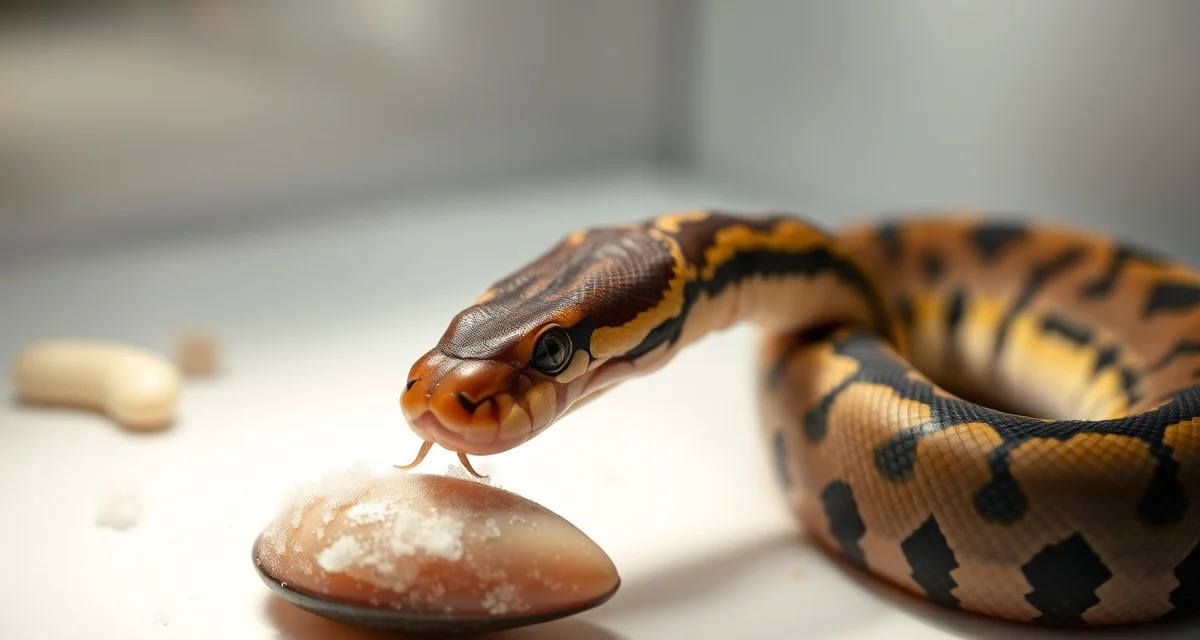
Transitioning Ball Python Hatchlings from Live to Frozen-Thawed Prey
Some hatchlings start on frozen-thawed without any issues. Others require a bit more patience. And occasionally, you'll have a hatchling that was started on live prey - either by choice or necessity - that now needs to convert. The transition from live to frozen-thawed (F/T) is almost always achievable with the right approach, though some animals take longer than others. Breeders using integrated software report 30% less time on administrative tasks, giving you more time for the hands-on feeding sessions this process sometimes requires.
TL;DR
- Ball python breeding operations require systematic record-keeping from pre-season preparation through end-of-season sales.
- Females at 1,200-1,500g or more are the target weight before introducing them to a breeding male.
- Ovulation detection is the key event that anchors pre-lay shed and lay date calculations.
- Clutch profitability guide depends on understanding actual cost basis per animal, not just gross sale revenue.
- Well-documented animals with complete feeding histories and clear genetic records consistently sell faster and at higher prices.
Why Converting to F/T Matters
An animal that will only accept live prey is significantly harder to manage long-term:
- Live prey requires regular sourcing and storage of live rodents
- Live prey poses injury risk to the snake
- Live prey carries more variability in size, health, and parasite exposure
- Buyers often expect F/T-established animals, particularly for breeding stock
Getting every animal on F/T before sale is good husbandry and good practice.
The "Scenting" Technique
The most commonly used transition method is scenting a thawed prey item with something that smells like live prey.
How to scent:
- Take a fully thawed, warmed F/T pinky
- Rub the thawed prey item along the sides and back of a live mouse briefly, just long enough to transfer scent (you don't need to injure or stress the live mouse)
- Offer the scented F/T prey as if it were live - warm and in a feeding-appropriate situation
The hatchling receives the familiar live prey scent but is actually consuming F/T. Once it has taken a few scented meals, reduce the intensity of scenting gradually. Most animals will convert fully within 3-6 meals.
Brain Matter Exposure
Another method that works for reluctant feeders: briefly expose a small amount of brain matter by making a small cut in the skull of the thawed prey. The enhanced scent from fresh brain tissue often triggers a feeding response in animals who ignore a whole intact F/T prey.
This is the same technique useful for getting reluctant hatchlings started on F/T in the first place.
Warm Temperature of Prey
F/T prey that's inadequately warmed is a common reason for refusals that gets misattributed to F/T aversion. Ball pythons are infrared sensors - they detect prey heat as part of what triggers a feeding strike.
For hatchlings, thaw in warm (not hot) water and then leave the prey in warm water until it's genuinely warm throughout. The target is body temperature feeling warm to your fingers - similar to what live prey would feel like. This alone resolves many apparent "F/T aversion" situations.
Movement Simulation
Ball pythons respond to movement as a prey cue. A live mouse moves; F/T prey doesn't, unless you move it.
Use tongs to wiggle F/T prey near the hatchling's head, simulating the movement and appearance of live prey. Don't wave it aggressively - slow, deliberate twitching at nose level is more likely to trigger a strike than rapid movement that triggers a defensive response instead.
The Paper Bag Method
Placing the hatchling and warmed F/T prey together in a sealed paper bag in a warm, dark environment concentrates the prey scent and reduces the environmental distractions that can prevent a feeding strike.
Check after 30-60 minutes. If the prey hasn't been taken, try again in a day or two. Don't leave prey in a bag with a hatchling for hours - if it hasn't eaten after 1-2 hours, try a different session.
Handling Stubborn Feeders
Some hatchlings resist for weeks. Stay consistent:
- Try every 5-7 days
- Vary the technique across sessions
- Ensure temperatures are adequate (warm side 88-90°F)
- Minimize unnecessary handling between feeding attempts
If a hatchling hasn't eaten in 6-8 weeks post-hatch and all techniques have been tried, a veterinary check is reasonable to rule out a health issue. Most healthy, well-set-up hatchlings will eventually eat; persistent refusal sometimes has an underlying cause.
Recording Transition Progress
Log every feeding attempt during the transition period. Note:
- Method used
- Whether prey was scented and how
- Temperature of prey
- Whether it was accepted
- Any relevant behavior observed
These notes help you identify what's working and what isn't for each individual animal. Once an animal takes 3-5 consecutive F/T meals without special preparation (unscented, standard temperature), you can consider the transition complete.
Track the full feeding history in HatchLedger's animal records from first meal through successful F/T establishment. This feeding history is part of the value you provide to buyers. For tools that support this kind of detailed feeding documentation, see the reptile breeder software comparison.
Frequently Asked Questions
What is the best approach to transitioning ball python hatchlings from live to frozen-thawed prey?
Start with scenting: rub a fully thawed, warmed F/T pinky on a live mouse to transfer scent, then offer the F/T. Most animals will strike the scented F/T. Reduce scent intensity over several meals until they're taking unscented F/T reliably. Ensure prey is genuinely warm throughout - cold F/T is a common refusal cause. Use tong-feeding with movement simulation and confined-space techniques for additional motivation.
How do professional breeders handle live-to-frozen-thawed transitions for ball pythons?
Experienced breeders prefer to start all hatchlings on F/T from the first meal, which avoids the transition problem entirely. When conversion is necessary, they use scenting as the primary tool and work through it systematically over several feeding sessions. They log every attempt and result so they can identify which techniques work for each individual animal. Persistent non-feeders get a vet check before any heroic feeding attempts.
What software helps manage ball python feeding transition records?
HatchLedger is purpose-built for reptile breeders, connecting animal records, breeding history, clutch outcomes, and financial tracking in one system. Unlike generic spreadsheets, it's designed around the specific workflow of an active breeding season. Free for up to 20 animals.
What records should every reptile breeder maintain per animal?
At minimum: acquisition date and source, morph and genetic documentation, feeding log, weight history, any veterinary treatments, and breeding history including pairing dates, clutch of origin for captive-bred animals, and offspring records. These records serve your own management, buyer documentation, regulatory compliance, and long-term genetic tracking.
How should reptile breeders document genetics for buyers?
A complete genetic record for sale includes the animal's visual morph name, confirmed het genes and their basis (parentage documentation or proven-out production), possible het genes with probability percentages, hatch date, and parent morph information. Including clutch-of-origin records lets buyers independently verify the claims.
Sources
- USARK (United States Association of Reptile Keepers)
- Association of Reptilian and Amphibian Veterinarians (ARAV)
- World of Ball Pythons (WoBP genetics reference database)
- MorphMarket (reptile industry marketplace)
- Reptiles Magazine (Bowtie Inc.)
Get Started with HatchLedger
Every part of a ball python breeding operation -- from pairing records to clutch documentation to financial tracking -- works better when the data is connected rather than scattered across notebooks and spreadsheets. HatchLedger is built for exactly that. Try it free with up to 20 animals.