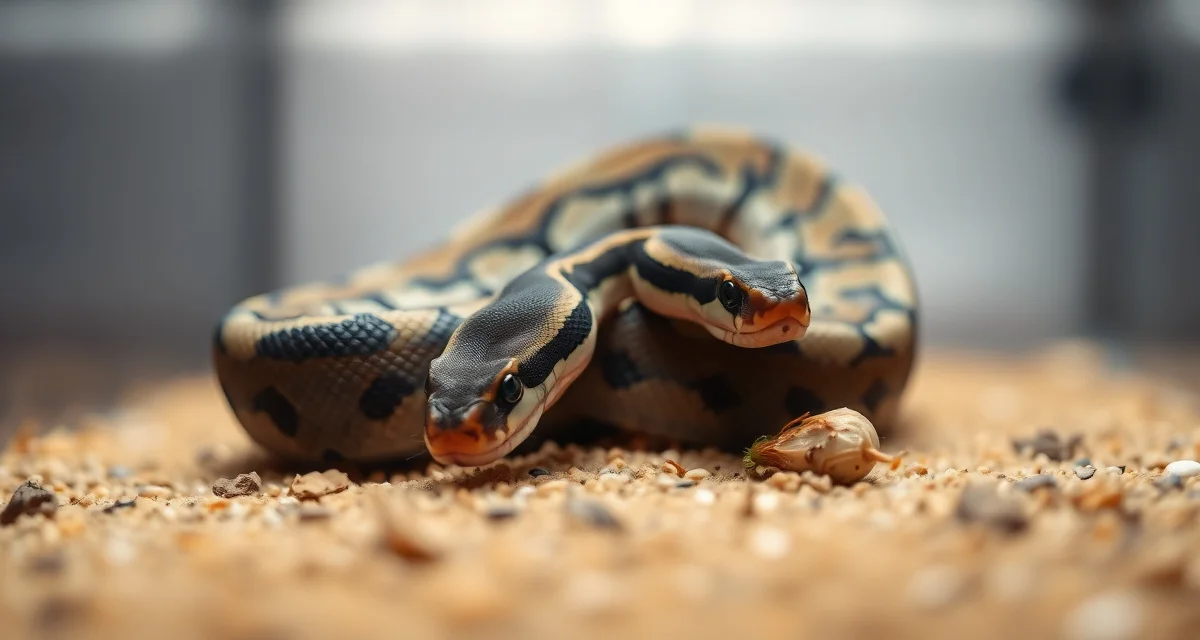
Hatchling Ball Python Feeding: Frozen-Thawed vs. Live Prey for First Meals
By HatchLedger Editorial Team · Published 2025-06-17 · Updated Mar 13, 2026
Getting hatchling ball pythons started on food is one of the most frustrating and important parts of producing a season's clutch. Some hatchlings eat immediately and enthusiastically. Others seem determined to never eat at all. Understanding the options for first meals - and the tactics that make frozen-thawed prey successful from the start - helps you get young animals feeding reliably and reduces the stress of watching expensive hatchlings refuse to eat. Breeders using integrated software report 30% less time on administrative tasks, leaving more bandwidth for the hands-on feeding sessions that hatchlings often require.
TL;DR
- Ball python breeding operations require systematic record-keeping from pre-season preparation through end-of-season sales.
- Females at 1,200-1,500g or more are the target weight before introducing them to a breeding male.
- Ovulation detection is the key event that anchors pre-lay shed and lay date calculations.
- Clutch profitability guide depends on understanding actual cost basis per animal, not just gross sale revenue.
- Well-documented animals with complete feeding histories and clear genetic records consistently sell faster and at higher prices.
When to Offer the First Meal
Wait until after the first shed, then give 2-3 days before attempting the first feeding. A hatchling that hasn't shed is not ready to eat - it's completing that physiological milestone and doesn't need the additional input of a meal.
After the first shed is confirmed (check that the shed is complete, including eye caps), offer the first prey item at 2-3 days post-shed. This timing is more reliable than using a specific number of days post-hatch.
Frozen-Thawed vs. Live: The Case for F/T
Frozen-thawed (F/T) prey is strongly preferred for hatchlings for several practical reasons:
- Safety: Live prey, even small mice, can bite or scratch hatchlings. A neonate ball python has a small head and thin skin - a defensive mouse bite is a real injury risk.
- Convenience: F/T prey can be stored in quantity and offered on any schedule. Live prey requires sourcing at each feeding.
- Consistency: F/T prey is consistent in size and condition. Live prey varies.
- Health: Frozen prey doesn't carry live parasites or pathogens that fresh prey can.
The goal for any hatchling is to get it established on F/T from the very first meal if possible. A hatchling who starts on F/T and has no experience with live prey is far easier to manage long-term than one who was started on live and later needs to be converted.
Preparing F/T for Hatchlings
Thaw a pinky mouse (newborn mouse, appropriate for hatchlings) completely in warm water. The prey should be:
- Completely thawed, including the interior
- Warm to the touch - warm from the outside in, not room temperature
- Dry on the outside when offered
Some hatchlings respond better to prey that's been "scented" - in this context, meaning prey that's at a warm body temperature rather than just thawed. Leave the thawed pinky in warm (not hot) water for a few extra minutes to bring it to a warmer temperature if your initial offering is refused.
Offering Prey to Hatchlings
Tong feeding: Use feeding tongs to offer prey at nose level. Wiggle the prey gently to simulate movement - this triggers the feeding response in many reluctant eaters.
Feeding in a confined space: Some hatchlings are more likely to eat in a smaller, darker space where they feel less exposed. A small deli cup or shoebox can work. Offer the prey, leave it in the container, and check in an hour.
Paper bag method: Placing a hatchling and prey in a brown paper bag allows the prey scent to concentrate in a small, dark, enclosed space. This method works surprisingly well for many reluctant feeders.
Overnight leave: After initial presentation, leave prey in the enclosure overnight. Some hatchlings eat in the dark after the room is quiet.
When Hatchlings Won't Eat F/T
Some hatchlings don't take F/T immediately. Options in escalating order:
- Try brain-scooping: exposing a small amount of brain matter on the prey item to increase scent appeal. Grim but effective.
- Scent prey with chicken broth or other meat scents.
- Try assisted feeding: place the hatchling's nose against the prey to expose it to the scent. Don't force the issue.
- If these fail after 4-6 weeks, consider a single live pinky to establish the feeding response, then immediately work on transitioning to F/T.
Live prey should be a last resort, not a first choice, and should be closely supervised. The goal is always to convert to F/T as quickly as possible.
Logging Hatchling Feeding Records
Track every feeding attempt for every hatchling:
- Date
- Prey size offered
- Method (tongs, deli cup, bag)
- Accepted or refused
- Notes on response (curious, defensive, disinterested)
For large clutches, this seems like a lot of work - but it creates the baseline record that tells you which animals are feeding reliably and which need closer attention. An animal with three months of missed feedings documented is very different from one you simply haven't logged.
Connect feeding records to each hatchling's record in HatchLedger from day one. For how platforms handle hatchling-level record-keeping, see the reptile breeder software comparison.
Frequently Asked Questions
What is the best approach to feeding ball python hatchlings their first meals?
Wait until after the first shed, then offer a warm, fully thawed pinky using tongs in a quiet, dim environment. Try leaving prey overnight or in a confined space (deli cup or paper bag) if initial tong-feeding is refused. Don't offer prey that's been thawed and left out for more than a couple of hours. Prioritize frozen-thawed from the first meal to establish that feeding response without live prey dependence. Log every attempt so you know exactly which hatchlings need extra attention.
How do professional breeders handle ball python hatchling first-meal feeding?
Experienced breeders offer F/T from the start with specific methods to maximize acceptance (warm prey, confined space, overnight leave). For reluctant feeders, they work through a systematic escalation - scent enhancement, different enclosure sizes, paper bag method - before considering live prey. They keep records from the first feeding attempt for every hatchling, which makes it easy to identify animals with consistent feeding issues early rather than noticing only after the animal has lost significant condition.
What software helps manage ball python hatchling feeding records?
HatchLedger is purpose-built for reptile breeders, connecting animal records, breeding history, clutch outcomes, and financial tracking in one system. Unlike generic spreadsheets, it's designed around the specific workflow of an active breeding season. Free for up to 20 animals.
What records should every reptile breeder maintain per animal?
At minimum: acquisition date and source, morph and genetic documentation, feeding log, weight history, any veterinary treatments, and breeding history including pairing dates, clutch of origin for captive-bred animals, and offspring records. These records serve your own management, buyer documentation, regulatory compliance, and long-term genetic tracking.
How should reptile breeders document genetics for buyers?
A complete genetic record for sale includes the animal's visual morph name, confirmed het genes and their basis (parentage documentation or proven-out production), possible het genes with probability percentages, hatch date, and parent morph information. Including clutch-of-origin records lets buyers independently verify the claims.
What is Hatchling Ball Python Feeding: Frozen-Thawed vs. Live Prey for First Meals?
Hatchling ball python feeding refers to the process of introducing newborn ball pythons to their first meals, specifically comparing frozen-thawed prey versus live prey. After hatching, these snakes require careful feeding strategies to establish reliable eating habits. Frozen-thawed mice or rats are generally preferred for safety and convenience, while live prey may be used as a last resort for stubborn feeders. Getting hatchlings started correctly sets the foundation for long-term health and growth.
How much does Hatchling Ball Python Feeding: Frozen-Thawed vs. Live Prey for First Meals cost?
There is no direct cost for the feeding method itself beyond the price of prey items. Frozen-thawed pinky mice or rat pups typically cost $1–3 each, making early feeding affordable. Live prey may cost slightly more and carries added risk of injury to the hatchling. The real cost consideration is the hatchling itself — an expensive morph refusing to eat represents a significant financial risk, making effective feeding techniques an important investment in your overall breeding operation.
How does Hatchling Ball Python Feeding: Frozen-Thawed vs. Live Prey for First Meals work?
After the hatchling's first shed (typically 7–14 days post-hatch), wait 2–3 days then offer a prey item in a small, secure feeding container. Thaw frozen prey fully and warm it to around 100°F to stimulate the snake's heat-sensing pits. Wiggle the prey gently with tongs to mimic movement. Keep the enclosure dark and minimize disturbance. If the hatchling refuses, try brain-scenting, covering the tub, or switching prey size before considering live prey as an alternative.
What are the benefits of Hatchling Ball Python Feeding: Frozen-Thawed vs. Live Prey for First Meals?
Frozen-thawed prey eliminates the risk of live prey injuring your hatchling, reduces the spread of parasites, and is more convenient to store and use. Establishing frozen-thawed feeding early means you won't need to source live rodents long-term. Hatchlings started on frozen-thawed also have complete, trackable feeding records from day one — a significant advantage when selling animals, as well-documented feeding histories consistently increase buyer confidence and sale prices.
Who needs Hatchling Ball Python Feeding: Frozen-Thawed vs. Live Prey for First Meals?
Any ball python breeder, hobbyist, or first-time keeper working with hatchlings needs this knowledge. It is especially critical for breeders producing multiple clutches per season, where feeding refusals across many animals can become time-consuming and costly. Keepers of expensive morphs have the most to gain, since a hatchling that won't establish feeding is a financial liability. Even experienced breeders benefit from reviewing tactics, as individual hatchlings vary widely in their willingness to feed.
How long does Hatchling Ball Python Feeding: Frozen-Thawed vs. Live Prey for First Meals take?
The initial feeding process can span several weeks. Most hatchlings will accept their first meal within 1–3 weeks post-shed when conditions are optimal. Stubborn feeders may take 6–10 weeks of repeated attempts before eating consistently. Once a hatchling takes two or three meals reliably, feeding typically becomes routine. Tracking attempt dates, prey types, and outcomes in a dedicated log helps identify patterns and informs when to escalate tactics or seek veterinary advice.
Related Articles
- Ball Python Feeding Schedule and Prey Sizing: A Complete Guide for Breeders
- Ball Python Pipping and Hatchling Emergence: Advanced Breeder Guide
Sources
- USARK (United States Association of Reptile Keepers)
- Association of Reptilian and Amphibian Veterinarians (ARAV)
- World of Ball Pythons (WoBP genetics reference database)
- MorphMarket (reptile industry marketplace)
- Reptiles Magazine (Bowtie Inc.)
Get Started with HatchLedger
Every part of a ball python breeding operation -- from pairing records to clutch documentation to financial tracking -- works better when the data is connected rather than scattered across notebooks and spreadsheets. HatchLedger is built for exactly that. Try it free with up to 20 animals.