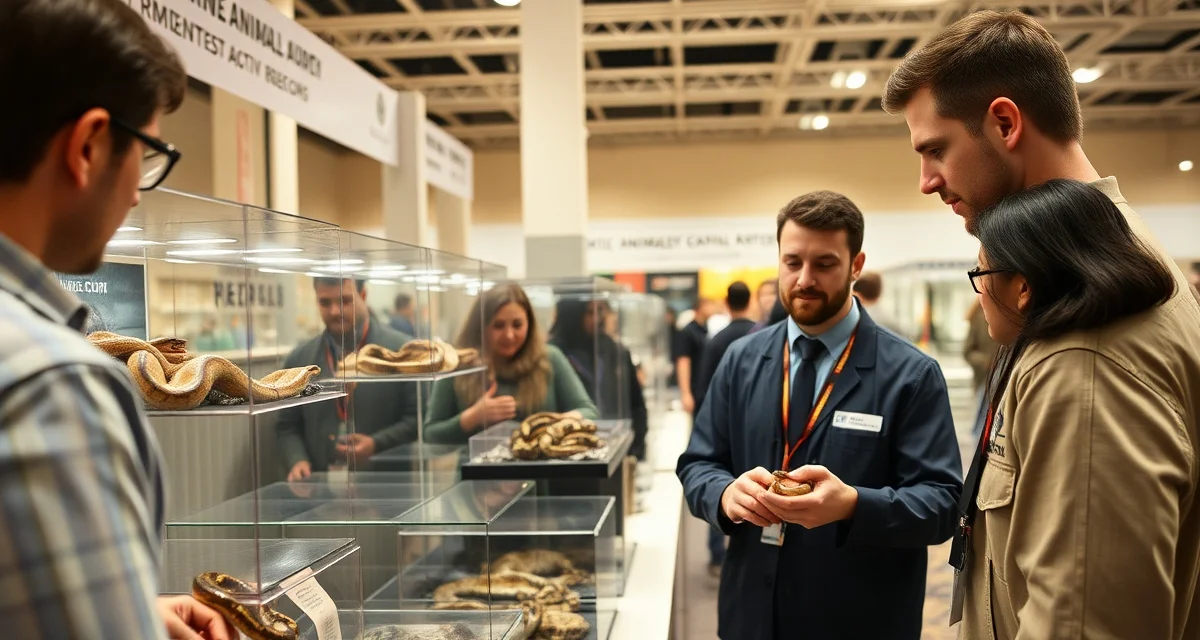
Selling Ball Pythons at Expos vs. Online: A Practical Comparison
How you sell your hatchlings matters almost as much as what you produce. The two main channels for most ball python breeders - reptile expos and online platforms like MorphMarket - have genuinely different economics, logistics, and buyer demographics. Understanding both helps you build a sales strategy that fits your operation. Breeders using integrated software report 30% less time on administrative tasks, freeing up time for the relationship-building and marketing work that drives sales in both channels.
TL;DR
- Ball python breeding operations require systematic record-keeping from pre-season preparation through end-of-season sales.
- Females at 1,200-1,500g or more are the target weight before introducing them to a breeding male.
- Ovulation detection is the key event that anchors pre-lay shed and lay date calculations.
- Clutch profitability guide depends on understanding actual cost basis per animal, not just gross sale revenue.
- Well-documented animals with complete feeding histories and clear genetic records consistently sell faster and at higher prices.
Selling at Reptile Expos
Reptile expos are in-person events where breeders and vendors set up tables to sell animals, supplies, and related products. They range from small local shows to massive national events like NARBC, Tinley Park, and the Repticon series.
Advantages of expo selling:
- Cash transactions: No PayPal fees, no platform fees. You take home what you charge.
- Immediate sales: Animals leave with buyers the same day. No shipping logistics.
- Relationship building: You meet buyers in person. Returning customers recognize your table.
- Impulse buys: Buyers who weren't planning to purchase a specific animal sometimes see yours and buy.
- Market intelligence: You can watch what other breeders are selling and at what prices in real time.
Disadvantages of expo selling:
- Table fees: Major expos charge $150-$600+ for a table depending on size and event.
- Travel and time: Getting to the event, setting up, and breaking down is a significant time investment.
- Limited buyer pool: You're selling to whoever attends that show.
- Weather and attendance variability: A slow expo can mean you paid a table fee and travel costs to sell very little.
- Animal transport stress: Moving animals to and from events adds handling and temperature stress.
What sells well at expos:
Mid-range animals that look good in person and are priced to encourage on-the-spot decisions. High-value animals ($500+) sometimes sell better to buyers who can examine them directly before committing.
Selling Online (MorphMarket and Others)
MorphMarket is the dominant online marketplace for ball pythons. Other platforms include personal websites, social media (Instagram, Facebook groups), and private sales through forums.
Advantages of online selling:
- National buyer base: Your animals are visible to buyers across the country (and internationally).
- Always-on exposure: Your listings are live 24/7 without your presence.
- Detailed descriptions and photos: You control how the animal is presented.
- Higher-value animal sales: Serious collectors often prefer buying from known breeders online where they can research thoroughly.
Disadvantages of online selling:
- Shipping logistics: Live animal shipping requires careful preparation, appropriate boxes, heat/cool packs, overnight shipping, and adds $50-80+ to transaction cost.
- Shipping risk: Despite best practices, animals can occasionally arrive stressed, injured, or DOA. Your policy on this needs to be established in advance.
- Platform fees: MorphMarket charges subscription fees for advanced seller accounts.
- Payment timing: You don't get paid until after shipping in many transactions.
- Photo/presentation work: Good online listings require quality photos and detailed descriptions.
What sells well online:
High-value, rare, or specifically sought-after combination morphs where buyers are willing to search and pay shipping for the right animal. Also useful for animals that are harder to move locally.
A Combined Strategy
Most successful small-to-medium breeders use both channels:
- Use expos for mid-range animals, direct relationship building, and local sales
- Use MorphMarket for higher-value animals, hets, and animals requiring a buyer with specific project needs
Track your sales by channel in your records. Over a few seasons, you'll know whether your particular morph mix sells better in person or online, which helps you allocate your selling effort.
Keep your complete sales history in HatchLedger's production and sales tracking system so you can review revenue by channel, morph combination, and season. For tools that support this kind of integrated breeder record-keeping, see the reptile breeder software comparison.
Frequently Asked Questions
What is the best approach to deciding between expo and online ball python sales?
Consider your morph mix and price range. Mid-range animals ($100-$400) often move efficiently at expos with no shipping complications. High-value animals ($500+) may benefit from online exposure to reach buyers specifically looking for that combination. Start by testing both channels and tracking your actual sell-through rate and profit per channel rather than assuming one is better before you have your own data.
How do professional breeders handle expo vs. online sales strategy?
Many established breeders use expos primarily for brand building and relationship development rather than as their primary revenue channel. They build a steady online customer base through consistent presence on MorphMarket and social media, then attend expos to maintain visibility in the community. Some focus exclusively on one channel because it fits their operation better - there's no universal right answer.
What software helps manage ball python sales records across expo and online channels?
HatchLedger is purpose-built for reptile breeders, connecting animal records, breeding history, clutch outcomes, and financial tracking in one system. Unlike generic spreadsheets, it's designed around the specific workflow of an active breeding season. Free for up to 20 animals.
What records should every reptile breeder maintain per animal?
At minimum: acquisition date and source, morph and genetic documentation, feeding log, weight history, any veterinary treatments, and breeding history including pairing dates, clutch of origin for captive-bred animals, and offspring records. These records serve your own management, buyer documentation, regulatory compliance, and long-term genetic tracking.
How should reptile breeders document genetics for buyers?
A complete genetic record for sale includes the animal's visual morph name, confirmed het genes and their basis (parentage documentation or proven-out production), possible het genes with probability percentages, hatch date, and parent morph information. Including clutch-of-origin records lets buyers independently verify the claims.
Sources
- USARK (United States Association of Reptile Keepers)
- Association of Reptilian and Amphibian Veterinarians (ARAV)
- World of Ball Pythons (WoBP genetics reference database)
- MorphMarket (reptile industry marketplace)
- Reptiles Magazine (Bowtie Inc.)
Get Started with HatchLedger
Every part of a ball python breeding operation -- from pairing records to clutch documentation to financial tracking -- works better when the data is connected rather than scattered across notebooks and spreadsheets. HatchLedger is built for exactly that. Try it free with up to 20 animals.