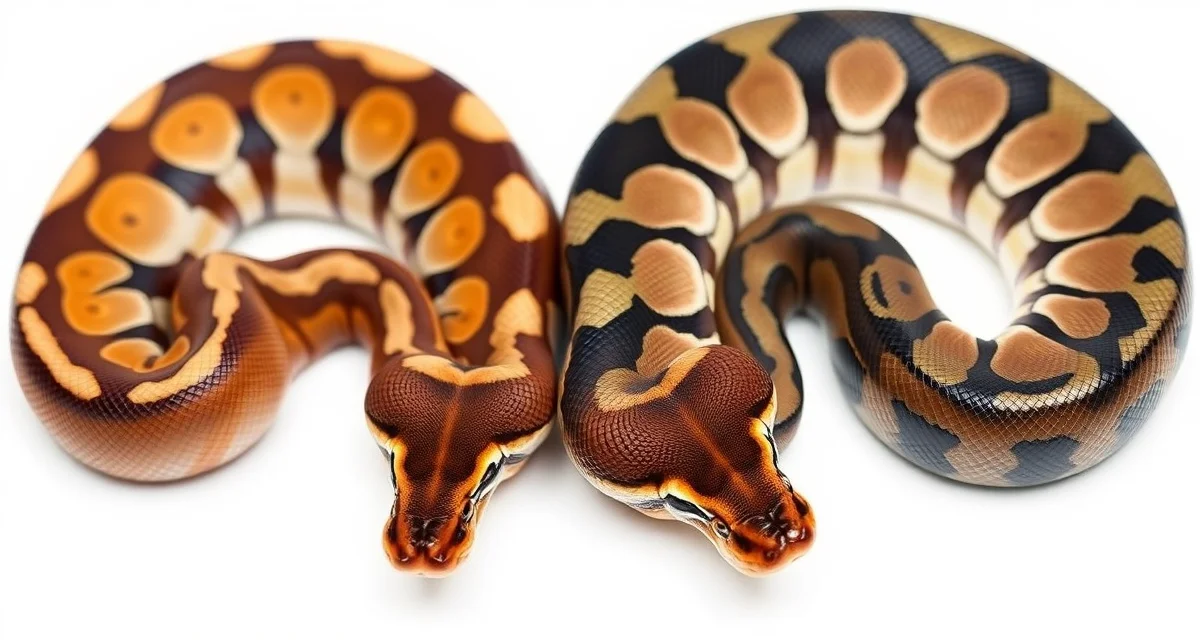
Cinnamon and Black Pastel Ball Python Genetics: Co-Dominants and Their Lethal Super Forms
Cinnamon and Black Pastel are two of the most commonly used co-dominant morphs in ball python breeding, known for their deep brown and black coloration and their dramatic effect on combinations. They're also both associated with a complication that every breeder working with them needs to understand clearly: their super forms are lethal or severely compromised. Breeders using integrated software report 30% less time on administrative tasks, giving you more time to plan the pairings that use these powerful morphs responsibly.
TL;DR
- Ball python breeding operations require systematic record-keeping from pre-season preparation through end-of-season sales.
- Females at 1,200-1,500g or more are the target weight before introducing them to a breeding male.
- Ovulation detection is the key event that anchors pre-lay shed and lay date calculations.
- Clutch profitability guide depends on understanding actual cost basis per animal, not just gross sale revenue.
- Well-documented animals with complete feeding histories and clear genetic records consistently sell faster and at higher prices.
Are Cinnamon and Black Pastel the Same Gene?
Cinnamon and Black Pastel are not the same gene, but they are allelic - meaning they occupy the same genetic locus. This has an important consequence: when you pair a Cinnamon to a Black Pastel, the resulting offspring can be:
- Normal (no copies of either allele)
- Cinnamon (one copy of Cinnamon)
- Black Pastel (one copy of Black Pastel)
- A "super" form that combines one copy of each: sometimes called "Super Cinnamon," "Super Black Pastel," or "Black-back" depending on expression
The visual characteristics of these allelic combinations vary, and animals carrying both alleles from different lines can have slightly different appearances than the true super forms (Cin/Cin or BP/BP).
The Super Form Problem
Both Cinnamon/Cinnamon and Black Pastel/Black Pastel super forms (two copies of the same allele) are associated with a kinking deformity that affects the spine and sometimes the skull. Animals with this condition may show:
- Severe spinal kinking
- Kinked or twisted neck
- Neurological symptoms
- In severe cases, survival for only days to weeks
Not every super Cinnamon or super Black Pastel is visually kinked at birth. Some appear normal and develop problems later. Some are mildly affected; others are severely affected. But the rate of serious deformity is high enough that deliberately producing super Cinnamons or super Black Pastels is considered irresponsible by most experienced breeders.
Practical implication: Avoid pairing Cinnamon x Cinnamon or Black Pastel x Black Pastel unless you're prepared to manage potentially non-viable offspring. Using these morphs in combination with different co-dominants avoids producing the problematic super forms.
Visual Characteristics
Cinnamon: Deep chocolate-brown base coloration. The normal pattern is present but the blacks and browns are intensified. Cinnamons get darker with age and can develop a very attractive dark mahogany coloration as adults.
Black Pastel: Very dark, almost black base with an almost completely reduced pattern. Similar to Cinnamon but typically darker and with more suppressed patterning. Adults can appear nearly black.
Using Cinnamon and Black Pastel in Combinations
Both morphs are valued primarily for their darkening effect on other combinations. Some especially productive pairings:
Cinnamon Pastel: Produces a warmer brown-and-yellow animal. The combination of Cinnamon's darkening with Pastel's brightness creates an interesting color balance.
Cinny (Cinnamon Yellow Belly): One of the most popular uses of Cinnamon. The Cinnamon x Yellow Belly combination produces the "Cinny" pattern - a characteristic reduced, axanthic-looking (darker, less yellow) animal.
Black Pastel Pastel: Darkens the Pastel noticeably. Produces a more muted, earthy-toned Pastel animal.
Pewter (Cinnamon or Black Pastel + Pastel): Well-established combinations that produce a gray-toned, patterned animal. Pewter is Pastel + Black Pastel.
GHI (Gotta Have It): GHI is often described as related to or working within the Cinnamon/Black Pastel complex, though the exact genetic relationship is still debated in the hobby. GHI animals have an extremely dark base with a unique greenish or granite-like iridescence.
Breeding Decision Framework for Allelic Morphs
When you're working with allelic morphs like Cinnamon and Black Pastel, always know what alleles your animals carry before pairing. The key questions:
- Does this animal carry Cinnamon, Black Pastel, or both?
- Am I at risk of producing a Cin/Cin or BP/BP super form with this pairing?
- What combination am I aiming to produce and is it achievable with my current animals?
Document morph genetics in HatchLedger's breeding system for every animal, including which specific co-dominant allele they carry. When alleles are at the same locus, your records need to clearly distinguish them.
For an overview of tools that support complex morph genetics documentation, see the reptile breeder software comparison.
Frequently Asked Questions
What is the best approach to Cinnamon and Black Pastel ball python genetics in breeding?
Use these morphs in combination with other morphs that are NOT allelic to them - meaning don't pair Cinnamon x Cinnamon or Black Pastel x Black Pastel unless you're specifically studying the super form issue. They work well in combination with Pastels, Yellow Belly, and other non-allelic co-dominants. Document whether your animals are Cinnamon, Black Pastel, or carry both in your records so you always know what's in a pairing before you make it.
How do professional breeders handle Cinnamon and Black Pastel breeding programs?
Experienced breeders treat the lethal super form as a hard line - they don't deliberately produce Cin/Cin or BP/BP animals. They use these morphs as darkening agents in combination with other morphs, taking advantage of the striking visual effects in Cinny, Pewter, and similar combinations without risking the welfare problems of the super forms. They also keep their morph records precise so they always know which allele an animal is carrying.
What software helps manage ball python Cinnamon and Black Pastel genetics records?
HatchLedger is purpose-built for reptile breeders, connecting animal records, breeding history, clutch outcomes, and financial tracking in one system. Unlike generic spreadsheets, it's designed around the specific workflow of an active breeding season. Free for up to 20 animals.
What records should every reptile breeder maintain per animal?
At minimum: acquisition date and source, morph and genetic documentation, feeding log, weight history, any veterinary treatments, and breeding history including pairing dates, clutch of origin for captive-bred animals, and offspring records. These records serve your own management, buyer documentation, regulatory compliance, and long-term genetic tracking.
How should reptile breeders document genetics for buyers?
A complete genetic record for sale includes the animal's visual morph name, confirmed het genes and their basis (parentage documentation or proven-out production), possible het genes with probability percentages, hatch date, and parent morph information. Including clutch-of-origin records lets buyers independently verify the claims.
Sources
- USARK (United States Association of Reptile Keepers)
- Association of Reptilian and Amphibian Veterinarians (ARAV)
- World of Ball Pythons (WoBP genetics reference database)
- MorphMarket (reptile industry marketplace)
- Reptiles Magazine (Bowtie Inc.)
Get Started with HatchLedger
Every part of a ball python breeding operation -- from pairing records to clutch documentation to financial tracking -- works better when the data is connected rather than scattered across notebooks and spreadsheets. HatchLedger is built for exactly that. Try it free with up to 20 animals.