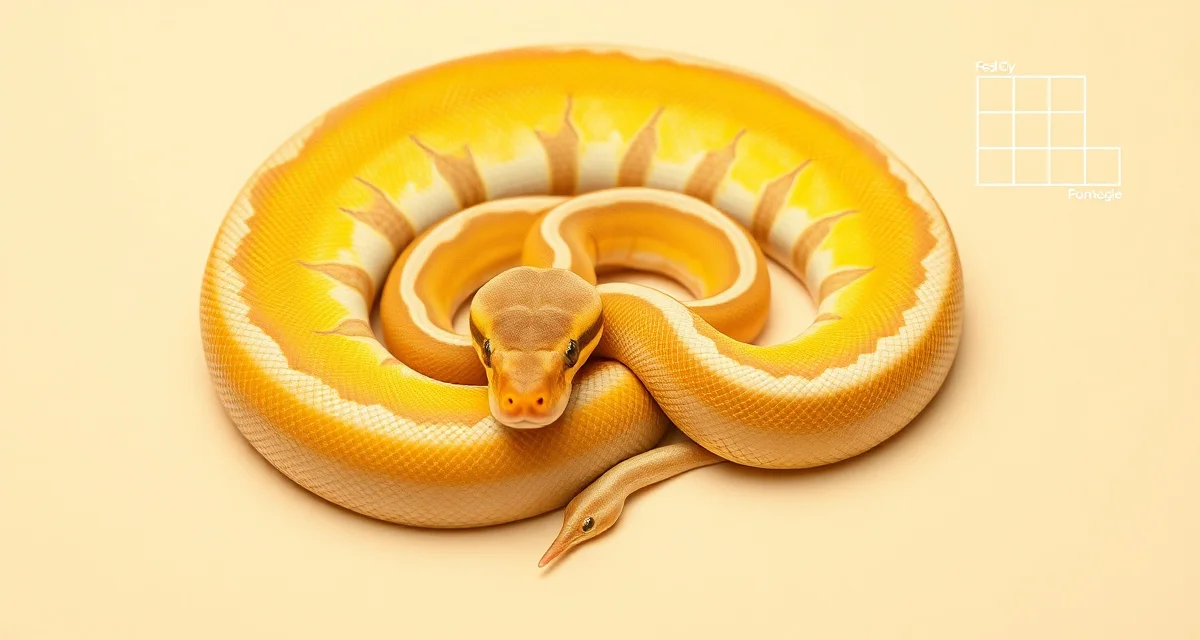
Banana and Coral Glow Ball Python Genetics: Sex-Linked Inheritance and Breeding Planning
By HatchLedger Editorial Team · Published 2025-06-16 · Updated Mar 13, 2026
Banana (also called Coral Glow) is one of the most popular and widely produced morphs in ball python breeding - and one of the most commonly misunderstood genetically. The sex-linked inheritance pattern of Banana creates a predictable ratio of male to female offspring in certain pairings, which changes how you approach project planning. Breeders using integrated software report 30% less time on administrative tasks, giving you more time to understand the genetic nuances that make Banana projects work.
TL;DR
- Ball python breeding operations require systematic record-keeping from pre-season preparation through end-of-season sales.
- Females at 1,200-1,500g or more are the target weight before introducing them to a breeding male.
- Ovulation detection is the key event that anchors pre-lay shed and lay date calculations.
- Clutch profitability guide depends on understanding actual cost basis per animal, not just gross sale revenue.
- Well-documented animals with complete feeding histories and clear genetic records consistently sell faster and at higher prices.
Banana and Coral Glow: Same Gene?
Yes. Banana and Coral Glow are different names for what genetic testing has shown to be the same mutation. The names originated from two separate breeders discovering the morph independently and naming their animals before the genetic relationship was established.
In practice, you'll encounter both names used in the hobby. Banana is more commonly used in general discussion; Coral Glow is used more by some breeders to refer to their specific line. For genetic purposes, they're the same thing.
The Standard Co-Dominant Inheritance
Banana is a co-dominant mutation:
- One copy (het) = visual Banana with the characteristic lavender/yellow coloration and black freckle markings
- Two copies (super/homozygous) = Super Banana, with even more vivid coloration and typically more intense freckle spotting
Basic pairing ratios:
- Banana x Normal: 50% Banana, 50% Normal
- Banana x Banana: 25% Super Banana, 50% Banana, 25% Normal
This is standard co-dominant inheritance. The unusual part is the sex-linked layer.
The Sex-Linked Complication
Here's where Banana gets more complex than typical co-dominants. Banana has been shown to have an unusual sex-linked inheritance pattern in certain pairings.
When a male Banana is bred to a normal female:
- The offspring tend to be predominantly male Bananas and predominantly female normals
- The ratio isn't absolute, but a strong bias toward male Bananas and female normals is well-documented
When a female Banana is bred to a normal male:
- The offspring tend to produce predominantly female Bananas and predominantly male normals
This means:
- If you want female Bananas, use a female Banana as your parent
- If you want male Bananas, use a male Banana as your parent
The sex bias isn't 100% - you will occasionally get female offspring from a male Banana pairing and vice versa - but the bias is strong enough that it directly affects your production planning.
Why This Matters for Project Planning
If your goal is to produce female Banana Clowns (for example), you want to start with a female Banana in your foundational animals. Working backward:
- Female Banana x het Clown male: produces some Banana hets and some normal hets, skewed toward female Bananas
- Grow out female het Clown animals
- Breed female Banana hets back to a visual Clown: produces visual Banana Clowns at expected ratios
If you started with a male Banana instead and used the same approach, most of your Banana offspring would be male, which isn't what you want if female Banana Clowns are your goal.
Understanding this prevents a very frustrating multi-year project where you're not getting the sex distribution you expected.
Super Banana
Super Banana (two copies of the Banana gene) is produced when two Banana animals are paired together. Visually, Super Banana animals typically show:
- More intense lavender/yellow coloration
- Denser black freckle markings
- Overall brighter, higher-saturation appearance
Super Banana is a striking morph on its own and works well as a foundation animal for projects where you want to guarantee that all Banana offspring from future pairings are visual Bananas.
Documenting Banana Projects
Because the sex-linked bias affects your production ratios, document the sex of every Banana animal you produce alongside the morph genetics. Over several clutches, you'll be able to verify whether your pairings are producing the expected sex distributions or something unusual.
Track every Banana hatchling's sex, morph, and parentage in your breeding records at HatchLedger immediately at sexing. This data is especially valuable when you're making purchasing decisions about foundation animals for new projects.
For how to structure genetics tracking across multi-morph projects, the reptile breeder software comparison covers what different tools offer.
Frequently Asked Questions
What is the best approach to Banana and Coral Glow ball python genetics and breeding?
Understand the sex-linked bias before starting your project. If you want female Bananas, start with a female Banana. If you want male Bananas, use a male Banana. Plan your pairings around this bias rather than assuming equal sex distribution. Banana is otherwise a standard co-dominant, so pairing ratios and super form production follow normal co-dominant rules. Track sex alongside morph in every hatchling to verify your production ratios over time.
How do professional breeders handle Banana ball python genetics in their programs?
Experienced Banana breeders account for the sex-linked bias when planning which animals to purchase and which pairings to set up. They maintain records of the sex and morph of every Banana offspring to track whether their actual production ratios match expectations. Some breeders who focus heavily on Banana projects acquire both male and female Bananas specifically to have flexibility in which sex of Banana they're producing in any given season.
What software helps manage ball python Banana genetics and sex records?
HatchLedger is purpose-built for reptile breeders, connecting animal records, breeding history, clutch outcomes, and financial tracking in one system. Unlike generic spreadsheets, it's designed around the specific workflow of an active breeding season. Free for up to 20 animals.
What records should every reptile breeder maintain per animal?
At minimum: acquisition date and source, morph and genetic documentation, feeding log, weight history, any veterinary treatments, and breeding history including pairing dates, clutch of origin for captive-bred animals, and offspring records. These records serve your own management, buyer documentation, regulatory compliance, and long-term genetic tracking.
How should reptile breeders document genetics for buyers?
A complete genetic record for sale includes the animal's visual morph name, confirmed het genes and their basis (parentage documentation or proven-out production), possible het genes with probability percentages, hatch date, and parent morph information. Including clutch-of-origin records lets buyers independently verify the claims.
What is Banana and Coral Glow Ball Python Genetics: Sex-Linked Inheritance and Breeding Planning?
Banana and Coral Glow are two names for the same ball python mutation, discovered independently by different breeders. What makes this morph genetically unique is its sex-linked inheritance pattern, which causes predictable male-to-female offspring ratios depending on the pairing. Understanding this inheritance system is essential for effective breeding project planning, helping breeders anticipate clutch outcomes and make smarter pairing decisions.
How much does Banana and Coral Glow Ball Python Genetics: Sex-Linked Inheritance and Breeding Planning cost?
There is no direct cost associated with understanding Banana and Coral Glow genetics — it is knowledge-based. However, acquiring Banana morph ball pythons varies widely in price depending on the animal's genetic combination, lineage, and documentation. Well-documented animals with complete feeding histories and clear genetic records consistently command higher prices and sell faster, making proper record-keeping a direct factor in your investment returns.
How does Banana and Coral Glow Ball Python Genetics: Sex-Linked Inheritance and Breeding Planning work?
Banana is a sex-linked mutation, meaning its inheritance is tied to the sex chromosomes of ball pythons. This creates predictable offspring ratios based on whether the Banana parent is male or female. For example, a Banana male bred to a normal female produces a different male-to-female ratio than the reverse pairing. Breeders who understand this can plan clutches strategically, anticipating which sex will carry the gene and in what proportions.
What are the benefits of Banana and Coral Glow Ball Python Genetics: Sex-Linked Inheritance and Breeding Planning?
The primary benefit is predictability. Unlike simple recessive or dominant morphs, Banana's sex-linked inheritance lets breeders forecast not just which offspring will express the gene, but roughly what sex those offspring will be. This allows for smarter project planning, better inventory forecasting, and more accurate clutch profitability estimates. Breeders using systematic tracking software report spending 30% less time on administrative tasks, freeing more time for hands-on breeding work.
Who needs Banana and Coral Glow Ball Python Genetics: Sex-Linked Inheritance and Breeding Planning?
Any ball python breeder working with Banana or Coral Glow animals needs this knowledge, from hobbyists producing their first clutch to professional breeders running multi-animal operations. It is especially critical for breeders building multi-generation projects or combining Banana with other morphs, where misunderstanding the sex-linked inheritance can lead to unexpected ratios, mislabeled animals, and lost revenue from incorrectly priced offspring.
How long does Banana and Coral Glow Ball Python Genetics: Sex-Linked Inheritance and Breeding Planning take?
Learning the genetics itself takes minimal time — the core sex-linked inheritance concept can be grasped in a single session. Applying it across a full breeding season is the longer process. Females should reach 1,200–1,500g before breeding begins, ovulation detection anchors the timeline, and from pairing to hatching typically spans several months. Consistent record-keeping throughout that cycle ensures each clutch's genetic and financial outcomes are fully understood.
Related Articles
Sources
- USARK (United States Association of Reptile Keepers)
- Association of Reptilian and Amphibian Veterinarians (ARAV)
- World of Ball Pythons (WoBP genetics reference database)
- MorphMarket (reptile industry marketplace)
- Reptiles Magazine (Bowtie Inc.)
Get Started with HatchLedger
Every part of a ball python breeding operation -- from pairing records to clutch documentation to financial tracking -- works better when the data is connected rather than scattered across notebooks and spreadsheets. HatchLedger is built for exactly that. Try it free with up to 20 animals.