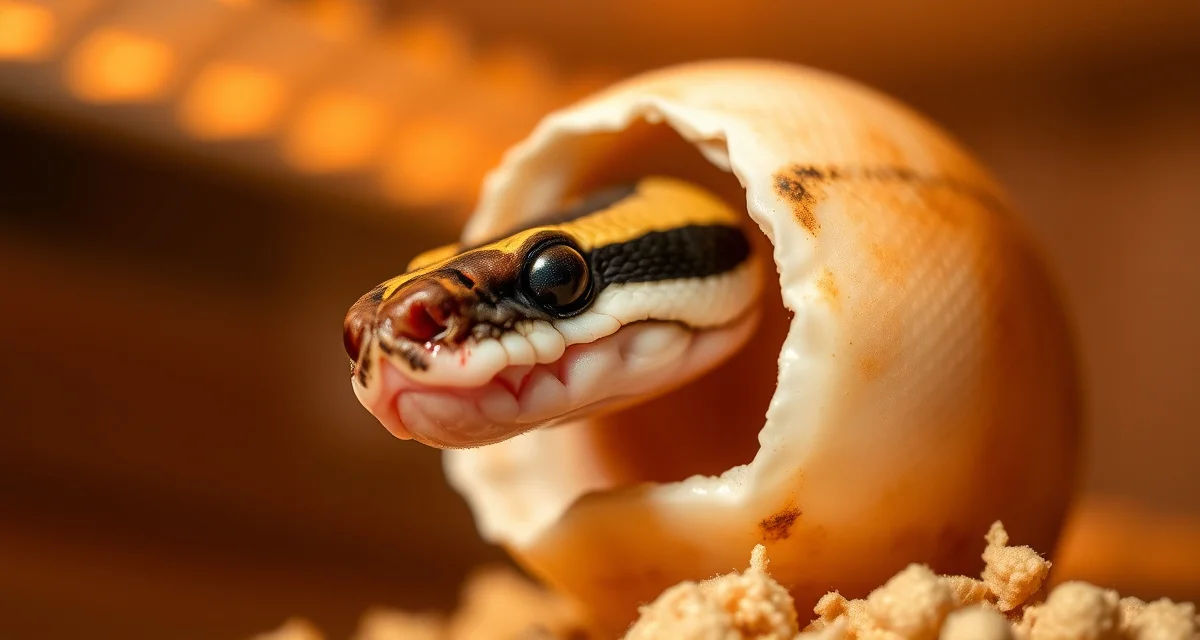
Ball Python Pipping Signs and When to Assist a Hatchling
Hatch day is one of the most rewarding moments in ball python breeding - and also one of the easiest to mess up if you intervene too soon or not soon enough. Knowing the difference between a hatchling that's progressing normally and one that genuinely needs help is a skill that comes from observation and experience. Breeders using integrated software report 30% less time on administrative tasks, which means you have more mental bandwidth available for the careful attention that hatch day monitoring requires.
TL;DR
- Ball python breeding operations require systematic record-keeping from pre-season preparation through end-of-season sales.
- Females at 1,200-1,500g or more are the target weight before introducing them to a breeding male.
- Ovulation detection is the key event that anchors pre-lay shed and lay date calculations.
- Clutch profitability guide depends on understanding actual cost basis per animal, not just gross sale revenue.
- Well-documented animals with complete feeding histories and clear genetic records consistently sell faster and at higher prices.
What Pipping Looks Like
Pipping is the moment a hatchling uses its egg tooth to make the first cut in the eggshell. In ball pythons, pipping typically produces a small slit or irregular hole in the shell, usually 5-15mm across initially.
You may see:
- A clean slit in the shell surface
- The egg tooth or snout of the hatchling visible through the opening
- The egg slowly deflating slightly as the hatchling pushes at the shell
- Moisture or condensation around the pip hole
The hatchling may peek out of the pip hole and then retreat back into the egg. This is completely normal. Don't interpret a hatchling that's visible at the pip hole but not emerging as stuck.
Normal Pipping Timeline
After the first pip appears:
- Most hatchlings will begin emerging within 12-48 hours
- Some hatchlings spend 24-48 hours resting with just their snout outside the egg
- Full emergence can take an additional 12-24 hours once the hatchling begins moving out
Clutches don't always pip simultaneously. One hatchling may pip 12-24 hours ahead of others. This is normal.
The hatchling continues absorbing the remaining yolk sac after pipping. This is a critical phase - pulling a hatchling out while the yolk sac is still attached tears the umbilical connection and can be fatal.
When NOT to Assist
The vast majority of hatchlings do not need assistance. Intervening too early is far more dangerous than waiting too long.
Do NOT assist if:
- The hatchling pipped recently (within 12-24 hours) and hasn't emerged
- The hatchling is visible at the pip hole but not moving constantly - resting is normal
- The egg looks healthy and the pip hole is clean
- You're not sure whether it's been long enough to warrant concern
Patience is the hardest part. Most "stuck" hatchlings that breeders intervene on were actually fine and would have emerged on their own.
Signs a Hatchling May Need Help
Genuine distress requiring potential assistance shows distinct signs:
- A hatchling has pipped but shows no movement at all for 48+ hours - not just resting, but completely motionless even when gently observed
- The hatchling appears to be breathing with difficulty - labored movement visible through the pip hole
- The pip hole has dried and appears to be sealing or constricting around the hatchling - this can happen with very low humidity
- The hatchling pipped in a position where the shell appears to be obstructing normal emergence - the pip hole is too small for the head to pass through after 36+ hours
Even in these situations, the first intervention should be minimal. Check humidity first - dried, constricted pip holes are often a humidity problem. Increase humidity in the incubator and give the hatchling more time before touching anything.
How to Assist If Necessary
If a hatchling genuinely appears stuck after 48-72 hours with no emergence and you've confirmed humidity is appropriate:
- Moisten the pip hole area with a few drops of warm water. This loosens dried membranes and eggshell edges.
- Gently extend the slit in the eggshell using clean, blunt scissors or your thumbnail. Extend the pip hole enough for the hatchling to exit more easily. Work slowly.
- Do not pull the hatchling out. The hatchling needs to come out on its own timetable. Your job is only to remove mechanical obstruction, not to extract the animal.
- Check the yolk sac. If the yolk sac is still clearly externalized, stop all intervention immediately. The hatchling is not ready.
- Return the egg to the incubator after opening the pip hole and monitor.
If the hatchling still doesn't emerge after you've cleared the opening, consult an experienced breeder or reptile vet before doing more.
Logging Hatch Day Events
Record for every egg:
- First pip date and time
- Full emergence date
- Any assist performed (Y/N) and reason
- Hatchling health at emergence (normal, retained yolk sac, deformities)
This data, connected to your clutch record in HatchLedger, gives you a complete production record. Over multiple seasons, you'll see if certain clutches or certain incubation conditions correlate with more difficult hatch days.
For tools that support this level of clutch-to-hatch documentation, review the reptile breeder software comparison.
Frequently Asked Questions
What is the best approach to recognizing when ball python pipping signs indicate a problem?
The most reliable approach is patience and observation. Most hatchlings that appear to be taking a long time are fine. Only consider intervention if a hatchling has been at the pip hole for 48-72 hours with zero movement or if the pip hole is physically obstructing emergence. Before doing anything, check that humidity is adequate and that you're not confusing normal rest periods with distress. When in doubt, give more time.
How do professional breeders handle ball python hatchling assists?
Experienced breeders intervene infrequently because they understand that most "stuck" hatchlings are just resting. When they do assist, they do the minimum necessary - moistening the pip area and carefully extending the slit to remove mechanical obstruction - then step back. They log every assist and the reason, which helps them identify if certain clutches or incubation conditions are correlating with difficult hatches.
What software helps manage ball python hatch day records and pip dates?
HatchLedger is purpose-built for reptile breeders, connecting animal records, breeding history, clutch outcomes, and financial tracking in one system. Unlike generic spreadsheets, it's designed around the specific workflow of an active breeding season. Free for up to 20 animals.
What records should every reptile breeder maintain per animal?
At minimum: acquisition date and source, morph and genetic documentation, feeding log, weight history, any veterinary treatments, and breeding history including pairing dates, clutch of origin for captive-bred animals, and offspring records. These records serve your own management, buyer documentation, regulatory compliance, and long-term genetic tracking.
How should reptile breeders document genetics for buyers?
A complete genetic record for sale includes the animal's visual morph name, confirmed het genes and their basis (parentage documentation or proven-out production), possible het genes with probability percentages, hatch date, and parent morph information. Including clutch-of-origin records lets buyers independently verify the claims.
Sources
- USARK (United States Association of Reptile Keepers)
- Association of Reptilian and Amphibian Veterinarians (ARAV)
- World of Ball Pythons (WoBP genetics reference database)
- MorphMarket (reptile industry marketplace)
- Reptiles Magazine (Bowtie Inc.)
Get Started with HatchLedger
Every part of a ball python breeding operation -- from pairing records to clutch documentation to financial tracking -- works better when the data is connected rather than scattered across notebooks and spreadsheets. HatchLedger is built for exactly that. Try it free with up to 20 animals.