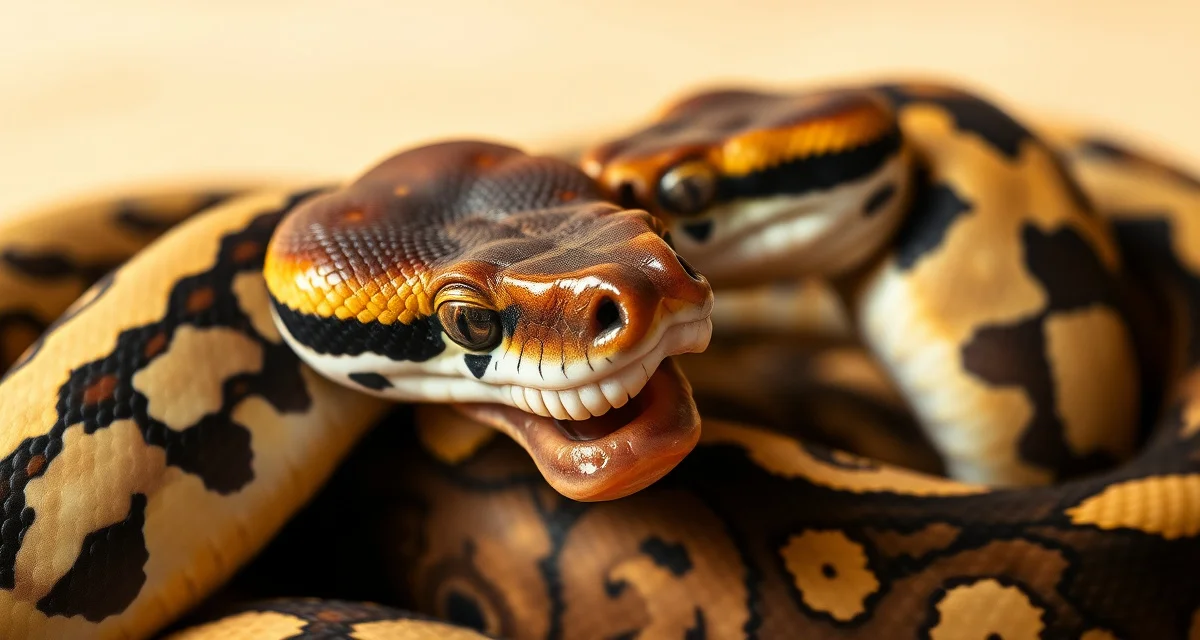
Ball Python Lock Duration and Confirming Successful Copulation
Watching a ball python pairing and trying to decide whether anything actually happened is one of the more frustrating parts of the breeding process. Males and females can cohabit for hours without copulating, and a brief lock doesn't guarantee fertilization any more than a long lock guarantees a clutch. Breeders using integrated software report 30% less time on administrative tasks, which frees you up to actually observe your pairings rather than managing paperwork.
TL;DR
- Ball python breeding operations require systematic record-keeping from pre-season preparation through end-of-season sales.
- Females at 1,200-1,500g or more are the target weight before introducing them to a breeding male.
- Ovulation detection is the key event that anchors pre-lay shed and lay date calculations.
- Clutch profitability guide depends on understanding actual cost basis per animal, not just gross sale revenue.
- Well-documented animals with complete feeding histories and clear genetic records consistently sell faster and at higher prices.
Understanding what a lock looks like, how long it should last, and what follow-up signs suggest successful copulation will help you make informed decisions about when to continue pairings and when you can back off.
What a Lock Actually Looks Like
In ball pythons, a lock (copulation) occurs when the male inserts one of his hemipenes into the female's cloaca. During a lock:
- The male and female align their cloacas
- The male will often wrap his tail under the female's tail
- You may observe rhythmic muscular contractions along the male's tail base
- Both animals typically remain relatively still, though some movement is normal
- The pair may remain connected anywhere from a few minutes to several hours
Locks can occur at any time of day or night, but many breeders observe them more frequently at night or in the early morning hours. If you're checking on pairings first thing in the morning and finding them separated and calm, there's a reasonable chance they locked overnight.
How Long Should a Lock Last?
Lock duration varies widely. There's no "correct" duration that guarantees fertilization, and there's no minimum time that makes a lock "real."
Typical locks run anywhere from 15 minutes to 24 hours. Very short locks (under 5 minutes) do occur but are harder to confirm as successful. Very long locks (over 12 hours) aren't unusual in ball pythons and aren't a concern unless you're worried about female stress.
What matters more than duration is frequency. Multiple confirmed locks across several pairing sessions over the course of breeding season gives you much better confidence than a single observed lock of any length.
How to Confirm Copulation Occurred
You won't always witness a lock directly. Here's how to build confidence that copulation happened:
Behavioral observation: After a successful lock, both animals often show relaxed, settled behavior. Males that have locked tend to be less active and may rest in contact with the female rather than continuing to pursue her.
Physical evidence: After a lock, the male's hemipenes are typically everted and need to retract. You'll sometimes see the male performing tail movements to retract the hemipenis after separation. In rare cases you may observe discharge from the cloaca, which is normal.
Female behavioral changes: Some females show increased restlessness or appetite changes after confirmed copulation, though this is not universal.
Continued male interest: After a successful lock, some males show less urgency on subsequent introductions. This isn't definitive but is a useful data point.
When to Keep Pairing vs. When to Stop
Your pairing frequency decisions should be driven by where your female is in her cycle, not by whether you witnessed a specific lock.
Continue pairing every 5-10 days from early breeding season through confirmed ovulation. The goal is multiple copulation opportunities across the window when follicles are developing. Relying on a single observed lock is not sufficient.
Stop pairing after confirmed ovulation. Once you've observed the ovulation swelling, additional introductions aren't productive and add unnecessary stress.
Troubleshoot if you see no locks after multiple sessions. If you've introduced a pair a dozen times with no lock observed, consider: Is the female actually in a receptive phase? Is the male experienced and proven? Are temperatures appropriate? Does swapping to a different male produce results?
Logging Pairing Events Properly
Every pairing introduction deserves an entry in your records, whether or not you observed a lock. Your log entry should include:
- Date and time of introduction
- Date and time of separation
- Whether a lock was observed (yes / no / uncertain)
- Approximate lock duration if observed
- Any notable behaviors
Over a season, this gives you a timeline you can review against ovulation and lay date to understand your animals' patterns. When you're connected to a system like HatchLedger's breeding hub, these pairing events build automatically into the animal's complete history.
What If You Never See a Lock?
It's entirely possible to end up with a fertile clutch without ever directly witnessing a lock. This is common in breeders who leave pairs together overnight and check in the morning.
Don't assume breeding failed because you never saw copulation directly. Track the female's behavioral and physical cues - follicle development, appetite changes, eventual pre-lay shed - as your primary indicators of whether breeding was successful.
If your female shows all the signs of successful breeding (ovulation event, pre-lay shed, laid eggs), the lock happened whether you saw it or not.
Frequently Asked Questions
What is the best approach to confirming ball python copulation occurred?
The most reliable approach is a combination of regular pairing sessions with log entries and observation of downstream biological events. You don't need to witness every lock; you need to see the post-ovulation cascade - pre-lay shed followed by egg deposition. For each pairing session, note whether you observed a lock, approximate duration if so, and post-session animal behavior. Over multiple sessions, you'll build confidence that successful copulation occurred even if you didn't catch it live.
How do professional breeders handle lock documentation and copulation confirmation?
Most experienced breeders use a pairing log where every introduction is recorded, with a flag for observed locks. Some set up cameras to monitor overnight pairings, which is especially useful for proving sire identity on high-value clutches. The downstream biological markers - ovulation event, pre-lay shed, clutch production - are treated as the definitive confirmation that breeding succeeded. Professionals typically run 6-12 pairing sessions per female per season rather than relying on a single lock.
What software helps manage ball python pairing records and copulation logs?
HatchLedger is purpose-built for reptile breeders, connecting animal records, breeding history, clutch outcomes, and financial tracking in one system. Unlike generic spreadsheets, it's designed around the specific workflow of an active breeding season. Free for up to 20 animals.
What records should every reptile breeder maintain per animal?
At minimum: acquisition date and source, morph and genetic documentation, feeding log, weight history, any veterinary treatments, and breeding history including pairing dates, clutch of origin for captive-bred animals, and offspring records. These records serve your own management, buyer documentation, regulatory compliance, and long-term genetic tracking.
How should reptile breeders document genetics for buyers?
A complete genetic record for sale includes the animal's visual morph name, confirmed het genes and their basis (parentage documentation or proven-out production), possible het genes with probability percentages, hatch date, and parent morph information. Including clutch-of-origin records lets buyers independently verify the claims.
Sources
- USARK (United States Association of Reptile Keepers)
- Association of Reptilian and Amphibian Veterinarians (ARAV)
- World of Ball Pythons (WoBP genetics reference database)
- MorphMarket (reptile industry marketplace)
- Reptiles Magazine (Bowtie Inc.)
Get Started with HatchLedger
Every part of a ball python breeding operation -- from pairing records to clutch documentation to financial tracking -- works better when the data is connected rather than scattered across notebooks and spreadsheets. HatchLedger is built for exactly that. Try it free with up to 20 animals.