Ball Python Pipping and Hatchling Emergence: Advanced Breeder Guide
Breeders using integrated software report 30% less time on administrative tasks, and hatch day is one of those moments where having everything prepared in advance makes all the difference. Hatchlings can emerge slowly over several days, and knowing what's normal versus what requires intervention is essential knowledge.
TL;DR
- Ball python breeding operations require systematic record-keeping from pre-season preparation through end-of-season sales.
- Females at 1,200-1,500g or more are the target weight before introducing them to a breeding male.
- Ovulation detection is the key event that anchors pre-lay shed and lay date calculations.
- Clutch profitability guide depends on understanding actual cost basis per animal, not just gross sale revenue.
- Well-documented animals with complete feeding histories and clear genetic records consistently sell faster and at higher prices.
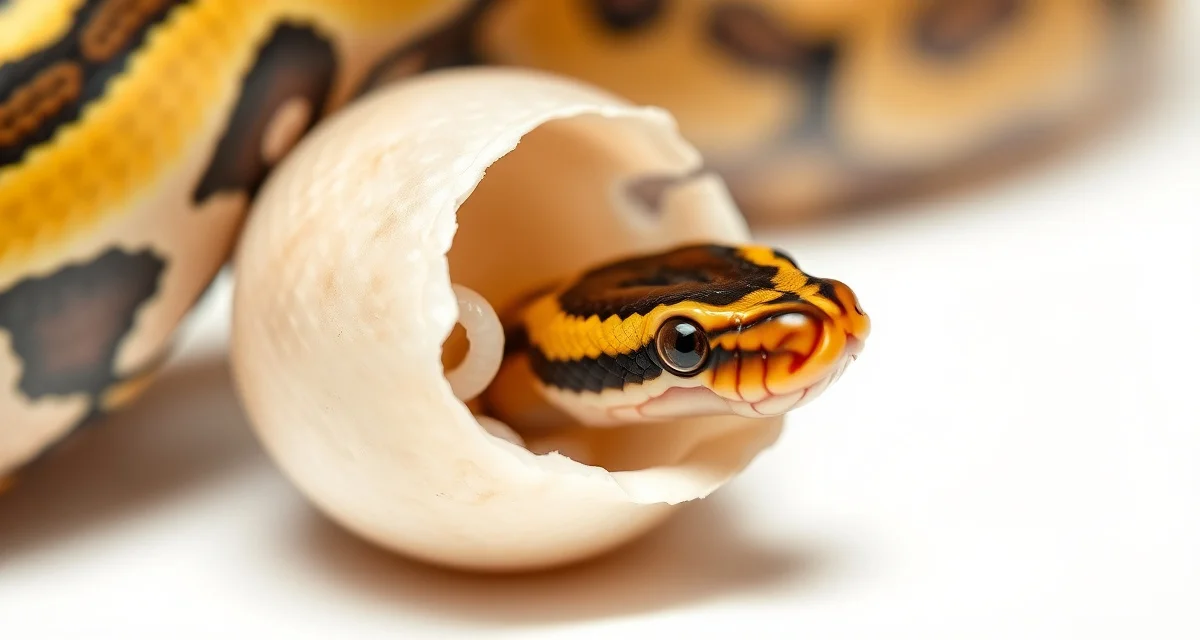
Pipping is the moment a hatchling cuts its first hole in the eggshell using the egg tooth, a small, sharp protrusion on the tip of the snout that falls off shortly after hatching. That first pip is your signal that emergence is underway.
The Timeline from Pip to Emergence
After a hatchling pips, it typically stays in the egg for 12-72 hours before fully emerging. This is completely normal and reflects the hatchling completing the yolk sac absorption, which continues even after the initial pip.
Don't try to help a hatchling out of the egg unless you have a clear medical reason to do so. The emergence process is deliberate. The hatchling is resting, absorbing residual yolk nutrients, and acclimating to outside conditions. Premature assistance causes more harm than good in the vast majority of cases.
What Pipping Looks Like
The first pip is a small slit or cut in the eggshell, usually at the top of the egg. The hatchling's egg tooth cuts through the shell membrane and then the shell itself. You may see the cut without seeing the hatchling, or you might see just the snout protruding.
Some hatchlings pip and then retreat back into the egg briefly before fully emerging. Others pip once and stay with the snout visible until they're ready to fully emerge.
Multiple eggs in a clutch may pip within hours of each other, or there can be a spread of a day or two between first and last pipper. Both are normal.
When to Check on Pipping Eggs
Once you see the first pip in a clutch, increase monitoring to every 4-6 hours. You're watching for:
- Additional eggs beginning to pip
- Hatchlings that have begun to emerge but seem stuck
- Any unusual discharge from eggs (pus or foul-smelling liquid rather than clear egg fluid indicates infection)
A hatchling that has pipped and appears to be working to emerge over 48+ hours without progress may need gentle assessment. More on that below.
Full Emergence
A hatchling fully exiting the egg is a relatively quick process once it begins, typically taking 10-30 minutes from the time it starts actively exiting to full emergence. The hatchling pushes out, often appearing very wet and covered in egg fluid and remnants of the yolk sac.
Don't handle hatchlings immediately. Let them sit in the incubation container for at least an hour after emergence to stabilize. They'll be more fragile and stressed in the first few minutes.
Assessing Hatchlings at Emergence
Once the hatchling is fully out and has had an hour or two to settle, do a quick assessment:
- Is the yolk sac fully absorbed? A small "belly button" scar is normal; a large, open yolk sac that's still external requires veterinary attention.
- Does the hatchling appear well-formed? Check for obvious kinked spines, malformed heads, or limb abnormalities.
- Is the hatchling active and responsive?
- What does the hatchling's body condition look like? Most hatchlings are lean but should not appear emaciated.
Photograph each hatchling immediately after settling. This initial photo documents the hatchling's morph expression and body condition at emergence, and it's part of your records.
Setting Up Hatchling Enclosures
Before hatch day, have your hatchling setup ready. Hatchlings can go directly into their individual tubs or enclosures within a few hours of emergence:
- Small deli cups or rack tubs work well for the first few weeks
- Paper towel substrate simplifies monitoring
- A small water bowl
- A small hide
- Ambient temperature around 82-84F with a warm side reaching 88-90F
- No need for a full adult-style setup at this stage
Don't place hatchlings together. Individual housing from day one prevents aggression, disease transmission, and competition at feeding time.
The First Shed
Hatchlings will have their first shed within 10-14 days of emergence. This shed is important for several reasons:
- It confirms the hatchling is healthy and developing normally
- It's the trigger for their first feeding opportunity
- The shed quality (complete or retained) tells you about hydration and enclosure humidity
Most experienced breeders don't attempt to feed hatchlings before their first shed. The hatchling's digestive system isn't ready, and the stress of handling for feeding attempts before that first shed is unnecessary.
Recording Hatchling Data
Each hatchling needs its own record from day one. Record:
- Clutch ID (which clutch and breeding pair the hatchling came from)
- Hatch date
- Morph identification (as best you can determine at hatch, updated as the animal develops)
- Sex (if determined at hatch, though many breeders wait until the first feeding)
- Body weight at hatch
- Any notable observations at emergence
Morph expression can be difficult to definitively identify at hatch in some cases, particularly with animals that carry het or co-dominant genes that don't affect visible appearance. Your genetic outcomes, based on the pairing, tell you the statistical possibilities, and visual observation at hatch tells you which bucket each hatchling falls into.
HatchLedger's hatchling records connect automatically to the parent clutch and the breeding pair. When you create a new animal record from a clutch, the genetic lineage is already populated based on the pairing you recorded at the start of the season.
Morph ID at Hatch
Some morphs are immediately obvious at hatch: albinos, pieds, axanthics, and other dramatic visual mutations are unmistakable. Others require more familiarity:
- Pastel hatchlings are more yellow and have cleaner pattern than normals
- Spiders show the characteristic "blushing" and lighter coloration
- Lessers and butters can be subtle
- Clown hatchlings have the distinctive banding pattern but look quite different from adults
Keep notes on your morph ID confidence. A hatchling you're unsure about should be flagged for reassessment at first shed or first feeding, when the pattern has clarified.
Unhatched Eggs After All Others Have Emerged
If one or more eggs in a clutch haven't pipped within 5-7 days of all other eggs hatching, investigate carefully. Options:
- Candle the unhatched eggs to check for signs of life (movement, or the egg appears full and healthy vs. collapsed)
- Wait another 3-5 days if the egg looks healthy and incubation conditions have been correct
- If the incubation period has notably exceeded normal (more than 70 days at standard temps), the egg may be non-viable
Don't cut into an egg unless you're confident it's overdue and showing signs of distress, or there's a reason to believe the hatchling can't emerge on its own (shell that's too thick to cut through, for example).
The records in HatchLedger's reptile breeder software give you the exact lay date and incubation timeline context you need to make informed decisions about late-hatching eggs.
Frequently Asked Questions
What is the best approach to ball python pipping and hatchling emergence?
Monitor pipping eggs every 4-6 hours once the first pip appears, but don't intervene in the emergence process unless there's a clear problem. Allow hatchlings to rest in the incubation container for at least an hour post-emergence, then move to individual housing. Photograph and record each hatchling's morph, weight, and hatch date immediately.
How do professional breeders handle ball python pipping and hatchling emergence?
Production breeders have hatchling housing ready and labeled before eggs start pipping. They record each hatchling's data immediately at emergence and begin morph identification right away, flagging uncertain identifications for follow-up assessment. They also photograph all hatchlings systematically to document morph expression at hatch.
What records should every reptile breeder maintain per animal?
At minimum: acquisition date and source, morph and genetic documentation, feeding log, weight history, any veterinary treatments, and breeding history including pairing dates, clutch of origin for captive-bred animals, and offspring records. These records serve your own management, buyer documentation, regulatory compliance, and long-term genetic tracking.
How should reptile breeders document genetics for buyers?
A complete genetic record for sale includes the animal's visual morph name, confirmed het genes and their basis (parentage documentation or proven-out production), possible het genes with probability percentages, hatch date, and parent morph information. Including clutch-of-origin records lets buyers independently verify the claims.
Sources
- USARK (United States Association of Reptile Keepers)
- Association of Reptilian and Amphibian Veterinarians (ARAV)
- World of Ball Pythons (WoBP genetics reference database)
- MorphMarket (reptile industry marketplace)
- Reptiles Magazine (Bowtie Inc.)
Get Started with HatchLedger
Every part of a ball python breeding operation -- from pairing records to clutch documentation to financial tracking -- works better when the data is connected rather than scattered across notebooks and spreadsheets. HatchLedger is built for exactly that. Try it free with up to 20 animals.