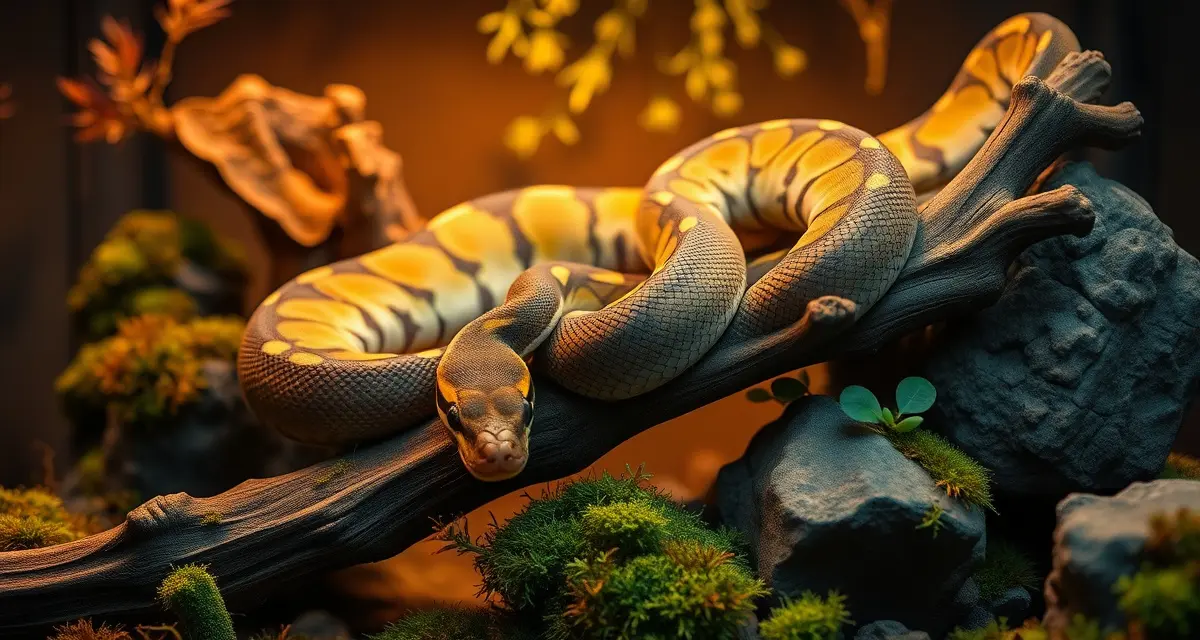
Ball Python Enrichment: Improving Welfare in Collections
Enrichment is a topic that's evolved fast in reptile keeping over the past decade. Ten years ago, most breeders were focused purely on husbandry basics: right temperature, right humidity, eat and shed. Now there's a much better understanding of how environmental complexity affects health, behavior, and long-term welfare, and the expectations of buyers have shifted alongside it.
TL;DR
- Ball python breeding operations require systematic record-keeping from pre-season preparation through end-of-season sales.
- Females at 1,200-1,500g or more are the target weight before introducing them to a breeding male.
- Ovulation detection is the key event that anchors pre-lay shed and lay date calculations.
- Clutch profitability guide depends on understanding actual cost basis per animal, not just gross sale revenue.
- Well-documented animals with complete feeding histories and clear genetic records consistently sell faster and at higher prices.
This guide covers practical enrichment approaches that work across collections of all sizes, not just single-display setups.
Why Enrichment Matters for Breeders
Your animals' welfare directly affects your business outcomes. Animals kept in enriched environments with opportunities for natural behavior tend to feed more reliably, stress less during handling, and show better breeding condition. Buyers increasingly ask about husbandry practices before purchasing, and photos of well-maintained, thoughtfully set up enclosures help justify premium pricing.
There's also a longer-term consideration. Breeding animals kept in better conditions over their lives tend to have longer productive careers. A female that isn't chronically stressed will cycle more reliably than one kept in a marginal environment.
Core Elements of Ball Python Enrichment
Hides
This is non-negotiable, but it's worth understanding what makes a good hide versus a poor one. Ball pythons feel most secure in hides that fit them snugly, where they can touch all sides. A hide that's too large doesn't give the security signal they need.
Every enclosure should have at minimum one hide on the warm side. Two hides, one warm, one cool, allows the animal to access shelter across the full thermal gradient without choosing between hiding and temperature regulation. In rack systems, this isn't always practical, but a single properly sized humid hide on the warm side covers the basics.
Substrate Depth
Ball pythons in the wild spend notable time in burrows. Providing enough substrate depth for basic burrowing behavior, even 3-4 inches, gives them an outlet for this instinct. In rack systems with paper substrate this isn't possible, which is one argument for providing a humid hide that partially simulates the enclosed underground space they naturally seek.
For individual enclosures using loose substrate, 4-6 inches allows actual burrowing. Animals with deeper substrate often spend more time exploring and less time nose-rubbing at enclosure walls.
Climbing Opportunities
Ball pythons are more arboreal than their sedentary reputation suggests, especially juveniles and sub-adults. Branches, cork tubes, or similar structures at height give them the option to climb if they want to. Not all individuals use vertical space readily, but providing the option supports natural behavior without any downside.
In rack systems, adding vertical elements isn't practical. But for animals in display enclosures, a sturdy branch or two adds behavioral complexity.
Environmental Variation
Controlled variation in the enclosure environment provides mental stimulation. This can be as simple as occasionally rearranging hides, adding a temporary enrichment object (a new hide structure, a section of cork bark, an empty paper towel roll), or varying the timing of light cycles.
The key word is controlled. Constant disruption stresses animals. Occasional thoughtful variation is different from unpredictable disturbance.
Enrichment in Rack-Based Breeding Operations
Many dedicated breeders run rack systems for practical reasons, and racks don't easily accommodate elaborate enrichment. That's a real tradeoff. Here's how to maximize welfare within the rack system context:
Humid hide in every tub. A humid hide with damp sphagnum moss addresses both humidity needs and the preference for a tight, enclosed space. It's the single highest-impact enrichment addition for rack-housed animals.
Appropriate tub sizing. Using tubs that are appropriately sized for the animal's current body weight gives it some room to explore and reposition without the stress of an oversized enclosure. Regularly sizing up as animals grow matters.
Visual barriers between tubs. Some breeders use opaque dividers between tub sections or opaque lids to reduce visual stimulation from adjacent animals. Less visual exposure to neighbors can reduce stress, especially during breeding season.
Foraging enrichment. Occasionally hiding prey in different locations within the tub, or using tongs to present prey in slightly varying ways, provides a form of feeding enrichment that engages the snake's hunting instinct more fully than a static presentation.
Handling as Welfare
Handling serves two purposes in a breeding collection: desensitization (which matters for animals you'll sell) and health assessment. Regular brief handling sessions from a young age produce animals that tolerate handling well, which buyers value and which makes your own health checks easier.
The goal isn't to make every animal docile for the sake of it. It's to ensure that handling for feeding checks, weight recording, and health assessment isn't an extreme stress event. Animals that are periodically handled from early life are easier to work with and sell better as juveniles to pet buyers.
Don't handle within 48 hours of feeding to avoid regurgitation risk. Keep sessions brief for younger and smaller animals. Track handling as part of your husbandry logs where relevant.
Documenting Welfare-Related Observations
Good welfare starts with observation. Breeders who know what normal looks like for each animal in their collection catch problems early. An animal that's not using its hide as normal, or that's spending unusual time on the cool side, or that's showing changes in activity level, may be signaling a health issue before visible symptoms appear.
The HatchLedger platform lets you log these behavioral observations directly against individual animal records. When you see a change, you have a baseline to compare against. When a veterinarian asks about the animal's recent history, you have actual data rather than rough estimates. Breeders using integrated software report 30% less time on administrative tasks, partly because relevant information is always at hand.
Welfare Standards and Buyer Expectations
The market for high-quality ball pythons has shifted meaningfully toward buyers who care about how animals were raised. Increasingly, the breeders who command premium prices and build repeat customer relationships are the ones who can speak credibly about their husbandry standards.
Being able to show that your animals are raised in appropriately sized, enriched enclosures, fed regularly, handled from early life, and tracked meticulously is a marketing differentiator as well as a welfare commitment. The reptile breeder software comparison covers how different software tools help breeders document and communicate their husbandry standards to buyers.
Enrichment Across Life Stages
Hatchlings: A single appropriate-sized hide, a humid hide, and occasional brief handling. Keep it simple and focused on establishing feeding and security.
Juveniles: Humid hide, second cool-side hide, begin handling for desensitization, consider branch for vertical interest in individual enclosures.
Adults in breeding program: Consistent environment with minimal disruption during breeding season, good humidity management for conditioning, appropriate-sized hides. Enrichment is secondary to breeding program management during active season.
Holdbacks and display animals: Invest more in enclosure complexity for animals you're keeping long-term. These are the animals buyers see in your photos and videos, and they represent your collection quality.
Frequently Asked Questions
What is the best approach to ball python enrichment guide?
Start with the fundamentals: appropriate-sized hides on both warm and cool sides, a humid hide for shedding support, and substrate depth where your setup allows. Add environmental complexity (climbing structures, varied substrate texture, foraging enrichment) for animals in individual enclosures, especially younger animals you're socializing for sale.
How do professional breeders handle ball python enrichment guide?
Professional breeders balance enrichment investment against the practical reality of managing large collections. Rack-based operations prioritize humid hides and appropriate tub sizing, while investing more in environmental complexity for display animals and holdbacks. Regular brief handling from early life is standard for animals intended for pet sales.
What records should every reptile breeder maintain per animal?
At minimum: acquisition date and source, morph and genetic documentation, feeding log, weight history, any veterinary treatments, and breeding history including pairing dates, clutch of origin for captive-bred animals, and offspring records. These records serve your own management, buyer documentation, regulatory compliance, and long-term genetic tracking.
How should reptile breeders document genetics for buyers?
A complete genetic record for sale includes the animal's visual morph name, confirmed het genes and their basis (parentage documentation or proven-out production), possible het genes with probability percentages, hatch date, and parent morph information. Including clutch-of-origin records lets buyers independently verify the claims.
Sources
- USARK (United States Association of Reptile Keepers)
- Association of Reptilian and Amphibian Veterinarians (ARAV)
- World of Ball Pythons (WoBP genetics reference database)
- MorphMarket (reptile industry marketplace)
- Reptiles Magazine (Bowtie Inc.)
Get Started with HatchLedger
Every part of a ball python breeding operation -- from pairing records to clutch documentation to financial tracking -- works better when the data is connected rather than scattered across notebooks and spreadsheets. HatchLedger is built for exactly that. Try it free with up to 20 animals.