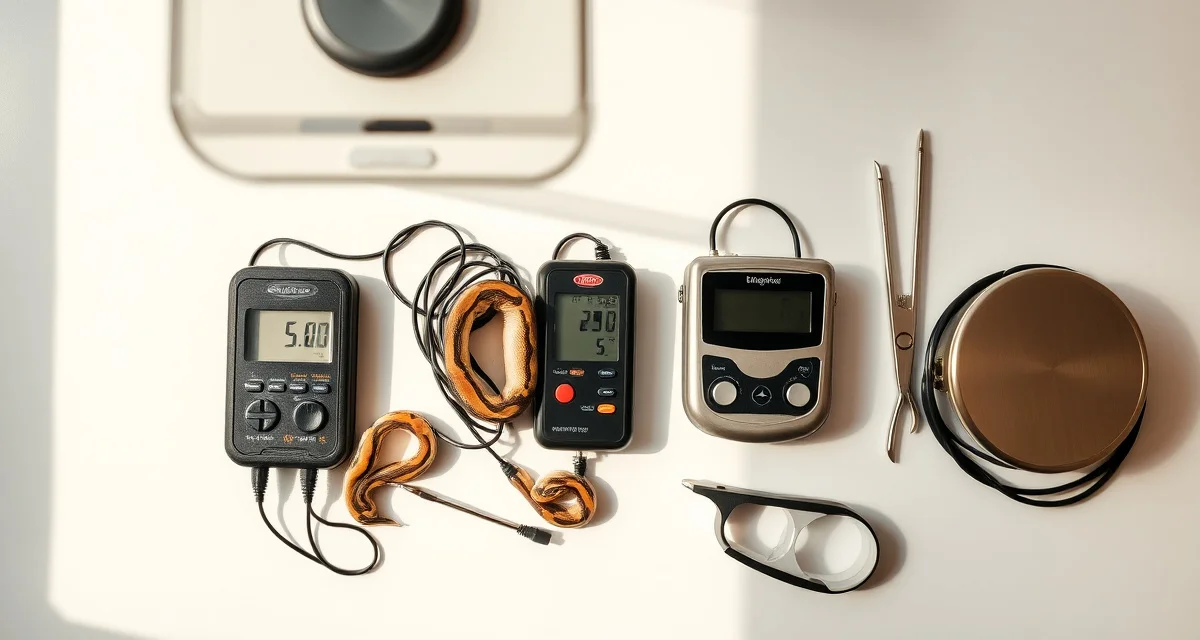
12 Essential Tools Every Ball Python Breeder Needs
Good tools don't make a good breeder, but they make the job easier, safer, and more accurate. These twelve tools belong in every serious ball python breeding operation regardless of collection size.
TL;DR
- Ball python breeding operations require systematic record-keeping from pre-season preparation through end-of-season sales.
- Females at 1,200-1,500g or more are the target weight before introducing them to a breeding male.
- Ovulation detection is the key event that anchors pre-lay shed and lay date calculations.
- Clutch profitability guide depends on understanding actual cost basis per animal, not just gross sale revenue.
- Well-documented animals with complete feeding histories and clear genetic records consistently sell faster and at higher prices.
1. A Quality Incubator
Your incubator is the most critical piece of equipment you own during breeding season. Options range from commercial reptile incubators like the ReptiPro 6000 to DIY builds from wine coolers or mini fridges with external PID controllers. Whatever you use, it needs to hold temperature within a degree without constant intervention.
Budget at least $200 to $400 for a reliable incubator. Skimping here is where clutches get lost.
2. Dual Digital Thermometers with Probes
Never trust a single temperature reading during incubation. Run at least two independent digital thermometers with probes placed inside the incubation container at egg level. If they disagree by more than a degree, investigate before your eggs go in.
Models with data logging that records temperature over time are worth the extra cost, especially if you're managing multiple clutches.
3. A Precision Scale
You need to weigh your animals. Not approximately, but precisely. A scale that reads in 0.1 gram increments and goes up to at least 3,000 grams covers most adults and hatchlings. Accurate weight tracking is how you confirm animals are growing properly, how you know females are at breeding weight, and how you catch health problems early.
4. Feeding Tongs
Long feeding tongs protect your hands and teach animals to associate food with tong movement rather than human scent. This is particularly valuable with hatchlings you're working to establish on frozen/thawed feeders and with animals that have strong feeding responses.
5. Heat Tape or a Rack System with Appropriate Heating
Housing a breeding collection in individual tubs on a shelf with unregulated heat tape is a recipe for temperature accidents. A properly built rack system with regulated heat cable or tape connected to a thermostat provides the consistent heat your animals need. The Herpstat and Spyder Robotics thermostats are popular choices at different price points.
6. A Proportional Thermostat
A basic on/off thermostat works, but a proportional thermostat is more accurate. It gradually reduces power to the heating element as the target temperature is approached rather than cycling on and off abruptly. This reduces temperature swings and is better for your animals and equipment.
7. Hook and Snake Hook Variants
Even calm ball pythons benefit from being hook-trained when you need to do enclosure maintenance or health checks. A good hook technique also protects you from accidental feeding responses. Keep a couple sizes, one for hatchlings and one for adults.
8. Incubation Substrate and Containers
Hatchrite or similar pre-mixed synthetic medium, or perlite with a calibrated water ratio, in well-labeled deli cups or shoeboxes. Each clutch needs its own dated and identified container. Some breeders use one large container for a full clutch, others use individual cups per egg.
Whatever system you use, have enough supplies on hand before the first clutch is laid.
9. Breeding and Record-Keeping Software
A good incubator gets your eggs to the ground. Good software keeps your entire operation organized. Tracking breeding introductions, clutch dates, hatch outcomes, genetic assignments, feeding records, weights, and sales in one system is what separates breeders who scale successfully from those who drown in paper.
The ball python breeding hub discusses operational management in detail. The reptile breeder software comparison walks through your options. HatchLedger is purpose-built for reptile breeders and connects your husbandry records directly to your financials.
10. Mite Treatment Supplies
Reptile mites are a reality in any collection, especially one that receives animals from multiple sources. Have Provent-a-Mite or similar preventive treatment on hand and a treatment protocol ready. An untreated mite outbreak in a breeding collection during egg development can have serious consequences.
11. A Loupe or Magnifying Glass
Useful for examining eggs (checking for mold, small dents, or developmental markings during candling), examining hatchlings for minor abnormalities, and checking shed integrity to confirm complete sheds.
12. A Dedicated Quarantine Enclosure
Every new animal entering your collection should spend 60 to 90 days in a separate quarantine enclosure, away from your main collection and using separate equipment. This protects your entire collection from incoming pathogens, mites, and other issues.
Too many breeders skip quarantine when they're excited about a new acquisition. Quarantine is the most important disease prevention tool you have.
Investing in the Right Equipment
Quality tools are worth the investment. A scale you can trust, an incubator you can rely on, and software that keeps your records straight will save you money in the long run compared to making decisions without accurate data or losing clutches to equipment failures.
Frequently Asked Questions
What are the essential tools every ball python breeder needs?
A reliable incubator, dual temperature probes, a precision scale, a proper rack system with regulated heating, and breeding management software are the non-negotiable core. Everything else is important but secondary.
How do professional breeders equip their ball python breeding rooms?
They invest in reliable temperature control and verification equipment, build scalable housing systems, maintain supplies for health management, and use dedicated software rather than spreadsheets to track records across a large collection.
What software helps ball python breeders manage their operation?
HatchLedger is purpose-built for reptile breeders, connecting animal records, breeding history, clutch outcomes, and financial tracking in one connected system. Unlike general spreadsheets or notes apps, it's designed around the specific workflow of an active breeding season -- from pairing records through hatchling inventory and sales documentation. Free for up to 20 animals.
What records should every reptile breeder maintain per animal?
At minimum: acquisition date and source, morph and genetic documentation, feeding log, weight history, any veterinary treatments, and breeding history including pairing dates, clutch of origin for captive-bred animals, and offspring records. These records serve your own management, buyer documentation, regulatory compliance, and long-term genetic tracking.
How should reptile breeders document genetics for buyers?
A complete genetic record for sale includes the animal's visual morph name, confirmed het genes and their basis (parentage documentation or proven-out production), possible het genes with probability percentages, hatch date, and parent morph information. Including clutch-of-origin records lets buyers independently verify the claims.
Sources
- USARK (United States Association of Reptile Keepers)
- Association of Reptilian and Amphibian Veterinarians (ARAV)
- World of Ball Pythons (WoBP genetics reference database)
- MorphMarket (reptile industry marketplace)
- Reptiles Magazine (Bowtie Inc.)
Get Started with HatchLedger
Every part of a ball python breeding operation -- from pairing records to clutch documentation to financial tracking -- works better when the data is connected rather than scattered across notebooks and spreadsheets. HatchLedger is built for exactly that. Try it free with up to 20 animals.