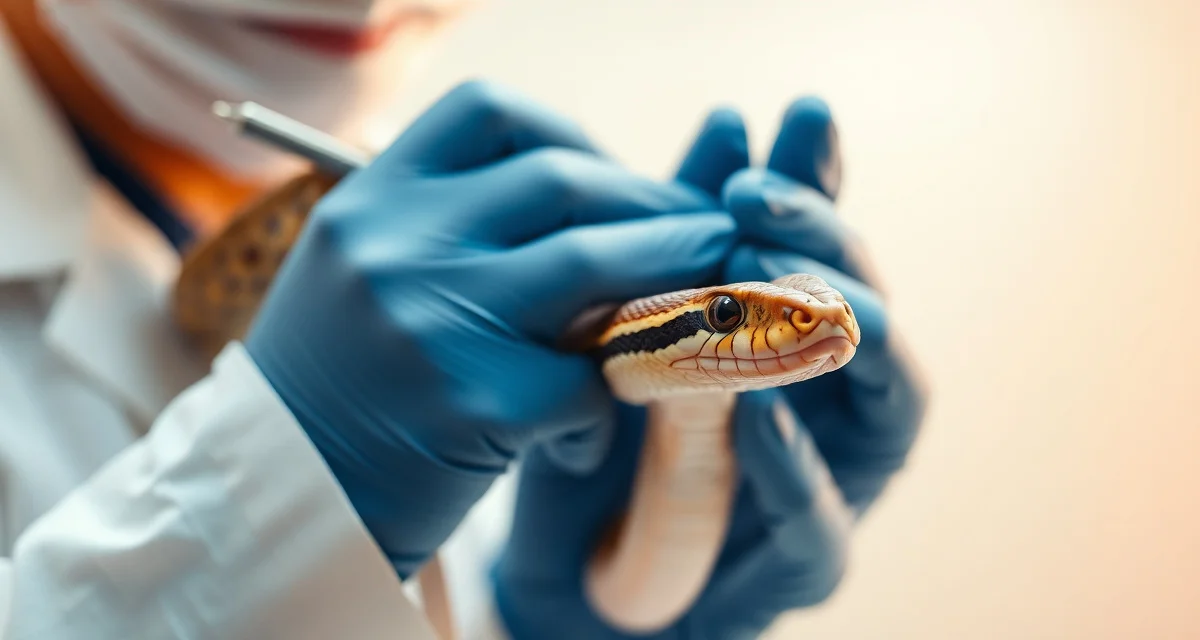
Boa Constrictor Health and Disease Prevention: Complete Breeder Guide
Disease prevention in a boa breeding collection is far less costly than treatment -- in money, time, and animals. The most serious boa health threats are largely preventable through biosecurity, quarantine protocols, and consistent monitoring. Breeders using integrated software report 30% less time on administrative tasks, freeing up time for the daily observation that catches health problems before they spread or worsen.
TL;DR
- Boa constrictors are viviparous (live-bearing), with gestation lasting 5-8 months depending on subspecies and husbandry conditions.
- Seasonal cycling typically starts in October with a 5-10 degree Fahrenheit temperature reduction and reduced photoperiod.
- Litter sizes average 15-25 neonates for Boa constrictor imperator, though some localities and true red-tails average smaller litters.
- Confirming pregnancy in boas is subtler than in ball pythons and often requires close behavioral observation or portable ultrasound.
- Logging every pairing date and gestation-period observation gives you the data to accurately predict birth windows and prepare appropriate neonate housing.
In a breeding collection where animals may be decades old, where females undergo the physical stress of annual gestation, and where you're regularly introducing new acquisitions, health management isn't optional. It's a core part of running a responsible program.
The Biggest Health Threat: Inclusion Body Disease (IBD)
Inclusion body disease is the most significant health concern for boa breeders. IBD is caused by an arenavirus and is transmitted between animals, primarily through contact and through mites that move between enclosures. It has no cure. Infected animals typically develop progressive neurological symptoms -- star gazing (persistent looking upward), inability to right themselves, regurgitation, and respiratory distress -- that worsen over time.
Preventing IBD starts with quarantine. Every new boa that enters your collection should be housed in a separate quarantine area for 60-90 days minimum, with separate tools, gloves, and cleaning supplies. Some experienced breeders quarantine for 6 months or longer. If you test new animals for IBD before introduction, consult with a reptile vet about current testing protocols -- the available tests have limitations and results should be interpreted carefully.
Eliminate mites immediately if you detect them. Mites are IBD vectors. A mite infestation requires treating all animals in the affected area, deep cleaning enclosures, and addressing the facility itself. Don't move animals from affected areas to non-affected areas until the infestation is fully resolved.
Respiratory Infections
Respiratory infections are common in boas kept at incorrect temperatures or humidity levels. Signs include wheezing, mucus around the mouth or nares, open-mouth breathing, and increased secretions. Low-grade respiratory infections may respond to correcting husbandry issues. More serious infections require veterinary treatment with antibiotics.
Prevention centers on maintaining appropriate temperatures and humidity. Boas kept too cool for extended periods are at much higher risk for respiratory infections. Wet substrate without adequate ventilation also contributes. If you're seeing a pattern of respiratory infections in your collection, review your temperature logs and enclosure ventilation.
Mites and External Parasites
Snake mites (Ophionyssus natricis) are a common problem in boa collections. They're small, dark, fast-moving parasites that live on the snake's skin and in the enclosure environment. You'll often notice them on the snake's face around the eye area, in the water dish, or as tiny moving specks in the enclosure. Heavy infestations cause significant stress, anemia, and create wounds that can become infected.
Treatment involves both treating the animal and treating the enclosure and surrounding environment. Several commercial products are available for snake mite treatment. Follow label directions carefully and treat all animals in the affected area simultaneously to prevent reinfestation. Mites can live in enclosure cracks, in substrate, and on equipment -- complete eradication requires thorough cleaning and treatment of the entire environment.
Internal Parasites
Wild-caught or farm-raised boas commonly carry internal parasites. Even captive-bred animals can acquire parasites if fed prey items that carry them. Annual fecal exams from a reptile vet are good practice for any breeding animal. Treating parasites before breeding season is particularly important -- a female carrying a heavy parasite load during gestation will produce fewer, weaker neonates.
Common internal parasites in boas include roundworms, hookworms, and various protozoa. Treatment options depend on the parasite identified and the animal's overall condition. Don't self-medicate with over-the-counter products without veterinary guidance -- dosing errors can harm or kill animals.
Health Monitoring and record keeping
The most effective health management happens before animals become visibly sick. Daily observation is the standard in a serious breeding collection. You're looking for changes in behavior, feeding response, body posture, and appearance. A boa that suddenly starts hiding more, refusing food after an established feeding pattern, or showing asymmetry in muscle tone may be showing early signs of a health issue.
HatchLedger provides a place to log health observations for each animal, track veterinary visits and treatments, and note when health events occurred relative to breeding or husbandry changes. Over time, this record helps you identify patterns -- specific animals that require more veterinary attention, seasonal health events, or correlations between husbandry changes and health outcomes.
HatchLedger connects husbandry logs to your overall program management so veterinary costs show up in your clutch P&L and you can see the full cost of keeping specific animals in your breeding rotation.
Frequently Asked Questions
What is the best approach to boa constrictor health and disease prevention?
Prevention is the only effective strategy for serious boa diseases like IBD. Implement a mandatory 60-90 day quarantine for every new animal, maintain strict mite prevention protocols, and keep separate tools for different areas of your collection. Maintain appropriate temperatures and humidity to minimize respiratory infection risk. Conduct annual fecal exams for breeding animals. Log all health observations daily so you catch changes early rather than after an animal has declined significantly.
How do professional breeders handle boa constrictor disease prevention?
Professionals treat biosecurity as non-negotiable. New animals are quarantined without exception, regardless of the source. Tools, gloves, and cleaning supplies are area-specific. Mite infestations are treated aggressively and completely rather than managed partially. Annual veterinary exams are standard for valuable breeding animals. Health records are maintained alongside breeding records so any correlation between health events and reproductive performance is visible in the data.
What software helps manage boa constrictor health records?
HatchLedger is purpose-built for reptile breeders, connecting animal records, breeding history, clutch outcomes, and financial tracking in one system. Unlike generic spreadsheets, it's designed around the specific workflow of an active breeding season. Free for up to 20 animals.
How do you sex boa constrictor neonates?
Boa constrictor neonates can be sexed by probing or by popping, both of which should be performed by an experienced keeper to avoid injury. Males typically probe to 4-8 subcaudal scales and females probe to 2-3. Recording sex in your records at birth is important for accurate inventory and sales documentation.
How long does it take a boa constrictor to reach breeding weight?
Most B. c. imperator females reach breeding weight (typically 3,000-5,000g depending on locality) at 3-4 years under good feeding conditions. True red-tailed boas (B. c. constrictor) grow larger and may take 4-5 years. Males of most localities are ready to breed at 18-24 months.
Can boa constrictors produce back-to-back litters in consecutive years?
Most experienced breeders rest females for a full season after a large litter to allow proper body condition recovery. A female that drops significant weight during a long gestation needs adequate recovery time before the next breeding cycle. Tracking body weight before and after gestation is the best guide.
Sources
- USARK (United States Association of Reptile Keepers)
- Association of Reptilian and Amphibian Veterinarians (ARAV)
- Herpetologica (Herpetologists League)
- Reptiles Canada Magazine
- World Animal Protection
Get Started with HatchLedger
Boa constrictor breeding involves months of gestation monitoring, pairing records, and litter documentation that is difficult to track reliably across multiple females using notebooks or generic spreadsheets. HatchLedger gives you a single connected system for all of it, from cycling start through neonate sale. Try it free with up to 20 animals.