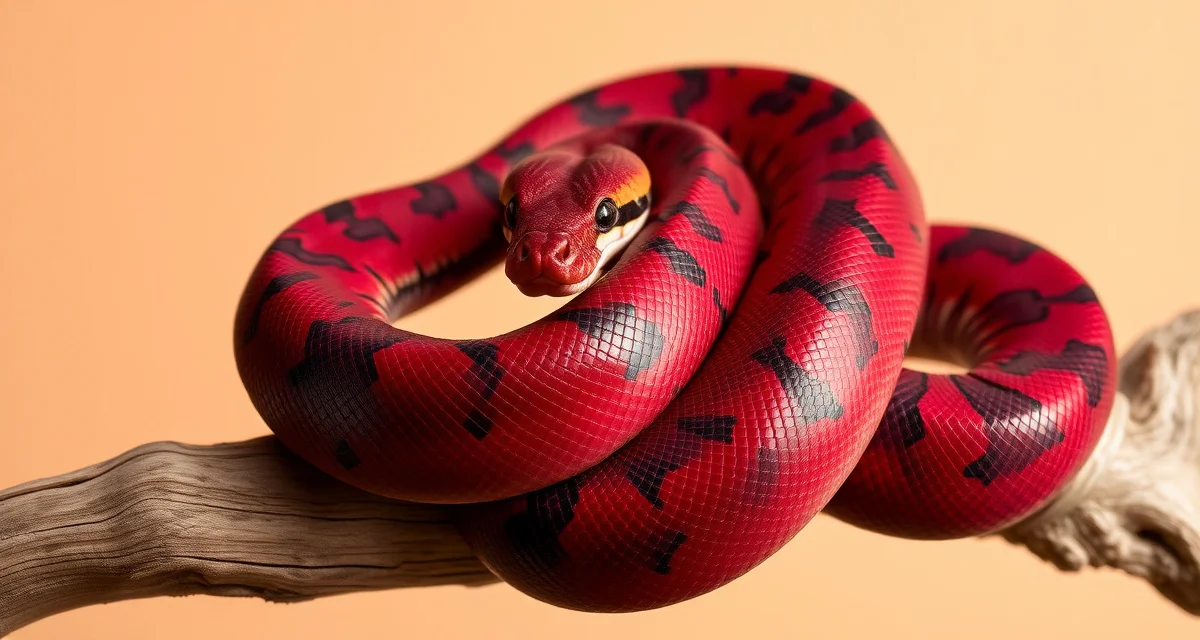
Blood Python Species Guide: Care and Breeding for Serious Keepers
Blood pythons are among the most striking pythons in captivity and among the most misunderstood. Their reputation as difficult, defensive animals reflects their wild-caught history more than their actual temperament as well-established captive-bred animals. A quality captive-bred blood python from a reputable breeder is typically a manageable, rewarding animal. Understanding the species is the first step toward keeping and breeding them well.
Species Overview
The common name "blood python" refers specifically to Python brongersmai, the Sumatran blood python, known for its vivid red coloration. The term is sometimes used loosely to refer to the short-tailed python group, which includes:
- Python brongersmai (Sumatran blood python): Found in Peninsular Malaysia, Sumatra, and nearby islands. Most vivid red coloration. Most common in captivity.
- Python curtus (Borneo short-tailed python): Found in Borneo. Typically darker, less vivid, often brown or gray-brown.
- Python breitensteini (Sumatran short-tailed python or Malayan blood python): Separated from P. curtus relatively recently. Brownish to reddish with a different range.
These are related species with similar care requirements but distinct appearances and slightly different temperaments. Know what you have.
Natural History Relevant to Captive Care
Blood pythons inhabit tropical lowland forests, plantations, and wetland margins in Southeast Asia. They are semi-aquatic ambush predators, spending time near water and relying on humidity. Key natural history facts that inform captive care:
- They are not built for extensive handling: heavy-bodied, short, and adapted for ambush, not activity
- They tolerate high humidity (70-80%+) and can develop skin problems in dry conditions
- They are solitary and do not thrive with co-habitation
- They are primarily ground and near-water hunters, taking small mammals, birds, and lizards
Husbandry Basics
Enclosure
Adults require larger footprint enclosures than ball pythons of comparable weight, as blood pythons are heavier-bodied and broader. A standard 4x2x2 or larger enclosure suits an adult female. Rack systems work for juveniles. Provide a humid hide on the cool side and a second hide on the warm side.
Temperature
- Hot spot: 88-90F
- Warm ambient: 80-82F
- Cool side: 74-78F
- Night drops during breeding season: 68-72F ambient
Avoid temperatures above 92F, which blood pythons tolerate poorly compared to ball pythons.
Humidity
Maintain 70-80% ambient humidity. Blood pythons in dry conditions develop scale rot, retained sheds, and chronic skin problems. Moist substrate (cypress mulch works well), a large water bowl, and regular misting maintain appropriate humidity in most setups.
Feeding
Blood pythons are typically excellent feeders when established. Adults eat large rats, rabbits, or other appropriate-sized prey every 10-21 days depending on prey size and season. Hatchlings take fuzzy mice or small rat pups and should be fed every 7-10 days.
Breeding Overview
Blood pythons are seasonal breeders that respond to temperature cycling. Breeding typically occurs October through January, with egg laying February through April and hatching July through September.
Clutch sizes average 10-16 eggs, with productive females producing larger clutches over time. Incubation targets 84-86F with humidity at 90-95% in the egg box, for approximately 75-90 days.
Blood python hatchlings are larger than ball python hatchlings, typically 80-130g at birth. They can be defensive from birth but most become manageable with regular, calm handling.
The Morph Market
Blood python morphs are a growing segment of the reptile market. Known morph traits include:
- Ivory: recessive mutation producing reduced pigmentation with a creamy white appearance
- Matrix: reduces and simplifies pattern
- Albino: melanin-reducing recessive, vivid orange-red with reduced dark pigment
- Titanium: high-contrast morph
- Various locality-specific color traits
The blood python morph market is small enough that accurate genetics documentation and honest marketing are essential for building a reputation. HatchLedger's genetics records support blood python morph tracking with the same tools used for ball python collection management.
Related content: Blood Python Breeding Records | Blood Python Cycling Guide | Blood Python Record Keeping
Sources
- Reptile and Amphibian Ecology International
- IUCN Red List species profiles
- Association of Reptilian and Amphibian Veterinarians (ARAV)
- Blood python keeper community (MorphMarket)