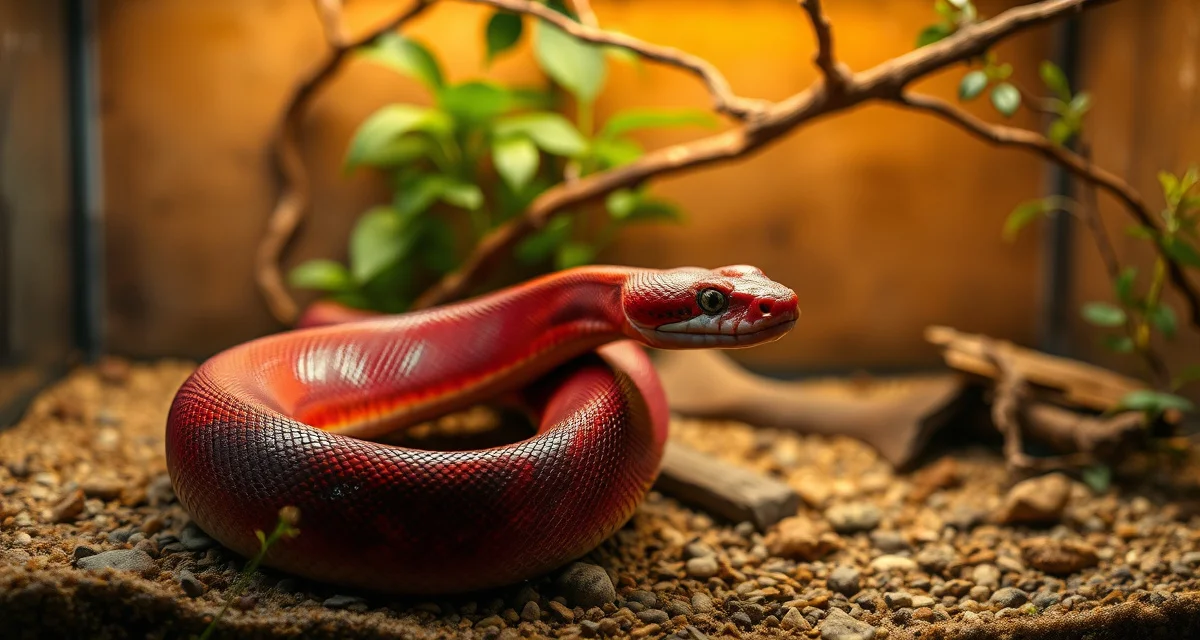
Blood Python Cycling Guide: How to Trigger Breeding Behavior
Blood pythons come from equatorial Southeast Asia, a region without dramatic seasonal temperature swings. This makes cycling them for breeding somewhat less predictable than species from areas with distinct dry and wet seasons. But experienced blood python breeders have developed effective protocols, and with consistent documentation, you can refine the approach for your specific animals.
The Environmental Triggers
Temperature Reduction
Blood pythons are housed at 82-86F ambient with hot spots of 88-90F under normal conditions. To initiate breeding cycling, reduce ambient temperatures beginning in late September or October:
- Day ambient: reduce to 76-80F
- Night ambient: allow to drop to 68-72F
- Hot spots: maintain at 84-86F (slightly cooler than normal, still allowing thermoregulation)
The night-time temperature drop is the primary trigger. Blood pythons may not respond dramatically to modest temperature reductions. Some breeders run night drops as cool as 65F for several weeks before introductions. Others find milder drops of 8-10 degrees sufficient for their animals.
Document your specific temperature settings and the start date of your cycling protocol each year. If a season is unproductive, your recorded protocol is the starting point for identifying what to adjust.
Feeding Protocol During Cycling
Reduce feeding frequency during the cycling period. Blood pythons tend to be more food-motivated than ball pythons and may continue eating aggressively through the breeding season if offered prey. However, overfeeding during the breeding season can produce overly fat females who do not cycle efficiently.
Cycling feeding protocol:
- September: reduce to every 14 days
- October-November: feed every 21 days if accepting food, prey size one step down from normal
- December-February (pairing period): feed males every 2-3 weeks if accepting; females every 21 days if accepting, or less
Many blood python females will continue eating during gravidity, unlike ball pythons. Continue offering food through gravidity but reduce size and frequency.
Humidity During Cycling
Blood pythons require higher ambient humidity than ball pythons: 70-80% is appropriate. Slightly reducing humidity during the cycling period to 60-65% may serve as an additional breeding trigger, mimicking the drier months of the year in their native range. This is optional.
Always provide fresh water throughout the cycling and breeding process.
Introduction Protocol
Begin introductions 4-6 weeks after starting the cooling protocol. Blood python introductions require more caution than ball python pairings due to the defensive nature of many blood pythons.
Supervised introductions are preferred. Place the male with the female in a neutral enclosure or in the female's enclosure. Watch for 15-30 minutes for the female's initial response. If she is immediately and severely defensive (striking repeatedly, coiling aggressively), separate and try again in a week.
If the female is tolerant of the male's presence, leave them together for 24-48 hours. Check periodically for locks.
Introduction frequency: Every 3-7 days during the pairing season, with rest periods for the male between introductions.
Signs of Successful Cycling
- Male becomes active and investigates the female's enclosure with interest
- Female's restlessness increases
- Locks are observed
- Female begins showing the early stages of follicular development (slight increased girth through lower body)
Animals That Don't Respond
Some blood pythons are slow to cycle, particularly younger animals or those new to captivity. Wild-caught animals may take 2-3 seasons to settle into a reliable breeding routine. If an animal doesn't respond after a full cycling protocol:
- Try adjusting temperature: drop nights lower or extend the cooling period
- Try a different male or female partner
- Evaluate body condition: a female in poor condition will not cycle efficiently
- Give the animal a year off to focus on feeding and condition
Document every protocol you run and the results, even failures. Year-over-year data is the fastest path to understanding what each animal in your collection needs.
HatchLedger tracks cycling start dates, temperature protocol notes, and breeding season records alongside the pairing and clutch data, so you have the full context when reviewing a season.
Related content: Blood Python Breeding Records | Blood Python Species Guide | Breeding Season Management
Sources
- Reptile and Amphibian Ecology International
- Blood python keeper community (MorphMarket, Fauna Classifieds)
- Association of Reptilian and Amphibian Veterinarians (ARAV)