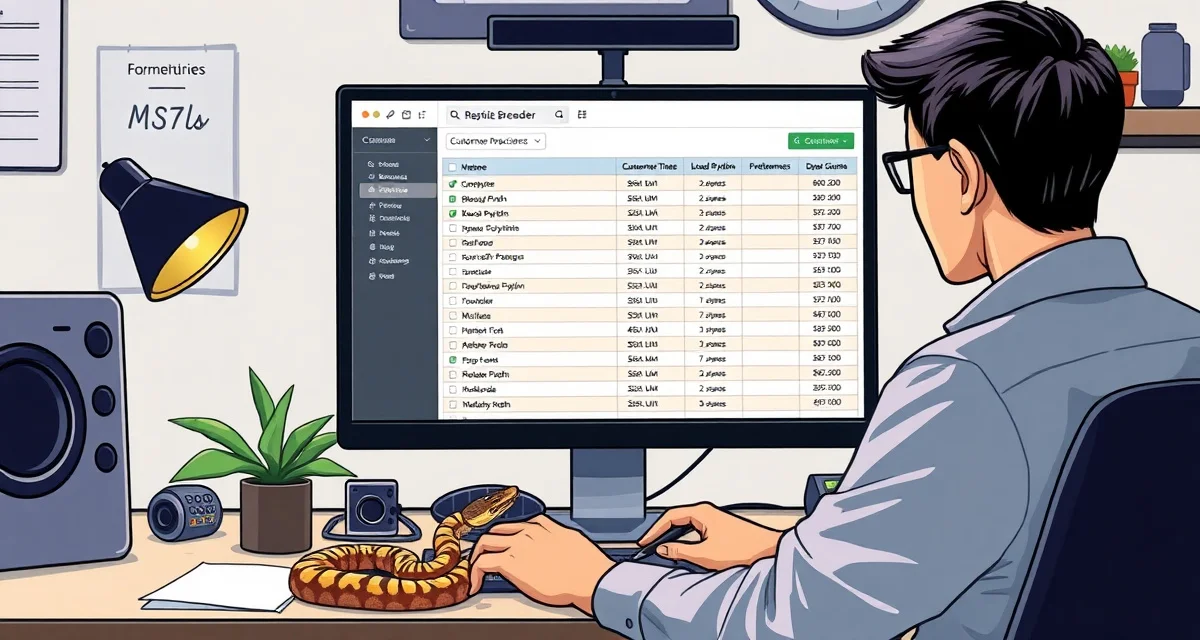
Blood Python Buyer Waitlist Management: Complete Breeder Guide
By HatchLedger Editorial Team · Published 2025-04-12 · Updated Mar 13, 2026
A blood python buyer waitlist is a valuable sales tool in a market where the buyer pool is smaller but more specialized than ball pythons. Buyers waiting for specific blood python morphs from specific breeders may wait patiently for months -- if they trust that the breeder communicates reliably and delivers what they promise. Breeders using integrated software report 30% less time on administrative tasks, leaving time for the buyer relationship management that waitlist success requires.
TL;DR
- Blood python buyers are highly specialized and will wait 6-9 months for the right animal from a trusted breeder, making waitlists more viable here than in higher-volume species.
- Clutch sizes of 8-16 animals mean every waitlist spot matters -- deposits are essential to filter serious buyers from casual interest.
- Capture very specific buyer preferences at intake: species (brongersmai, curtus, or breitensteini), morph, sex, price range, and flexibility for future seasons.
- Proactive seasonal updates (cycling, introductions, gravid confirmation, eggs laid, hatch) keep buyers engaged through the long wait and reduce drop-off.
- Blood python hatchling feeding establishment can take several weeks -- being upfront about this timeline prevents buyer frustration and sets accurate expectations.
- Connecting buyer records directly to animal inventory and financial tracking (rather than managing through email threads) is what separates organized operations from chaotic ones.
Why Waitlists Work Well for Blood Pythons
The blood python market has a knowledgeable, patient buyer base. These buyers know the species, understand breeding season timelines, and are often willing to wait for the right animal from a trusted source. A buyer waiting for an ivory blood python from a specific line knows that few breeders produce them and that getting on a waitlist with a reputable producer is the most reliable path to the animal they want.
This patience means your waitlist can actually work as intended -- buyers stay engaged through the months between when they sign up and when animals are available -- as long as you communicate reliably and deliver what you've promised.
Building a Useful Waitlist
Every waitlist entry should include:
- Buyer name and contact information
- Exactly what they're looking for (species -- brongersmai, curtus, or breitensteini -- morph, sex preference, price range)
- Flexibility level (will they wait for the right animal from a future season if this season doesn't produce what they want?)
- Date added and deposit status
- How they found you
For blood python buyers, the "exactly what they're looking for" field should be very specific. A buyer waiting for a female T+ albino P. brongersmai from proven parents with full lineage documentation has very specific needs that you should capture precisely. Keeping these records organized in a dedicated system -- rather than scattered across emails -- is the foundation of a reliable reptile breeder record-keeping workflow.
Deposits are even more useful in the blood python market than in larger-volume species because they filter out casual interest from serious buyers. Given that blood python clutches are small (8-16 animals), you can't afford to hold spots for buyers who don't follow through.
Communication Strategy
Blood python breeding season runs fall through spring. A buyer who signed up in August for a morph animal is potentially waiting 6-9 months to see what the season produces. Maintain their engagement with periodic updates:
- Cycling protocol started (October)
- Introductions beginning (November-December)
- Female confirmed gravid or showing signs of follicle development (January-February)
- Eggs laid and in incubation (March-April)
- Hatch in progress, preliminary morph assessment (May-June)
Each update is brief and informative. Buyers who know where you are in the process feel connected to the outcome and are much less likely to have moved on when animals are finally ready. Tracking these breeding season milestones alongside your clutch records keeps your communication accurate and consistent across all waiting buyers.
Processing Sales from the Waitlist
When hatch is complete and animals have their first shed behind them, notify waitlist buyers with preliminary information about available animals. Give buyers 48-72 hours to confirm interest before moving down the list.
For blood pythons, be transparent about the extended feeding establishment period. Buyers who want an animal immediately after hatch need to understand that blood python hatchlings may take several weeks to reliably establish on food. Some buyers will wait for a more established animal; others will take the challenge. Both are legitimate -- just be upfront about what they're getting. Logging hatchling feeding records by individual animal makes it easy to give buyers accurate, up-to-date status when they ask.
HatchLedger manages buyer records alongside animal inventory, connecting waiting buyers to available animals as they become ready for sale.
HatchLedger links buyer transactions to your P&L so waitlist sales flow directly into your financial tracking.
Frequently Asked Questions
What is the best approach to blood python buyer waitlist management?
Capture specific preferences at intake -- species, morph, sex, price range, and flexibility. Take deposits to filter serious buyers from browsers. Communicate proactively through the breeding season with brief, informative updates. When animals are available, notify waitlist buyers in order and give a defined response window. Be transparent about blood python hatchling feeding establishment timelines so buyers have accurate expectations. Document all buyer information in an organized system rather than email threads.
How do professional breeders handle blood python buyer waitlists?
Professional blood python breeders treat their waitlist as a curated buyer relationship list rather than a first-come-first-served queue. They know what each buyer specifically wants and communicate with them accordingly. They maintain engagement through the season so buyers don't disappear. When animals are ready, the matching process is smooth because both the animal's characteristics and the buyer's preferences are clearly documented.
What software helps manage blood python buyer waitlists?
HatchLedger provides buyer management tools connected to your animal inventory and sales records. Waitlist preferences, deposit status, and contact information all live in the same system as your breeding records. When hatch produces available animals, matching them to appropriate waitlist buyers is organized and efficient rather than requiring you to dig through emails to remember who wanted what.
How should I handle a waitlist buyer whose preferred morph wasn't produced this season?
Contact them as soon as you have a clear picture of what the season produced, before you open animals to the general public. Let them know specifically what is available and ask whether they want to be matched to something close or held over to the next season. Buyers who receive this kind of direct, honest communication almost always stay on the list. Documenting their response and updating their waitlist entry immediately prevents confusion when the next season's hatch arrives.
Should I charge different deposit amounts for rarer blood python morphs?
Many breeders do scale deposits to the expected sale price of the animal, which is reasonable given that a T+ albino P. brongersmai commands a significantly higher price than a wild-type. A deposit that represents roughly 20-25% of the anticipated sale price gives the buyer meaningful skin in the game without being a barrier to entry for serious collectors. Whatever amount you choose, document it clearly in the buyer's record along with your refund policy so there is no ambiguity if the season doesn't produce what they wanted.
How many buyers should I keep on a waitlist for a single morph pairing?
A practical rule is to keep two to three confirmed, deposited buyers per animal you realistically expect to produce from that pairing. Blood python clutches average 8-16 eggs, but hatch rates and morph ratios vary, so having a small buffer of backup buyers protects you without creating a situation where most waitlist buyers are perpetually disappointed. Be honest with buyers about where they sit in the queue so they can make informed decisions about whether to also pursue other sources.
What is Blood Python Buyer Waitlist Management: Complete Breeder Guide?
Blood Python Buyer Waitlist Management: Complete Breeder Guide is a comprehensive resource for reptile breeders who want to organize and optimize their sales process for blood pythons. It covers how to capture detailed buyer preferences, collect deposits, communicate proactively through the breeding season, and convert waitlist interest into confirmed sales. The guide is designed for breeders working with the specialized blood python market, where buyers are fewer but highly committed and willing to wait months for the right animal from a trusted source.
How much does Blood Python Buyer Waitlist Management: Complete Breeder Guide cost?
The guide itself is free educational content published on HatchLedger. The breeding management software it references is a separate product with its own pricing. For breeders considering dedicated waitlist tools, costs vary by platform and feature set. What the guide emphasizes is that the administrative time saved — breeders using integrated software report roughly 30% fewer hours on admin tasks — often justifies any software investment, especially when managing multiple clutches and buyer relationships across a 6-9 month breeding cycle.
How does Blood Python Buyer Waitlist Management: Complete Breeder Guide work?
The guide walks breeders through each stage of waitlist management: collecting intake details like subspecies preference, morph, sex, and budget flexibility; requiring deposits to filter serious buyers; sending proactive seasonal updates at key milestones like cycling, gravid confirmation, eggs laid, and hatch; and setting accurate expectations around hatchling feeding establishment timelines. By systematizing these steps, breeders reduce buyer drop-off during the long wait and avoid the last-minute scramble to place animals after hatch.
What are the benefits of Blood Python Buyer Waitlist Management: Complete Breeder Guide?
The core benefits are time savings, higher conversion rates, and stronger buyer trust. Proactive communication keeps buyers engaged through a 6-9 month wait, reducing ghosting and deposit chargebacks. Capturing specific preferences upfront means breeders can match animals to buyers confidently rather than guessing. Deposits filter casual inquiries from committed buyers, making every waitlist slot meaningful given blood python clutch sizes of 8-16 animals. The result is a more predictable sales pipeline and a reputation for reliability that drives repeat purchases and referrals.
Who needs Blood Python Buyer Waitlist Management: Complete Breeder Guide?
This guide is for blood python breeders at any experience level who are tired of managing buyer inquiries through scattered messages, spreadsheets, or memory alone. It is especially relevant for breeders working with brongersmai, curtus, or breitensteini who produce limited clutches and need every animal placed efficiently. Hobbyist breeders scaling up, as well as established breeders looking to reduce administrative overhead, will find the waitlist framework directly applicable to the specialized, relationship-driven dynamics of the blood python market.
Related Articles
Sources
- Reptile & Amphibian Breeders Alliance (RABA), industry standards and best practices documentation
- United States Association of Reptile Keepers (USARK), breeder compliance and sales guidance
- Ball Python and Blood Python Morph Genetics Reference, World of Ball Pythons (morphmarket-affiliated research database)
- National Reptile Breeders Expo (NARBC), annual market and buyer trend reports
- University of Florida IFAS Extension, exotic reptile husbandry and commerce guidelines
Get Started with HatchLedger
Managing a blood python waitlist across a 6-9 month breeding season -- with specific morph preferences, deposit records, and feeding status updates for each buyer -- is exactly the kind of detail work that falls apart in email threads and spreadsheets. HatchLedger keeps your buyer records, animal inventory, and financial tracking in one place so nothing slips through when hatch season gets busy. Try HatchLedger free and see how much cleaner your next season's sales process can be.