Ball Python Hatchling Season: Complete Management Guide
By HatchLedger Editorial Team · Published 2025-05-05 · Updated Mar 13, 2026
Hatchling season is the payoff, and also the most logistically demanding stretch of the breeding year. When you've got three clutches pipping within two weeks of each other, 25 hatchlings in deli cups, half of them still in blue, feeders arriving Friday, and buyers messaging asking for updates, the gaps in your management system become very obvious.
TL;DR
- Healthy ball python hatchlings typically weigh 55-90 grams and should receive their first meal after their first shed, usually 7-14 days post-hatch.
- Hatchlings that refuse frozen-thawed prey can often be transitioned using scenting, smaller prey sizes, or darkened feeding enclosures.
- First shed timing is a reliable health indicator -- hatchlings that do not shed within 21 days post-hatch warrant closer observation.
- Each hatchling needs an individual record: hatch date, weight, morph ID, sex (if determined), and a complete feeding log before sale.
- Animals sold before 3 confirmed meals and 65g body weight generate significantly more buyer problems post-sale.
This guide covers everything from the moment eggs pip through first feeds, inventory management, sexing, photography, documentation, and the sale process. Running this well means fewer mistakes, fewer refunds, and more revenue from the same clutch.
Pip Through Emergence: What to Expect
Day 1 of pip: The hatchling cuts a small slit in the egg. You'll often see just the snout. The hatchling may appear to "rest" for hours or even a day, this is normal. It's absorbing the final yolk reserves and adjusting to air breathing.
24-48 hours post-pip: Most hatchlings emerge on their own. Some stay in the egg for up to 72 hours. Don't pull them unless you have clear reason to intervene, a visible yolk sac still attached, obvious distress, or an egg that's collapsing around the animal.
Assisted emergence: If a hatchling has pipped but not emerged after 48+ hours, you can gently enlarge the pip hole. Make a small cut with clean scissors, follow the existing slit direction. Never pull the animal. If a yolk sac is still attached, return the hatchling to the incubator box (keeping the sac moist) and give it another 12-24 hours. Pulling an animal with an attached yolk sac is almost always fatal.
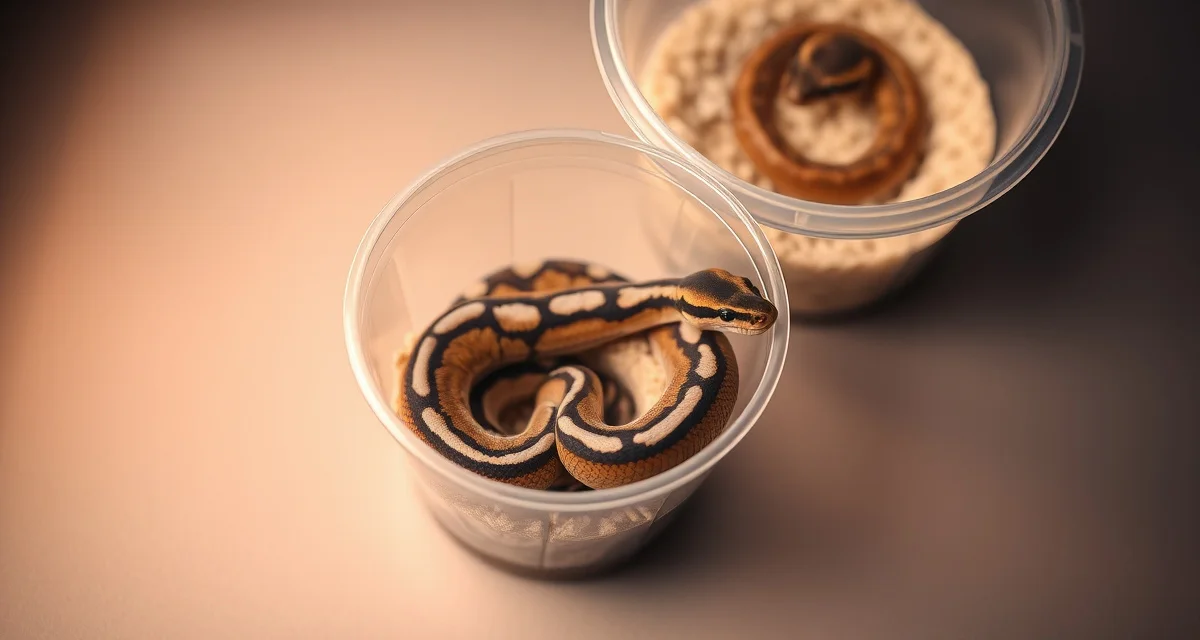
After emergence: Place each hatchling immediately in its own labeled deli cup with:
- Paper towel substrate (clean, absorbent, easy to check)
- Small water dish (hatchlings often drink within hours)
- A hide or crumpled paper towel for security
- Ventilation holes (but not too large, ball python neonates can push through surprisingly small gaps)
Label every cup immediately. In the excitement of a clutch hatching, it's easy to mix up animals. If you have multiple morphs in a clutch, a label error creates a problem that's hard to fix later.
Processing: What to Document at Hatch
Within the first 24 hours, document for each hatchling:
- Hatch date
- Weight (in grams, scale accurate to 1g minimum)
- genetics guide (or "possible morph" if uncertain)
- Parent clutch reference
- Any physical notes (minor kinks, retained egg tooth, etc.)
Morph ID at hatch: Most morphs are identifiable at hatch, but some can be subtle. Pastel hatchlings show the characteristic bright head and yellow/white belly. Clowns are unmistakable. Pieds are unmistakable. Spider hatchlings are obvious. Enchi can look similar to Pastel in some combos, when in doubt, note as "possible" and revisit after first shed when colors sharpen.
Weight benchmarks: A healthy ball python hatchling typically weighs 60-100g. Animals under 50g are small but can thrive with careful care. Animals over 100g from a large clutch are excellent starts. Record this initial weight, it's the baseline for all future tracking and often requested by buyers as part of sale documentation.
First Shed
Hatchlings typically shed 7-14 days post-hatch. This shed is important for two reasons:
- It confirms the animal is healthy and developing normally
- After this shed, morph coloration often clarifies significantly, what looked "possibly Enchi" often becomes clearly Enchi (or clearly not)
During the blue/in-shed period:
- Don't attempt to feed
- Make sure the water dish is available and the deli cup isn't too dry
- Hatchlings in a blue haze with milky eyes are normal and fine, don't disturb them unnecessarily
After shed:
- Check that the shed came off in one piece (incomplete sheds on hatchlings can cause constriction, especially around eyes and tail tip)
- Update your morph documentation if the post-shed coloration clarifies anything
- Weigh again, you'll see a slight weight loss from the shed itself
Getting Hatchlings to Feed
This is the single most common source of breeder frustration. Ball python hatchlings have a reputation for feeding refusal, and it's partly deserved, but most healthy hatchlings will eat within 2-4 feeding attempts with the right approach.
Timing: Wait until after first shed. Offering food before the first shed almost never works.
Prey size: Appropriately sized frozen/thawed fuzzy mice or rat pups. "Appropriately sized" means slightly wider than the widest part of the snake's head, not a "challenge" prey item. When in doubt, go smaller. A smaller prey item is better than prey refusal or a feeding stress response.
Frozen/thawed technique: Thaw completely (ideally in a sealed bag submerged in warm water for 20-30 minutes). Offer with tongs at body temperature, you can warm slightly more with a heat lamp or by brief immersion in hot water. Movement from tongs ("jiggling" the prey) helps trigger a feeding response in reluctant animals.
The paper bag trick: Place hatchling and prey item in a small brown paper bag, fold the top over, and leave in a warm spot for 30-60 minutes. The confined, dark space reduces visual stress and often triggers feeding in reluctant animals.
Scenting: Rubbing prey against a live feeder (run a live mouse over the F/T prey before offering) or using a small dab of tuna juice or lizard shed can trigger reluctant feeders. Use sparingly, you want hatchlings eating F/T cleanly.
Document every feeding attempt: Note the date, prey type and size, and whether the animal fed. A pattern of consistent refusal that persists past 5-6 attempts (especially if the animal is losing weight) warrants investigation, check temps, check hide security, check for mites, and consider a vet visit if weight drops below 50g.
Sexing Hatchlings
Sex determination matters for pricing (females typically sell at a premium in ball pythons, often 2-3x the male price for the same morph), for genetic planning, and for buyer requests.
Probing: The most accurate method. A lubricated probe (use clean, sterile lubricant) is gently inserted into the cloaca and directed posteriorly. Males: probe goes 8-15+ scale lengths. Females: probe goes 1-3 scale lengths. This should be learned in person from an experienced breeder before you attempt it, improper technique can injure the animal.
Popping: Gentle pressure below and anterior to the cloaca can evert the hemipenes in males. Works well on neonates. Requires practice and a delicate touch, too much pressure can cause injury. Not as definitive as probing in experienced hands.
When to sex: You can probe hatchlings after first shed, but waiting until 3-4 good meals have been consumed and the animal is showing healthy weight gain gives you a calmer, better-conditioned animal to work with and reduces stress risk.
Inventory Management at Scale
With one clutch, inventory management is easy. With five clutches hatching within three weeks of each other, it becomes a real logistics problem.
Physical labeling system: Number every deli cup. Use a consistent scheme: clutch number, animal number within that clutch. "C1-4" = Clutch 1, Animal 4. This label goes on the cup. The number links to your records.
What to track per animal in inventory:
- Animal ID / cup label
- Morph and genetics
- Hatch date and weight
- Feeding history (each feeding: date, prey type, success/refuse)
- Sex (once determined)
- Sale status (available, on hold, sold)
- Buyer information if on hold
Inventory aging: Animals that've been on the market for 60+ days need attention. Either re-photograph, adjust price, push to different channels, or move to MorphMarket if selling through direct channels. Every week an unsold hatchling eats feeders is margin erosion.
Photography for Sales
Good photos sell animals faster and at better prices. This is not optional at a professional level.
Equipment: You don't need a professional camera. A modern smartphone with decent lighting does the job. What matters is execution.
Setup:
- Use a plain white background (white foam board or photo paper)
- Natural light or a daylight-balanced bulb, avoid harsh direct flash
- A small clear deli cup or photo box lets you control the snake's position
- Photograph when the animal is alert and moving, not defensive or coiled tight
Shots needed for each animal:
- Full-body dorsal (top-down) to show pattern
- Side profile showing head and upper body
- Close-up head shot showing eye color, pattern, head stamp
- Belly shot (some buyers want this, especially for pattern morphs)
Photo immediately after first shed when colors are sharpest and pattern most defined. Pastels, Enchis, and other color morphs look noticeably better photographed in the first 72 hours post-shed.
Buyer Documentation
Every animal that leaves your collection should leave with documentation. This protects you (disputes about what you said the animal was) and builds your reputation.
Minimum documentation per sale:
- Animal morph name and genetic makeup
- Confirmed and possible het genes with source explanation
- Hatch date
- Weight at sale
- Number of confirmed meals, prey type
- Parent information if available
HatchLedger's buyer pack generator pulls all of this from your existing records and formats it for delivery. What used to take 15 minutes of copying data from multiple places takes seconds.
Managing the Sale Process
Holding deposits: Always take a deposit before holding an animal. "I want it, can you hold it?" without a deposit means the animal is off the market based on a promise. A $50-$100 non-refundable deposit (applied to purchase price) protects your time.
Communication: Respond to buyers promptly. In the ball python market, a buyer who doesn't hear back within 24 hours moves on to the next listing. If you're selling at volume, a templated response with key details (genetics, hatch date, first feed status, price with shipping) saves time.
Shipping: Learn to ship properly before you ship an animal. Use a properly sized box with insulation, a heat pack (in cold weather), a secure deli cup inside the box, and an ICE-certified or similar express shipping service. An animal that arrives dead because of shipping failure is a refund, a chargeback, and a reputation hit.
Related Articles
- The Complete Ball Python Egg Incubation Guide
- Ball Python Wintertime Breeding Season Management: Cold Weather Husbandry Guide
- Carpet Python Hatchling Inventory Management: Complete Breeder Guide
FAQ
How long does it take ball python hatchlings to eat for the first time?
Most healthy hatchlings will accept their first meal 7-21 days after first shed, which itself typically occurs 7-14 days post-hatch. So plan for first feeding attempts at 2-4 weeks post-hatch. Some animals take longer, 8-10 weeks without eating in an otherwise healthy, properly set up hatchling is stressful but not immediately dangerous as long as weight isn't dropping significantly. Persistent refusal past 10 weeks in a declining-weight animal warrants veterinary attention.
How do professional breeders handle ball python hatchling inventory?
Consistent physical labeling tied to digital records is the foundation. Each animal gets a unique ID that links to its clutch records, morph documentation, feeding log, and sale status. At scale, this is managed in software like HatchLedger rather than spreadsheets because the records need to be searchable, updatable, and connected to both breeding history and buyer communication.
What software helps manage ball python hatchling inventory?
HatchLedger is purpose-built for reptile breeders, connecting animal records, breeding history, clutch outcomes, and financial tracking in one connected system. Unlike general spreadsheets or notes apps, it's designed around the specific workflow of an active breeding season -- from pairing records through hatchling inventory and sales documentation. Free for up to 20 animals.
What is Ball Python Hatchling Season: Complete Management Guide?
Ball Python Hatchling Season: Complete Management Guide is a comprehensive article on HatchLedger covering every stage of managing ball python hatchlings from pip to sale. It addresses inventory tracking, first feeds, shed timing, morph identification, sexing, photography, documentation, and buyer communication. The guide is designed for breeders managing multiple clutches simultaneously, helping them avoid common mistakes that lead to refunds, health issues, and lost revenue during the most logistically demanding stretch of the breeding year.
How much does Ball Python Hatchling Season: Complete Management Guide cost?
Ball Python Hatchling Season: Complete Management Guide is free editorial content published on HatchLedger. There is no purchase required to access the article. HatchLedger may offer paid tools, software, or platform features that complement the guidance in the article, but the guide itself is openly available to any ball python breeder looking to improve their hatchling season management practices.
How does Ball Python Hatchling Season: Complete Management Guide work?
The guide works by walking breeders through a structured workflow starting at pip and ending at sale. It covers health benchmarks like the 55-90 gram hatch weight range and first shed within 21 days, feeding protocols including frozen-thawed transitioning techniques, and individual record-keeping for each hatchling. By following the outlined system, breeders can manage multiple clutches in parallel without losing track of feeding history, morph IDs, weights, or buyer-ready status.
What are the benefits of Ball Python Hatchling Season: Complete Management Guide?
The guide helps breeders reduce buyer complaints, refunds, and post-sale health issues by establishing clear readiness thresholds before selling. Animals with 3 confirmed meals and at least 65 grams body weight generate significantly fewer problems. Breeders also benefit from organized documentation that speeds up the sale process, supports accurate morph identification, and creates a professional record trail. Better systems mean more revenue extracted from the same clutch with less stress.
Who needs Ball Python Hatchling Season: Complete Management Guide?
This guide is written for ball python breeders who produce multiple clutches per season and need a repeatable management system. It is especially relevant for anyone who has experienced gaps in their process when volume spikes, such as three clutches pipping within two weeks. Both intermediate hobbyists scaling up and established commercial breeders looking to tighten operations will find practical value in the documentation, feeding, and sale readiness frameworks covered.
Sources
- USARK (United States Association of Reptile Keepers)
- Association of Reptilian and Amphibian Veterinarians (ARAV)
- World of Ball Pythons (WoBP genetics reference database)
- MorphMarket (reptile industry marketplace)
- Reptiles Magazine (Bowtie Inc.)
Get Started with HatchLedger
Processing a season's worth of hatchlings means individual records for every animal -- hatch date, morph ID, weights, feeding logs, and sale status. HatchLedger's hatchling inventory keeps all of that organized and generates buyer documentation automatically from your existing records. Try it free with up to 20 animals.