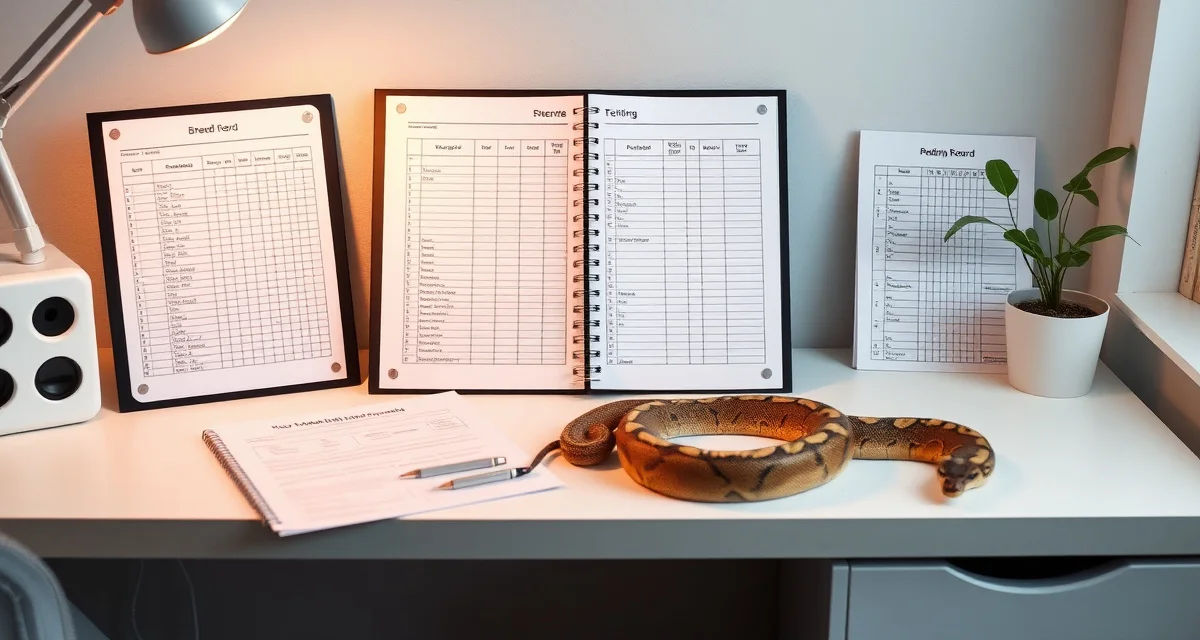
Ball Python Breeding Records: A Complete Guide
A ball python breeding record is not a single document. It's a chain of connected data points that starts when you introduce a pair and ends when the last hatchling from that clutch is sold or placed. The chain includes pairing records, ovulation data, pre-lay information, clutch records, incubation logs, hatch data, hatchling records, and sales documentation.
When the chain is complete and accurate, you can answer any question about any animal in your collection. When links are missing, you're guessing.
The Breeding Record Chain
1. Pre-Season Documentation
Before the first introduction of the season, document the state of every breeding candidate:
- Weight (females should be 1,200g minimum, ideally 1,500g+)
- Last feeding date and last shed date
- Breeding history (first-season breeder or experienced)
- Planned pairings: which female with which male, and what morph outcomes you're targeting
This pre-season snapshot becomes important later. If a female produces a problem clutch, you want to know what condition she was in when the season started.
2. Pairing Records
Log every introduction with the date, the female ID, the male ID, and whether a lock was observed. A lock is confirmed copulation. Ball pythons can lock for hours, and females often lock multiple times over weeks before ovulating.
Important pairing data to record:
- Date of introduction
- Lock observed (yes/no)
- Duration of lock if observed
- Date male was removed
If you run multiple introductions with the same pair, log each one. The pattern of lock dates helps estimate when ovulation might occur and how receptive the female has been.
3. Ovulation Records
Ovulation is the most critical event to document in the ball python breeding cycle. It's a visible mid-body swelling that lasts 24-48 hours. The ovulation date anchors everything downstream.
From the ovulation date, you can calculate:
- Expected pre-lay shed: approximately 28-35 days post-ovulation
- Expected lay date: approximately 28-35 days post-pre-lay shed
- Expected hatch date: 54-65 days from lay date at 88-90F
If you catch the ovulation, your timeline calculations are anchored. If you miss it but catch the pre-lay shed, you still have a usable anchor. Missing both means you're estimating.
4. Pre-Lay Shed Record
Log the date of the pre-lay shed, sometimes called the post-ovulation shed. This shed is different from normal cycling sheds: it happens approximately a month after ovulation and signals that egg laying is roughly 28-35 days away.
Once a female has her pre-lay shed, prepare her egg-laying enclosure (or confirm the nest box is in place) and check her daily. She will become increasingly restless and may stop eating entirely in the final week before lay.
5. Clutch Records
When eggs are laid, document immediately:
- Lay date and time (if known)
- Total egg count
- Fertile egg count (firm, white, slightly sticky)
- Slug count (infertile eggs: yellow, soft, separate from clutch)
- Total clutch weight
- Individual egg weights or notation of any abnormal eggs
- Female's weight post-lay
Pull eggs for artificial incubation if desired, noting whether any eggs were stuck together and how you handled them.
6. Incubation Records
Set up an incubation container with appropriate substrate (vermiculite at roughly 1:1 water-to-substrate by weight, or perlite), and document:
- Incubation container setup date
- Substrate type and ratio
- Incubation temperature (target 88-90F)
- Humidity (target 95-100% in the egg box)
- Incubator used
Log temperature and humidity checks throughout incubation, along with any egg inspections. Candling fertile eggs at 3-4 weeks can confirm development. Eggs that show visible veining and a dark embryo mass are developing normally.
7. Hatch Records
Log the pip date (when eggs first show slits from hatchlings cutting through), the full hatch date (typically 24-72 hours after pip), and individual hatchling data:
- Hatch date
- Individual weight
- Visual morph identification
- Sex (if probed or popped)
- Any physical abnormalities
HatchLedger links hatch records directly to the parent breeding records so that every hatchling's record carries forward the genetic context of its parents. This eliminates the need to manually cross-reference clutch data when creating hatchling records or sale listings.
8. Hatchling Records
From hatch through sale, each hatchling needs its own record tracking weight, first shed date, first feeding date, subsequent feedings, and sale information. This is the end of the breeding record chain for that animal.
Related content: Ball Python Pairing Records | Ball Python Clutch Records | Ball Python Ovulation Tracking
Sources
- World of Ball Pythons breeding guides
- USARK member resources
- Association of Reptilian and Amphibian Veterinarians (ARAV)