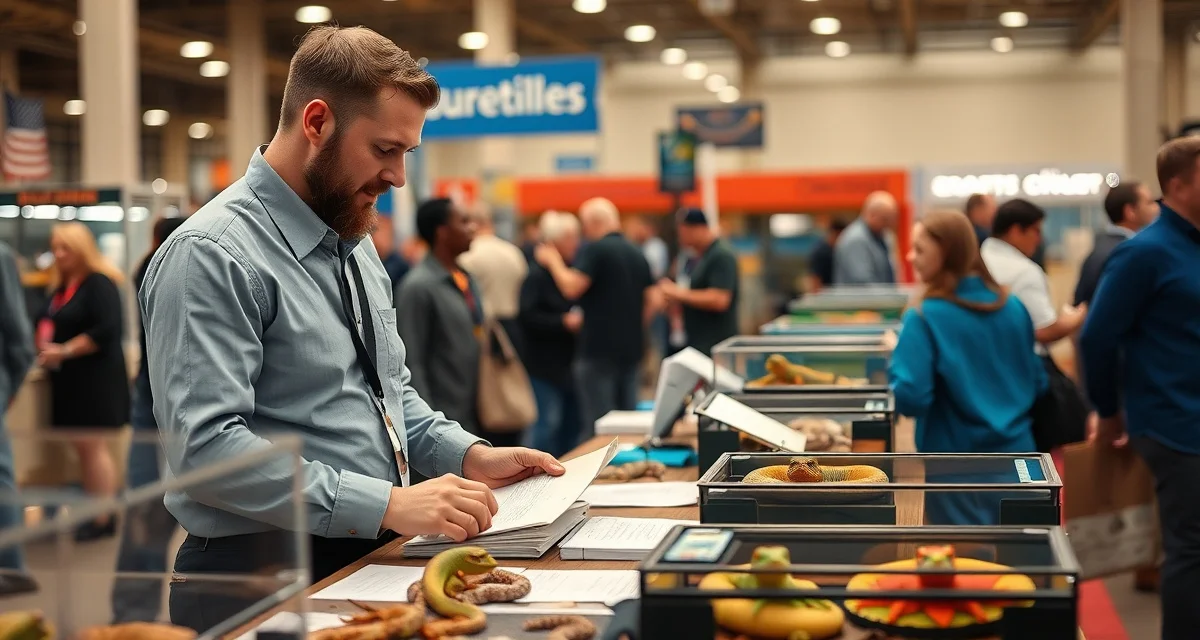
Reptile Expo Sales Tracking: Managing Sales at Events
Reptile expos are a major sales channel for many breeders. A well-attended regional expo can move 10-30 animals in a single weekend. The fast pace of expo sales creates specific documentation challenges: you need to record sales quickly while actively selling, without creating records that are inaccurate or incomplete.
Pre-Expo Inventory Preparation
Before any expo, document which specific animals you're bringing:
- Animal IDs for each animal attending
- Current morph description and asking price
- Condition notes (any feeding issues, recent health events, anything relevant to buyer discussions)
- Physical identification method (tag, color-coded tub, or similar)
This pre-expo inventory list is your starting point for post-expo reconciliation. After the event, you know exactly which animals you brought, which sold, and which came home.
Pricing and Sale Terms at Expos
Expo pricing often differs from online pricing. Consider:
- Online buyers pay shipping (or you absorb shipping costs). Expo buyers carry the animal home themselves. This affects your net revenue per sale.
- Expo buyers often expect or ask for discounts. Decide your minimum prices in advance.
- Some breeders run expo-specific promotions ("any hatchling purchased today includes a free care sheet and first shed guarantee").
Document your expo price list separately from your online price list. This helps with financial reconciliation and helps you compare expo vs. online pricing effectiveness.
Recording Sales During the Expo
The challenge is capturing buyer information and sale details in real time while actively talking to other potential buyers.
Minimal acceptable records at the expo:
- Which animal sold (ID)
- Sale price
- Payment method received
- Buyer name and phone/email
This can be noted on paper, in a phone notes app, or in HatchLedger if you have connectivity. The important thing is that every sale is documented before the next buyer arrives.
Full records (complete after the expo if not possible during):
- Full buyer information
- Any terms discussed (DOA policy communicated, health notes shared)
- Payment confirmation
Payment Methods at Expos
Cash: Still common at expos. Accept it. Count it at the point of sale. Document cash transactions specifically.
Venmo/Cash App/PayPal: Most buyers expect these. Have your accounts set up and QR codes easily accessible.
Square or similar card readers: For buyers who pay by card. This creates an automatic transaction record with timestamp.
Personal checks: Rare but sometimes offered. Decide in advance whether you accept them.
Post-Expo Reconciliation
After the expo, reconcile your sales against your pre-expo inventory:
- Which animals sold?
- What was the total revenue?
- Which animals came home unsold?
- What were the total expo expenses (booth fee, travel, hotel, food)?
Expo net revenue = gross sales minus booth fee minus travel and lodging minus any unsold animals that now need longer grow-out.
Many breeders discover that expos are their least efficient sales channel per-animal when all costs are included, but they value the customer relationships, community connections, and brand visibility. That's a legitimate business choice, as long as you're making it with accurate numbers.
HatchLedger allows expo sales to be tagged as a separate sales channel from online sales, making it easy to generate expo-specific revenue summaries for financial analysis.
Related content: Hatchling Sales Tracking | Reptile Sales Documentation | Reptile Sales Payment Processing
Sources
- NARBC and similar expo operator resources
- MorphMarket seller community expo practices
- USARK business resources