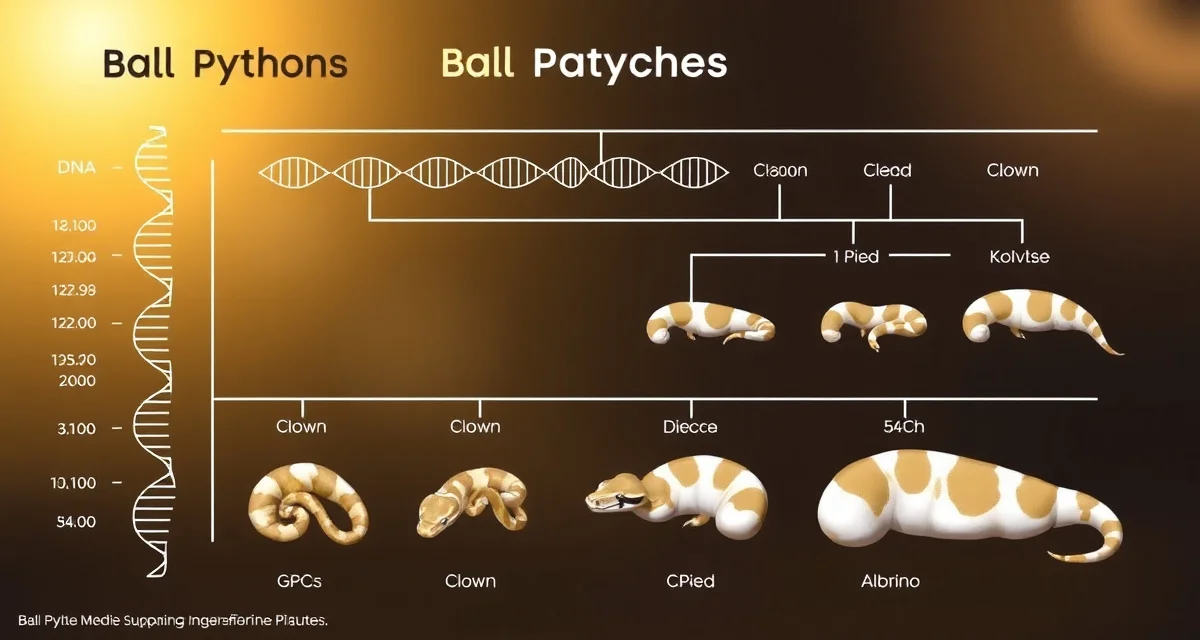
Recessive Morph Projects in Ball Pythons
By HatchLedger Editorial Team · Published 2025-06-07 · Updated Mar 13, 2026
Recessive morphs are the backbone of high-value ball python breeding. Clown, Pied, Albino, Axanthic, Desert Ghost, Lavender Albino, these genes require two copies to be visible, which means years of patient het breeding before you see your first visual animals. Understanding how to structure and manage recessive projects is what separates breeders who consistently hit their targets from those who spin wheels for years without progress.
The Basic Recessive Math
Every recessive morph follows the same inheritance pattern:
het × het: 25% visual, 50% het, 25% normal (no gene). From 8 eggs, you statistically expect 2 visuals, but statistics don't guarantee a specific clutch. You might get 0 visuals or 5 visuals from the same probability.
visual × het: 50% visual, 50% het. No normals. This is the most efficient pairing for producing visuals once you have them.
visual × normal: 100% het. No visuals, but every offspring carries one copy. This is how you create a lot of hets quickly when you have a visual male to use.
het × normal: 50% possible het, 50% normal (with no gene). These offspring look identical to each other visually, you can't tell which are hets. They sell as possible hets at a probability-discounted price.
The math is predictable. The outcomes per clutch are not. This is why breeders run multiple females in a recessive project simultaneously, more eggs means better coverage of the statistical distribution.
Starting a Recessive Project
Option 1: Buy het × het animals and pair immediately
Fastest path to visuals. Two documented hets paired together give you a 25% chance of visual offspring per egg. Cost: het animals are cheaper than visuals, but you may wait through one or two clutch seasons before seeing a visual.
Option 2: Buy a visual and pair to a het
50% visuals from every egg. Faster and more reliable. Cost: visual animals are significantly more expensive than hets, but the efficiency gain may be worth it depending on the gene's value.
Option 3: Start from scratch with confirmed 100% hets
Buy two visual animals, pair them, and every offspring is 100% het. In generation 2, pair siblings back together (line-breeding) or out to hets from other sources. Slower, you're two generations from visuals, but you control the lineage completely.
Which approach makes sense depends on the gene, current market prices, and how quickly you want to see results.
The Clown Project
Clown is the highest-demand recessive gene in the ball python hobby. Clown animals have a characteristic clown-like facial pattern, reduced dorsal banding, and strong color expression that combines dramatically with co-dominant morphs.
Starting animals: A pair of documented het Clowns from reputable breeders. Price: $200-400 each depending on what else they're carrying.
Year 1: Pair het × het. Expect 6-8 eggs. Statistical expectation: 1-2 visual Clowns, 3-4 hets, 1-2 normals. Hatch in late spring to summer.
Year 2: You have visual Clowns. Pair visual Clown male to het female from a different source (avoid sibling pairings if possible). 50% of offspring are visual Clowns.
Year 3: You're producing visual Clowns reliably and have hets to sell. Begin adding co-dominant genes to the project.
The economics work out because even single-gene Clown ball pythons sell for $300-800+ depending on sex and expression. The hets from your clutches are worth $100-300 each. By year 2-3, a well-run Clown project is cash-flow positive.
The Pied Project
Piebald (Pied) is the other top-tier recessive gene. Pied animals are partially white with patterned "islands" of normal coloring. The pattern varies significantly, some animals are 80% white, others are mostly patterned with small white sections.
Pied breeding considerations:
Selecting for pattern: High-white Pied animals command premiums. Tracking which pairings produce high-white vs. low-white offspring, and selecting your holdbacks accordingly, lets you breed toward higher white expression over generations. This is one of the most useful things you can do with detailed clutch records.
Multiple Pied lines: As with Axanthic, Pied exists in multiple lines. Most Pieds in the hobby are from common backgrounds, but if you're acquiring animals specifically to add Pied genetics, verify the animals are compatible (from the same line or known-compatible lines).
Pied combinations: Pied combines dramatically with co-dominant morphs. Pastel Pied, GHi Pied, Banana Pied, Enchi Pied, all are significantly more valuable than single-gene Pied. Plan which co-dominant genes you want to introduce from the start.
Axanthic Projects and Line Compatibility
Axanthic is a recessive that produces black-and-white animals (reduced yellow and red pigment). It combines with morphs like Spider, Pastel, and Lesser to produce high-contrast animals.
Line compatibility is critical: TSK, VPI, Marcus Enc, and other Axanthic lines are not compatible. Breeding a TSK Axanthic to a VPI Axanthic produces animals that are het for two different, non-interacting genes. Those animals will never produce visual Axanthics when bred together. You've wasted two seasons on incompatible genetics.
Always document Axanthic line in your morph genetics records. If you're unsure of an animal's Axanthic line, contact the breeder you acquired it from before building a project around it.
Het Depth and Proving Out
As you work through recessive projects, some animals will be "possible hets" rather than confirmed. Breeding through possible hets to confirm het status is called proving out.
Pairing a possible het to a visual: If your possible het produces even one visual offspring, it's confirmed het. A positive result can come from a single clutch. A negative result (no visuals across multiple clutches) increases doubt but can't fully disprove het status, it's possible to have bad statistical luck across 2-3 clutches.
Economic decision: Is it worth the time and space to prove out a possible het, or should you sell it as a possible and allocate that space to confirmed het animals? This depends on the gene's value and how many possible het animals you're working with. Proving out a possible het Clown that might be a confirmed het worth $300 might be worthwhile. Proving out a possible het Axanthic worth $50 if confirmed might not be.
Track your proving-out breeding in HatchLedger by linking the pairing to both animals and recording outcomes. When the proving-out is complete, whether positive or negative, annotate the animal's record so the history is clear.
Record-Keeping for Recessive Projects
Every generation of a recessive project needs to be connected in your records. Key documents per project:
- Founder animals (where they came from, what their het status is and how it was established)
- Pairing records per season (which animals were paired, observed locks, clutch dates)
- Hatchling inventory with genetic makeup per animal
- Holdback decisions and reasoning
- Sale records with what documentation was provided to buyers
HatchLedger connects all of these to specific animals. When you're planning your year 3 pairings, you can look at any holdback's record and see its full lineage, who its parents were, what else was in its clutch, how that clutch was incubated. That information drives better pairing decisions than working from memory.
FAQ
What is Recessive Morph Projects in Ball Pythons?
Recessive morph projects in ball pythons are multi-generation breeding programs designed to produce visually expressed recessive genes like Clown, Pied, Albino, and Axanthic. Because these traits require two copies of the gene to be visible, breeders must strategically pair heterozygous (het) animals over multiple breeding seasons before producing visual offspring. These projects form the foundation of high-value ball python breeding and require careful record-keeping, patience, and a solid understanding of Mendelian inheritance patterns.
How much does Recessive Morph Projects in Ball Pythons cost?
There is no fixed cost — expenses vary widely depending on which morph you pursue and your starting point. A het Clown or het Pied ball python might cost $100–$400, while proven visual animals can run $500–$2,000 or more. Factor in housing, feeding, veterinary care, and typically 2–4 years of breeding before producing visuals. Budget conservatively and treat the project as a multi-season investment rather than a quick return.
How does Recessive Morph Projects in Ball Pythons work?
Recessive morph projects work by pairing animals that carry one or two copies of a recessive gene. A het × het pairing gives a 25% chance of visual offspring per egg, a 50% chance of hets, and 25% normals. Once you have visuals, pairing them back to hets produces 50% visuals and 50% hets with no normals. Each generation gets you closer to reliable visual production, but clutch outcomes vary due to natural probability.
What are the benefits of Recessive Morph Projects in Ball Pythons?
The primary benefit is access to the highest-value ball python morphs on the market. Recessive visuals like Clown Pied or Lavender Albino combos command premium prices that far exceed common dominant or codominant morphs. Running your own project also gives you a steady supply of hets to sell or trade, builds your reputation as a serious breeder, and develops deep genetic knowledge that compounds across every future project you undertake.
Who needs Recessive Morph Projects in Ball Pythons?
Serious hobbyist breeders and professional reptile producers who want to work with premium-value morphs need to understand recessive projects. If you're breeding ball pythons beyond the casual level — aiming for consistent, high-value offspring and long-term program development — recessive morph projects are essential. They're best suited to breeders who can commit multi-year timelines, maintain organized records, and house multiple animals simultaneously without cutting corners on care.
How long does Recessive Morph Projects in Ball Pythons take?
Expect a minimum of 2–4 years from starting with hets to producing your first visual offspring, assuming everything goes smoothly. The het × het phase alone takes at least one full breeding season, and ball pythons typically breed once per year. If you start with normals or possible hets, add another season. Larger projects running multiple pairings simultaneously can compress the timeline, but there are no shortcuts around the biology.
What should I look for when choosing Recessive Morph Projects in Ball Pythons?
Look for animals with verified genetic lineage and trustworthy documentation from the seller. Prioritize hets from visual-to-het pairings over possible hets from het × normal pairings — they carry higher genetic certainty. Evaluate the health and body condition of the animal independently of its genetics. Choose projects built around morphs with stable, sustained market demand. Starting with a reputable visual male to breed across multiple females is often the most efficient and cost-effective entry point.
Is Recessive Morph Projects in Ball Pythons worth it?
Yes — for breeders committed to the long game, recessive morph projects are absolutely worth it. They produce the most sought-after and highest-priced ball pythons in the hobby. The learning curve and time investment are real, but the genetic knowledge, breeding stock, and reputation you build have lasting value. Breeders who plan carefully, maintain clean records, and stay consistent see compounding returns across seasons as their visual animals open up new, even more valuable combo pairings.