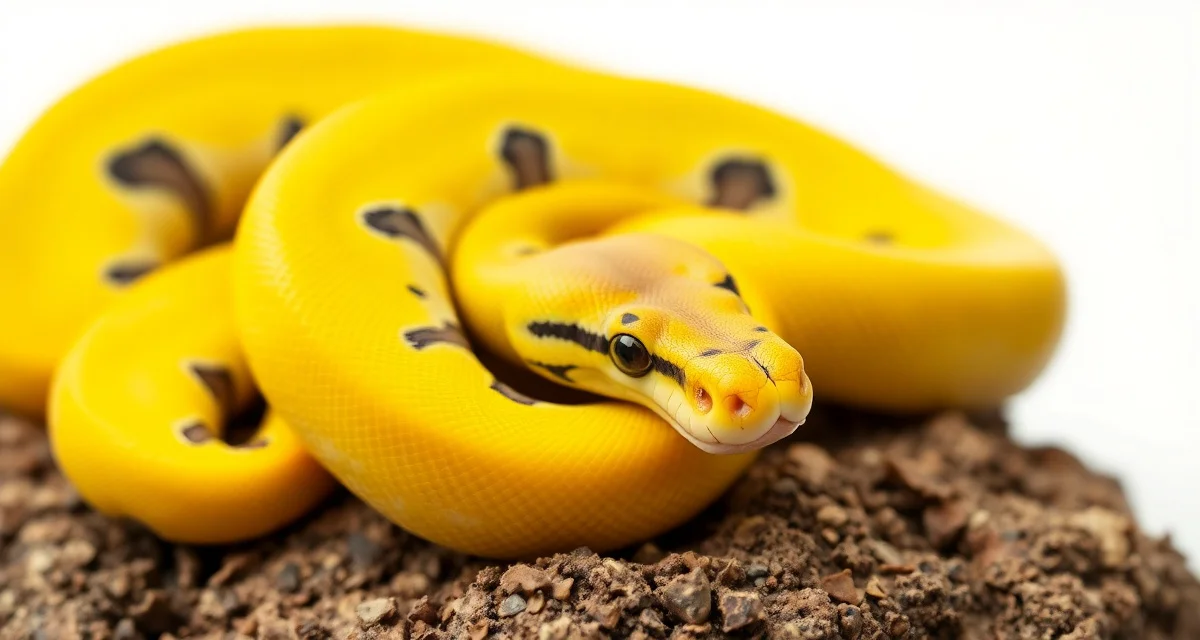
Sulfur Ball Python: Genetics, Breeding Outcomes and Pricing
Sulfur is a co-dominant morph in the Fire/Vanilla gene complex, and it's one of the most color-amplifying genes available to ball python breeders. Single-gene Sulfur animals show vivid yellow and reduced dark pigmentation. Sulfur is also allelic with Fire and Vanilla, meaning all three are at the same genetic locus, which opens up some interesting BEL-pathway interactions.
TL;DR
- The Sulfur morph is a documented genetic variant in ball pythons with established inheritance pattern and pricing history.
- Co-dominant morphs express visually in single copy and produce a distinct super form in double copy (with exceptions like Spider where the super is non-viable).
- Recessive morphs require two copies to be visually expressed; single-copy carriers (hets) look identical to normal ball pythons.
- Documented het claims backed by parentage records are worth significantly more at resale than unverified possible-het claims.
- Market prices for any given morph are heavily influenced by production volume, demand trends, and whether the morph stacks well with high-value genes.
Sulfur Genetics Explained
Sulfur is co-dominant. One copy produces the single-gene Sulfur phenotype. Two copies produce the Super Sulfur, which is a dramatically lighter, near-leucistic-appearing animal.
Because Sulfur, Fire, and Vanilla are allelic, an animal can only carry two alleles at this locus. That means:
- Sulfur x Sulfur = 25% normal, 50% Sulfur, 25% Super Sulfur
- Sulfur x Fire = 25% normal, 25% Sulfur, 25% Fire, 25% Sulfur Fire (a white or near-white BEL-pathway animal)
- Sulfur x Vanilla = similar results to above
Single-Gene Sulfur Appearance
Single-gene Sulfurs are vivid. The base coloration shows strong yellows and the pattern contrast is reduced. They look noticeably different from normals, more color-saturated with brighter yellow tones. Retail for single-gene Sulfurs typically runs $100-$200.
Super Sulfur
Super Sulfurs are near-white animals with reduced pattern, they sit in similar visual territory to Super Fires and Super Vanillas. They're commercially appealing to buyers who want reduced-pattern white or cream animals. Retail $300-$500.
Sulfur Combos
- Sulfur Pastel: extremely vivid yellow; one of the brightest single-co-dom Pastel combos available; retail $200-$350
- Sulfur Fire: BEL-pathway white animal; retail $400-$700
- Sulfur Clown: recessive combo; visual animals show brilliant yellow pattern with clown reduction; retail $700-$1,200
- Sulfur Pied: white-based with vivid yellow saddles; retail $700-$1,400
- Sulfur Enchi: intense orange-yellow animals with pattern reduction; retail $300-$500
Breeding Sulfur Ball Pythons
Pairing Strategies
Sulfur is most commonly used as a color amplifier. The typical strategy is to pair Sulfur into animals that already carry other co-doms and are working toward recessive goals. A Sulfur het Pied paired with another het Pied gives you a clutch that includes single-gene Sulfurs, Sulfur Pieds, and normal hets, multiple tiers of sellable offspring from one pairing.
When running Sulfur x Fire pairings, document the BEL-pathway animals carefully. Sulfur Fire animals require specific labeling, buyers need to know they're not getting a simple Sulfur or Fire but a compound gene animal.
Breeding Season Notes
Ball python breeding season runs October through March. Females need to be at minimum 1,500g, ideally 1,700g+. I run introductions every 10-14 days and log lock dates in HatchLedger. After ovulation, identified by the characteristic mid-body swelling, I note the date and project forward: pre-lay shed in 28-35 days, egg deposition 10-20 days after that.
Sulfur females behave the same as any other ball python during breeding. There's nothing gene-specific to their breeding behavior.
Incubation
88-90°F, 88-100% humidity, 55-65 days. Sulfur hatchlings from Sulfur x Sulfur pairings include normals, single-gene Sulfurs, and Super Sulfurs. The single-gene and super can typically be identified visually at hatch, supers are noticeably lighter.
Pricing Sulfur Ball Pythons
| Animal | Retail Range |
|--------|-------------|
| Single-gene Sulfur (female) | $150-$250 |
| Single-gene Sulfur (male) | $100-$175 |
| Super Sulfur | $300-$500 |
| Sulfur Pastel | $200-$350 |
| Sulfur Fire | $400-$700 |
| Sulfur Clown | $700-$1,200 |
| Sulfur Pied | $700-$1,400 |
Female premiums of 20-30% apply across all categories.
Managing Sulfur Projects in HatchLedger
When you're producing clutches that include single-gene Sulfurs, normals, and potentially compound-gene animals from BEL interactions, clean records prevent misidentification that can cost you money or buyer trust.
HatchLedger's hatchling inventory tracker records each animal's genetic makeup at hatch. The budget calculator lets you see cost per animal across the whole clutch, useful when you're pricing normals from a Sulfur pairing versus the Super Sulfurs. The breeding season planner helps coordinate Sulfur pairings alongside other projects so you don't accidentally double-book your males.
FAQ
What is the difference between Sulfur, Fire, and Vanilla ball pythons?
All three are co-dominant morphs at the same genetic locus (allelic). Single-gene animals look different, Sulfur shows strong yellow reduction, Fire looks similar, Vanilla is more subtle. But because they're allelic, they interact with each other to produce compound animals (Sulfur Fire, Sulfur Vanilla, etc.) that often appear near-white or white. They also interact with the BEL complex genes (Lesser, Mojave, etc.) to produce BEL-pathway animals.
How do professional breeders use Sulfur in their programs?
Most experienced breeders use Sulfur as a color amplifier, stacking it into recessive projects to add value to all offspring. A Sulfur het Pied is more valuable than a plain het Pied. Breeders also use Sulfur in high-color projects targeting vivid yellow ball pythons for the market segment that wants bright animals without going full albino.
Sources
- USARK (United States Association of Reptile Keepers)
- World of Ball Pythons (WoBP genetics reference database)
- Association of Reptilian and Amphibian Veterinarians (ARAV)
- MorphMarket (reptile industry marketplace data)
- Ball Python community genetics documentation
Get Started with HatchLedger
Tracking Sulfur genetics through multiple generations requires connected records that link parent morphs, clutch outcomes, and het status for every animal in your collection. HatchLedger's genetics engine handles this automatically, making buyer documentation accurate and complete. Try it free with up to 20 animals.