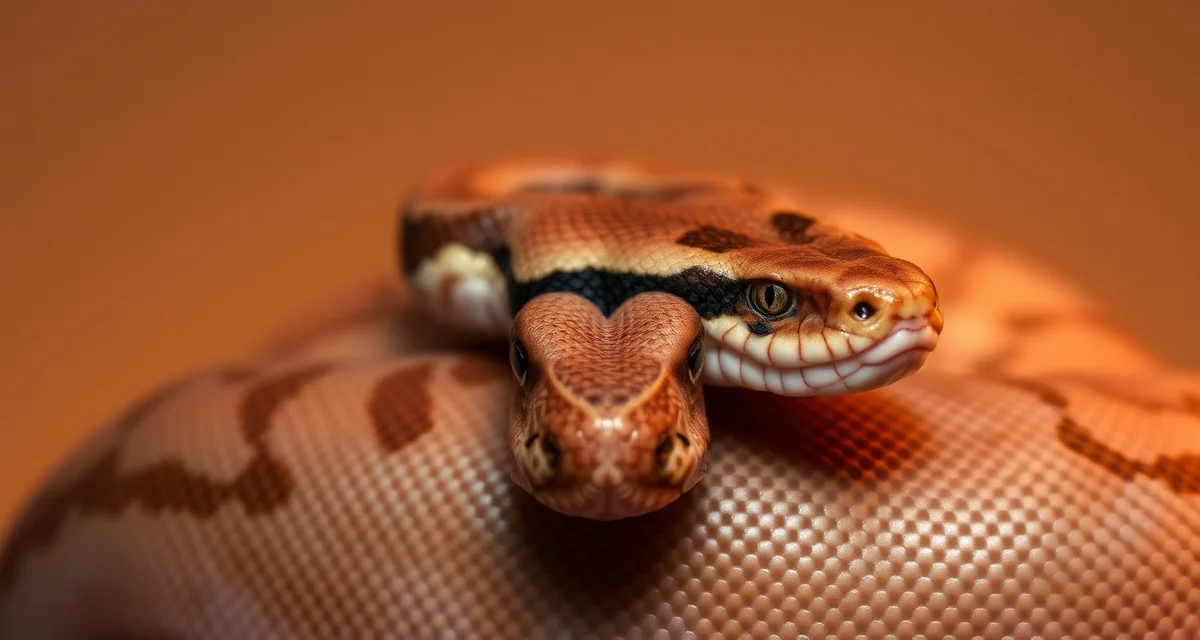
Scaleless Ball Python: Genetics, Breeding Outcomes and Pricing
Scaleless ball pythons are one of the most unusual and visually striking animals in the hobby. Rather than a color morph, Scaleless is a structural mutation that reduces or eliminates scale coverage on the dorsal surface, revealing the underlying skin texture. Combined with color morphs, Scaleless animals can look like nothing else in ball pythons. They're also one of the more complex genes to work with, they carry welfare considerations and the genetics are still being refined as the morph develops.
TL;DR
- The Scaleless morph is a documented genetic variant in ball pythons with established inheritance pattern and pricing history.
- Co-dominant morphs express visually in single copy and produce a distinct super form in double copy (with exceptions like Spider where the super is non-viable).
- Recessive morphs require two copies to be visually expressed; single-copy carriers (hets) look identical to normal ball pythons.
- Documented het claims backed by parentage records are worth significantly more at resale than unverified possible-het claims.
- Market prices for any given morph are heavily influenced by production volume, demand trends, and whether the morph stacks well with high-value genes.
Scaleless Ball Python Genetics
Scaleless is recessive in ball pythons. Two copies are required for visible expression. Animals with one copy (het Scaleless) look like normals.
Scaleless Head vs. Fully Scaleless
There's an important distinction in the Scaleless world:
- Scaleless Head: animals with scales on the body but reduced/absent scales on the head; some lines produce these as intermediates
- Fully Scaleless: animals with reduced or absent scaling across the dorsal surface; the most extreme expression
Welfare Considerations
Scaleless ball pythons require extra husbandry attention:
- Higher humidity requirements to prevent dehydration through exposed skin (target 60-80% ambient humidity, higher during shed)
- More careful handling, scale-free skin is more susceptible to abrasion
- Temperature regulation may be slightly more challenging without scale insulation
- Feeding and digestion appear normal in most cases
Buyers need full disclosure about these care requirements. Don't sell Scaleless animals to buyers who aren't prepared for the additional husbandry.
Scaleless Appearance
Fully Scaleless animals have a distinctive texture, the underlying skin is visible, creating a smooth or rough leathery appearance depending on the individual. Color morphs are expressed through the skin texture rather than scales, which creates a very different visual impression than scaled animals. The colors tend to look "wetter" or more saturated because light reflects differently.
Scaleless animals retail for $800-$2,500+ depending on what color genes are stacked on top.
Scaleless Combos
This is where prices escalate dramatically:
- Scaleless Pastel: vivid yellow through scaleless skin texture; retail $1,200-$2,500
- Scaleless Banana: intense color expression; retail $1,500-$3,000+
- Scaleless Clown: highly unique combo; retail $2,000-$5,000+
- Scaleless Pied: white-and-color contrast through scaleless skin; retail $2,000-$5,000+
- Scaleless Enchi: vivid orange through scaleless texture; retail $1,500-$3,000
Breeding Scaleless Ball Pythons
Building a Scaleless Project
Scaleless projects are multi-year investments. You need two het Scaleless animals to begin. Het Scaleless animals sell for $200-$500+ depending on what other genes they carry.
From het x het pairing: 25% Scaleless, 50% het Scaleless, 25% normal. Your first visual Scaleless animals typically emerge in year two of serious breeding work.
Timing the Project for Maximum Value
Scaleless paired with already-developed recessive lines produces maximum value. The ideal: a het Scaleless female that's also visual Clown or visual Pied, paired to a het Scaleless male. Your clutch can then contain Scaleless Clowns or Scaleless Pieds, animals that routinely sell for $3,000-$6,000.
Record-Keeping Importance
Because het Scaleless animals look normal, complete lineage documentation is essential. HatchLedger's lineage engine tracks each het Scaleless animal's parentage and how het status was established, whether from visual parents, proven het pairings, or possible het status with listed odds.
Incubation
88-90°F, 88-100% humidity, 55-65 days. Scaleless hatchlings emerge like any other ball python, the lack of scales is visible immediately. Keep humidity on the higher end of the range for Scaleless babies.
Pricing Scaleless Ball Pythons
| Animal | Retail Range |
|--------|-------------|
| Scaleless (no additional genes, female) | $1,000-$2,000 |
| Scaleless (no additional genes, male) | $700-$1,500 |
| Het Scaleless (proven, with co-doms) | $300-$700 |
| Scaleless Pastel | $1,200-$2,500 |
| Scaleless Banana | $1,500-$3,000 |
| Scaleless Clown | $2,000-$5,000 |
| Scaleless Pied | $2,000-$5,000 |
FAQ
What is the best approach to Scaleless ball python breeding?
Start with documented het Scaleless animals from reputable sources. Build color morph genes into your het lines so that when visuals emerge, they're already multi-gene animals. Factor in the additional husbandry costs, Scaleless animals need more careful environmental management, and price accordingly. Full disclosure to buyers about care requirements is non-negotiable.
How do professional breeders handle Scaleless ball python welfare disclosures?
Every sale of a Scaleless ball python should include written documentation of the special care requirements: higher humidity, careful substrate choice, regular skin condition monitoring. Reputable breeders include this in buyer packs, and often pre-screen buyers to confirm they're prepared for the husbandry demands. HatchLedger's buyer pack generator supports custom care notes that can be added to certificates for Scaleless animals.
Sources
- USARK (United States Association of Reptile Keepers)
- World of Ball Pythons (WoBP genetics reference database)
- Association of Reptilian and Amphibian Veterinarians (ARAV)
- MorphMarket (reptile industry marketplace data)
- Ball Python community genetics documentation
Get Started with HatchLedger
Tracking Scaleless genetics through multiple generations requires connected records that link parent morphs, clutch outcomes, and het status for every animal in your collection. HatchLedger's genetics engine handles this automatically, making buyer documentation accurate and complete. Try it free with up to 20 animals.