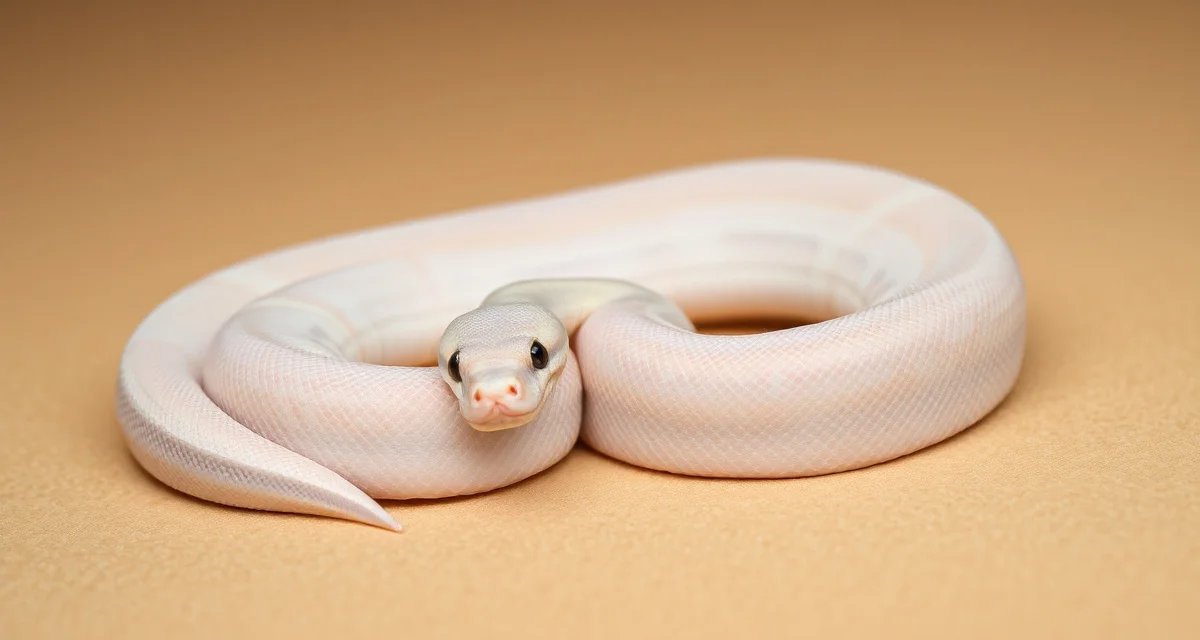
Ghost Ball Python: Genetics, Breeding Outcomes and Pricing
Ghost ball pythons are one of those morphs with naming confusion that trips up newer breeders. "Ghost" is widely used as a trade name for Hypo ball pythons, a recessive gene that reduces dark pigmentation across the body. The result is a lighter, washed-out animal with a ghostly appearance. Visual Ghosts are attractive animals, but their real power is in combos, especially when stacked with Pastel, Enchi, or Pied.
TL;DR
- The Ghost morph is a documented genetic variant in ball pythons with established inheritance pattern and pricing history.
- Co-dominant morphs express visually in single copy and produce a distinct super form in double copy (with exceptions like Spider where the super is non-viable).
- Recessive morphs require two copies to be visually expressed; single-copy carriers (hets) look identical to normal ball pythons.
- Documented het claims backed by parentage records are worth significantly more at resale than unverified possible-het claims.
- Market prices for any given morph are heavily influenced by production volume, demand trends, and whether the morph stacks well with high-value genes.
Ghost Genetics: What You Need to Know
Ghost (Hypo) is a recessive gene. You need two copies to see visual expression. Animals with one copy are het Ghost, they look like normal ball pythons and you can only know they carry the gene through parentage records or test breedings.
Visual Ghost Appearance
Visual Ghosts show reduced dark pigmentation throughout the body. The base coloration lightens to cream, tan, or yellow-brown tones, and the pattern contrast decreases. Some high-quality Ghosts develop beautiful lavender or purple-grey tones as they age and darken. They're not the most dramatic-looking single-recessive animals, but they're consistently sellable. Retail for visual Ghosts runs $100-$200 depending on sex and quality.
Breeding Ratios
- Het x Het pairing: 25% visual Ghost, 50% het Ghost, 25% normal (all look identical except the visuals)
- Visual x Het pairing: 50% visual, 50% het
- Visual x Normal pairing: 100% het Ghost (no visuals, but all offspring carry one copy)
Ghost Combos
The real market for Ghost is in combos:
- Ghost Pastel: vivid purple/lavender tones, retail $200-$400
- Ghost Pied: incredible white-based animals with reduced-pigment saddles; retail $500-$900
- Ghost Enchi: striking orange and cream animals; retail $300-$550
- Ghost Mojave: BEL pathway interaction, Ghost doesn't directly interact but the visual combo is clean; retail $300-$500
- Ghost Clown: takes time but visually stunning, some of the cleanest combo animals; retail $700-$1,400
Breeding Ghost Ball Pythons
Starting a Ghost Project
Most Ghost projects start with het Ghost animals purchased from a reputable breeder. Confirmed hets from proven visual x het pairings sell for $75-$150. Possible hets from het x het pairings are cheaper but require proving out before you can price offspring confidently.
I log every animal's het status in HatchLedger, visual, proven het, or possible het, along with the source of that determination. "Possible het" based on parentage is different from "proven het" through a test breeding, and buyers pay accordingly.
The Proving Process
To prove out a possible het Ghost, pair it with a known visual Ghost. You need to produce visual offspring to confirm the animal carries the gene. Statistically, from a het x visual pairing, if you don't see any visual offspring from a clutch of 6 eggs, there's still about a 17% chance the animal is het. Most breeders want 8-12 produced offspring before declaring an animal "proven."
Seasonal Calendar
- October-November: Begin pairings, log lock dates
- November-March: Continue pairings through breeding season
- January-April: Ovulations occur, pre-lay sheds follow
- March-June: Egg deposition, move eggs to incubator
- May-August: Eggs hatch at 55-65 days at 88-90°F
Pricing Ghost Ball Pythons
| Animal | Typical Retail |
|--------|---------------|
| Visual Ghost (female) | $150-$250 |
| Visual Ghost (male) | $100-$175 |
| Proven het Ghost | $75-$150 |
| Possible het Ghost (66%) | $50-$100 |
| Ghost Pastel | $200-$400 |
| Ghost Pied | $500-$900 |
| Ghost Enchi | $300-$550 |
| Ghost Clown | $700-$1,400 |
Records Management for Ghost Projects
Ghost / Hypo projects are exactly the type of multi-year recessive work where bad records cost real money. If you can't document an animal's het status with confidence, you can't price it as a proven het. HatchLedger maintains each animal's complete genetic record from hatch, including parent IDs and how het status was determined.
The buyer pack generator creates clean documentation for each sale, certificate of authenticity, parent pairings, genetic status, feeding records. For het animals especially, that documentation justifies a premium price and builds repeat buyer relationships.
FAQ
Is Ghost the same gene as Hypo ball python?
In most cases, yes. "Ghost" is a trade name used for Hypo ball pythons, the same recessive mutation that reduces melanin. However, Desert Ghost is a completely different, more extreme mutation and is NOT the same gene. Always verify lineage and which specific line an animal comes from before purchasing or breeding.
How many offspring do I need to prove out a het Ghost ball python?
There's no definitive number, but most experienced breeders want to see 8-12 offspring from a het x visual pairing without producing any normals before calling an animal "proven het." Given clutch sizes of 4-8 eggs for ball pythons, this typically takes 2 seasons of pairings. From a het x het pairing, you need to see visual offspring, which carry two copies, to confirm the het status.
Sources
- USARK (United States Association of Reptile Keepers)
- World of Ball Pythons (WoBP genetics reference database)
- Association of Reptilian and Amphibian Veterinarians (ARAV)
- MorphMarket (reptile industry marketplace data)
- Ball Python community genetics documentation
Get Started with HatchLedger
Tracking Ghost genetics through multiple generations requires connected records that link parent morphs, clutch outcomes, and het status for every animal in your collection. HatchLedger's genetics engine handles this automatically, making buyer documentation accurate and complete. Try it free with up to 20 animals.