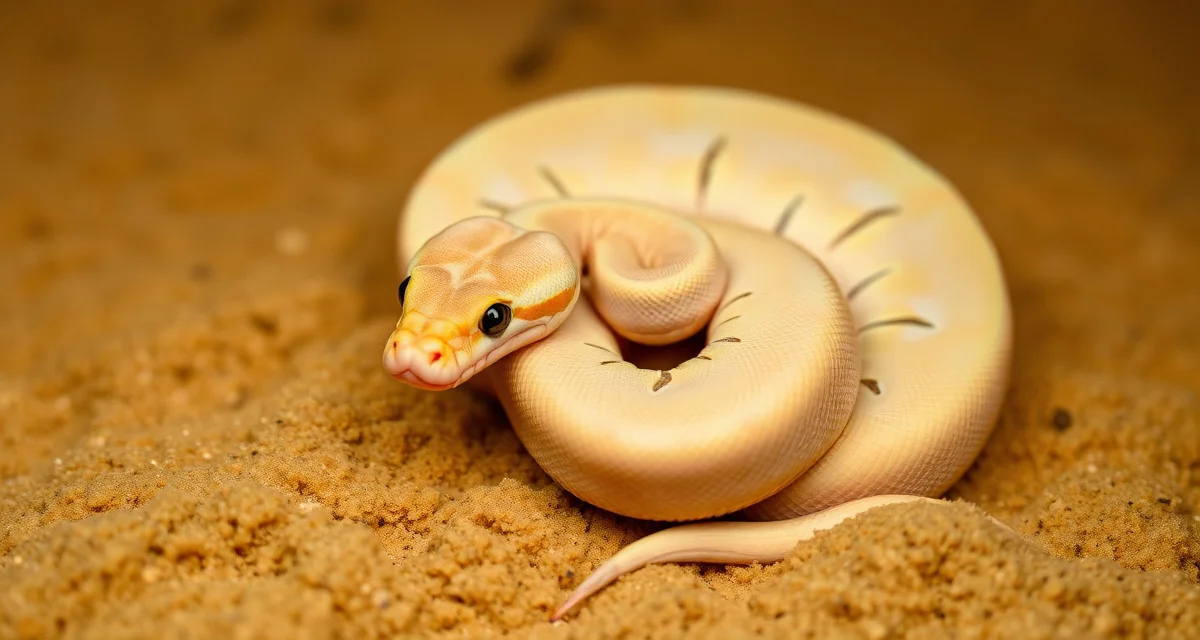
Desert Ghost Ball Python: Genetics, Breeding Outcomes and Pricing
Desert Ghost is one of the most misunderstood and underappreciated recessives in ball pythons. It's not the same gene as Ghost (Hypo), it's a distinct, more extreme hypomelanistic mutation that produces animals with dramatically reduced dark pigmentation and very vibrant underlying yellows and oranges. Desert Ghost stacked on top of other morphs can produce some of the most visually striking animals in the hobby, and it's still not as widely produced as it should be given the results.
TL;DR
- The Desert Ghost morph is a documented genetic variant in ball pythons with established inheritance pattern and pricing history.
- Co-dominant morphs express visually in single copy and produce a distinct super form in double copy (with exceptions like Spider where the super is non-viable).
- Recessive morphs require two copies to be visually expressed; single-copy carriers (hets) look identical to normal ball pythons.
- Documented het claims backed by parentage records are worth significantly more at resale than unverified possible-het claims.
- Market prices for any given morph are heavily influenced by production volume, demand trends, and whether the morph stacks well with high-value genes.
Desert Ghost Genetics
Desert Ghost is recessive. Two copies required for visual expression. One copy is het Desert Ghost, visually normal. The gene is completely separate from standard Ghost/Hypo, and these lines do NOT cross-prove. A het Ghost paired with a het Desert Ghost will produce animals that look normal, no visuals.
Visual Desert Ghost Appearance
Visual Desert Ghosts are stunning. The dark pigmentation is almost entirely absent in the highest-quality examples, you get vivid yellow, orange, and cream tones throughout the body. Some Desert Ghosts develop deep amber and gold tones with age. They're more extreme in pigment reduction than standard Ghost/Hypo.
Visual Desert Ghosts retail for $250-$500 depending on quality, gender, and lineage.
Desert Ghost Combos
This is where breeders get excited:
- Desert Ghost Pastel: electric yellow animals with minimal dark patterning; retail $500-$900
- Desert Ghost Pied: white-based animals with brilliant orange/gold saddles; retail $1,000-$2,000
- Desert Ghost Clown: one of the most visually impressive recessive combos in the hobby; retail $1,500-$3,000+
- Desert Ghost Enchi: orange and gold animals with reduced pattern; retail $600-$1,000
- Desert Ghost Banana: vivid combination with intense color; retail $700-$1,200
Double Recessive Desert Ghost Projects
When you're pairing Desert Ghost with other recessives, timelines extend significantly. Desert Ghost Pied requires both parents to carry both genes. If you start with animals that are het for both genes, you're looking at a 1/16 chance per egg of producing the double visual. That means clutch size and season documentation are critical.
Building a Desert Ghost Project
Acquiring Foundation Stock
Start with animals of known, documented lineage. Desert Ghost hets should come from visual parents or proven-het pairings. Possible hets (from het x het pairings where not all offspring are proven) trade at a lower price, $100-$200, but need to be proven before you can market offspring confidently.
Proven het Desert Ghosts typically sell for $200-$400. That premium is worth it for a foundation animal because it saves you a full proving season.
Proving Out Hets
Pair your possible het with a confirmed visual Desert Ghost. Produce a clutch. Any visual offspring confirms the possible het carries the gene. You need roughly 8-12 offspring without a visual to be reasonably confident an animal is het. Given that ball python clutches average 5-7 eggs, plan on 2 seasons of proving work minimum.
Log every pairing, every clutch, every hatchling in HatchLedger's lineage engine. When you finally prove an animal, update the record and that confirmation date goes into the buyer documentation.
Incubation Parameters
88-90°F, 88-100% humidity, 55-65 days. Double-recessive babies (Desert Ghost Pied, etc.) are indistinguishable from single-visual or het animals at hatch in some cases. Label every egg container with both parent IDs and pull your records when hatchlings emerge to correctly identify what genes they likely carry.
Pricing Desert Ghost Ball Pythons
| Animal | Typical Retail |
|--------|---------------|
| Visual Desert Ghost (female) | $350-$550 |
| Visual Desert Ghost (male) | $250-$400 |
| Proven het Desert Ghost | $200-$400 |
| Possible het Desert Ghost | $100-$200 |
| Desert Ghost Pastel | $500-$900 |
| Desert Ghost Pied | $1,000-$2,000 |
| Desert Ghost Clown | $1,500-$3,000 |
| Desert Ghost Banana | $700-$1,200 |
Tracking Desert Ghost Records
Because Desert Ghost projects run 3-5 years to produce high-value combos, and because het animals look identical to normals, your records are everything. HatchLedger maintains a complete history for each animal, where it came from, which pairings it was involved in, what offspring it produced, and how its het status was determined.
When you sell a proven het Desert Ghost, HatchLedger generates buyer documentation that shows the full proving history: parent IDs, clutch records, and the specific offspring that confirmed the gene. That level of documentation commands premium prices and builds long-term buyer relationships.
FAQ
Is Desert Ghost the same as Ghost or Hypo ball python?
No. Desert Ghost is a completely separate recessive gene from standard Ghost (Hypo). They don't cross-prove, and you cannot confirm one by breeding to the other. Both are hypomelanistic mutations, but they're at different loci. Always confirm lineage documentation when purchasing Desert Ghost animals.
How do professional breeders price Desert Ghost het animals?
Pricing depends on how the het status was established. Proven hets (confirmed through producing visual offspring) sell for $200-$400. Possible hets from het x het pairings where the animal was never proven carry lower prices and a description of the odds (e.g., "66% possible het" if one visual sibling was produced). Documented lineage from reputable breeders significantly affects buyer confidence and price.
Sources
- USARK (United States Association of Reptile Keepers)
- World of Ball Pythons (WoBP genetics reference database)
- Association of Reptilian and Amphibian Veterinarians (ARAV)
- MorphMarket (reptile industry marketplace data)
- Ball Python community genetics documentation
Get Started with HatchLedger
Tracking Desert Ghost genetics through multiple generations requires connected records that link parent morphs, clutch outcomes, and het status for every animal in your collection. HatchLedger's genetics engine handles this automatically, making buyer documentation accurate and complete. Try it free with up to 20 animals.