Milk Snake Husbandry for Breeders: Complete Breeder Guide
By HatchLedger Editorial Team · Published 2025-03-02 · Updated Mar 13, 2026
Milk snake husbandry for breeders is relatively straightforward compared to tropical species, but breeding-focused care goes beyond basic maintenance. The difference between keeping a milk snake alive and keeping it in optimal breeding condition involves consistent attention to body weight, pre-breeding conditioning, and year-round health monitoring. Breeders using integrated software report 30% less time on administrative tasks, freeing time for the husbandry practices that actually drive clutch quality.
TL;DR
- Milk snakes span dozens of recognized subspecies of Lampropeltis triangulum and related species, each with distinct care and breeding requirements.
- Most milk snake subspecies require 60-90 days of seasonal cycling at 50-55 degrees Fahrenheit for reliable breeding.
- Clutch sizes range from 4-18 eggs depending on subspecies, with Honduran milk snakes averaging toward the larger end.
- Incubation runs 55-70 days at 78-82 degrees Fahrenheit with moderate humidity.
- Honduran milk snakes have an active morph program with albino, hypo, and tri-color tangerine lines among the established variants.
Housing for Breeding Milk Snakes
Adult milk snakes do well in a range of enclosure types. For collection-scale programs, PVC rack systems with appropriately sized tubs provide efficiency and consistent environmental control. For smaller programs or display collections, glass terrariums or custom PVC enclosures work well.
Enclosure sizing: Adult milk snakes should have enclosures where they can fully extend in at least one dimension. 28-quart tubs are appropriate for most adult milk snake subspecies in a rack system. Larger subspecies like adult Honduran milk snakes may benefit from 41-quart tubs.
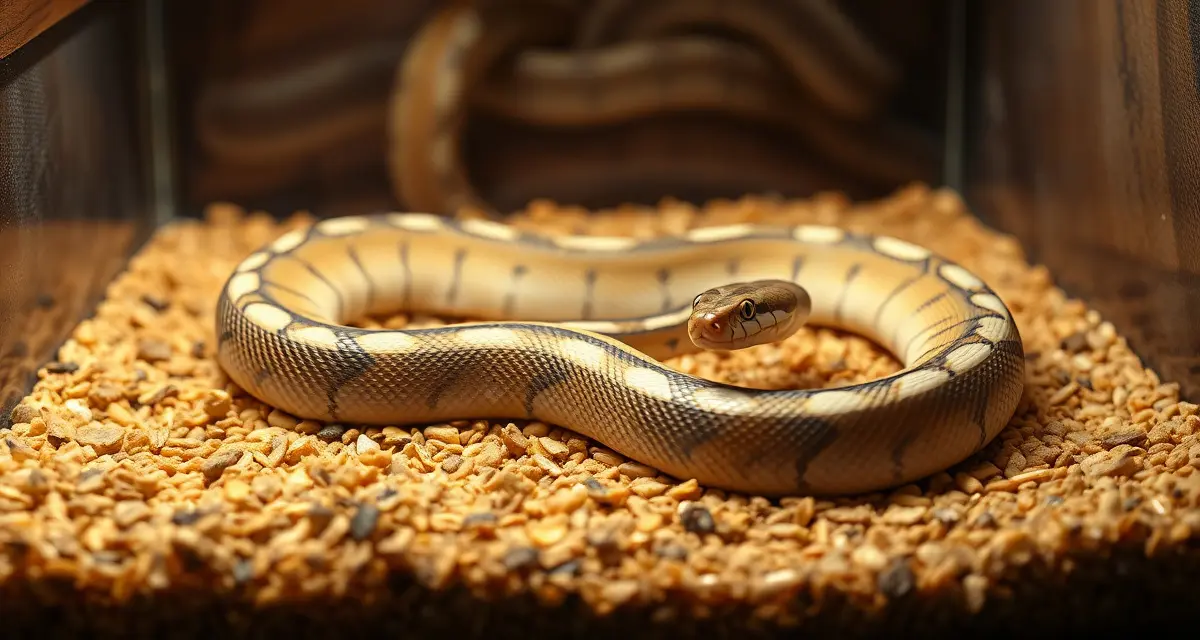
Substrate: Aspen shaving is widely used for its moisture management, easy spot-cleaning, and compatibility with milk snakes' burrowing behavior. Coconut fiber works similarly. Paper towel is appropriate for quarantine or hatchling enclosures where close observation is needed.
Hides: Every enclosure should have at least one hide. Milk snakes are secretive animals that feel stressed in exposed environments. A hide on the warm side is the minimum; a second hide on the cool side reduces stress further.
Individual housing: Like kingsnakes, milk snakes should be housed individually at all times. While milk snakes are less aggressively cannibalistic than kingsnakes, they will still occasionally prey on smaller enclosure-mates. Individual housing is safer and makes record-keeping cleaner.
Temperature and Heating
Maintain a thermal gradient of 85-88°F warm side and 72-76°F cool side. Belly heat from heat pads or heat tape on thermostats is effective for these terrestrial snakes.
All heat sources need quality thermostats with probes at floor level. Verify temperatures inside enclosures with a secondary probe periodically. Consistent temperatures are associated with consistent health and breeding performance.
During the cooling period, reduce to 55-65°F over 2 to 3 weeks. Verify your cooling space is achieving target temperatures before moving animals.
Feeding for Breeding Animals
Adult milk snakes eat mice, moving to adult mice as they reach full size. Prey should approximate the snake's mid-body diameter. Feed every 7 to 14 days.
Pre-breeding conditioning involves slightly increased feeding frequency in the 2 to 3 months before cooling begins. This builds the fat reserves that support follicle development. Log feeding events for breeding animals throughout the year.
Post-cooling, most milk snakes resume eating within the first week of warming. Allow females to eat 2 to 4 meals before male introduction. Track post-cooling feeding resumption in your breeding records in HatchLedger's reptile breeder hub.
Health Monitoring
Weigh breeding animals monthly. Log weights in individual records. A gradual weight decline over several months is often the first detectable sign of an underlying health issue, caught far earlier by a weight graph than by visual observation.
Log every shed date and quality. Retained shed indicates humidity or health issues that warrant attention before the breeding season.
Annual fecal exams for breeding animals catch parasite loads that reduce female condition without obvious visible signs. A female carrying a significant parasite burden will produce smaller clutches than an equivalent healthy female.
Reptile breeder software comparison resources highlight that connecting husbandry records to breeding outcomes is the defining feature that separates dedicated breeding software from general animal care apps.
Frequently Asked Questions
What is the best approach to milk snake husbandry for breeders?
Maintain appropriate thermal gradients with verified thermostats, feed appropriately sized prey on a regular schedule, and weigh breeding animals monthly year-round. Pre-breed condition females with slightly increased feeding before cooling. Log all feedings, weights, and sheds consistently. Conduct annual fecal exams for breeding animals. Review your husbandry records before each breeding season to assess whether each female is entering the season in the condition needed for productive breeding.
How do professional breeders handle milk snake husbandry for breeders?
Professional milk snake breeders manage animal condition year-round with breeding outcomes in mind. They monitor weights monthly, adjust feeding seasonally, and assess health before each breeding season. Their records show long-term condition trends that inform breeding readiness decisions. They maintain consistent environmental management across their collection and treat record-keeping as part of standard daily care rather than an administrative burden.
What software helps manage milk snake husbandry for breeders?
HatchLedger is purpose-built for reptile breeders, connecting animal records, breeding history, clutch outcomes, and financial tracking in one system. Unlike generic spreadsheets, it's designed around the specific workflow of an active breeding season. Free for up to 20 animals.
What is the most commonly bred milk snake subspecies?
Honduran milk snakes (L. t. hondurensis) are the most widely bred milk snake subspecies due to their larger size, active morph development, and established keeper base. Nelson's milk snakes and Sinaloan milk snakes are also commonly bred. Scarlet kingsnakes have a smaller but dedicated keeper community.
How do you tell apart milk snake subspecies?
Subspecies identification relies on coloration pattern (band count and width), scale counts, and geographic origin. For captive-bred animals, documentation from the original breeder is the most reliable source. Hybridization between subspecies does occur and reduces the value and documentation reliability of offspring.
What is Milk Snake Husbandry for Breeders: Complete Breeder Guide?
This guide covers everything breeders need to know about keeping milk snakes in optimal breeding condition, going beyond basic maintenance. It addresses subspecies-specific care across the dozens of recognized Lampropeltis triangulum variants, seasonal cycling protocols, clutch management, incubation parameters, and morph genetics. The guide also covers how integrated record-keeping tools help breeders manage their collections more efficiently, freeing up time for the hands-on husbandry that drives clutch quality and hatchling health.
How much does Milk Snake Husbandry for Breeders: Complete Breeder Guide cost?
The guide itself is free to read on HatchLedger. The husbandry practices described require standard reptile keeping equipment: PVC rack systems, thermostats, incubators, and hides. Startup costs vary by collection size, but milk snakes are among the more affordable colubrid species to house and breed at scale. Optional software tools for record-keeping and breeding management may carry a subscription cost but are not required to follow the husbandry protocols outlined.
How does Milk Snake Husbandry for Breeders: Complete Breeder Guide work?
The guide walks breeders through a year-round care cycle: maintaining adult snakes at proper weights, cooling them through a 60-90 day brumation period at 50-55°F, introducing pairs for breeding, and managing gravid females through egg deposition. Eggs are then incubated at 78-82°F for 55-70 days. Each stage builds on the previous one, so consistent monitoring and record-keeping throughout the year directly influences breeding success and clutch quality.
What are the benefits of Milk Snake Husbandry for Breeders: Complete Breeder Guide?
Following this guide helps breeders achieve more consistent reproductive output by standardizing the conditioning and cycling protocols that trigger breeding behavior. Subspecies-appropriate care reduces stress and health issues in adult animals. Proper incubation parameters improve hatch rates. For breeders with larger collections, the integrated software approach described can reduce administrative time by around 30%, allowing more focus on animal care and selective pairing decisions that improve morph and genetic outcomes.
Who needs Milk Snake Husbandry for Breeders: Complete Breeder Guide?
This guide is written for hobbyist and commercial breeders working with milk snakes at any scale, from small private collections to larger production programs. It assumes basic reptile keeping knowledge but is detailed enough to help intermediate breeders refine their protocols. Breeders working with specific subspecies like Hondurans will find morph-specific information particularly useful, and anyone transitioning from casual keeping to structured breeding programs will benefit from the conditioning and cycling sections.
How long does Milk Snake Husbandry for Breeders: Complete Breeder Guide take?
The annual breeding cycle for milk snakes typically spans 10-12 months from the start of conditioning to hatching the following season. Brumation alone runs 60-90 days. Post-cooling breeding introductions happen over several weeks, followed by a 30-45 day gestation before egg deposition. Incubation adds another 55-70 days. Reading the guide takes under an hour, but implementing the full protocol and seeing results from a complete breeding season requires commitment across an entire calendar year.
Related Articles
- Boa Constrictor Husbandry for Breeders: Complete Breeder Guide
- Burmese Python Husbandry for Breeders: Complete Breeder Guide
Sources
- USARK (United States Association of Reptile Keepers)
- Association of Reptilian and Amphibian Veterinarians (ARAV)
- Herpetologica (Herpetologists League)
- Society for the Study of Amphibians and Reptiles (SSAR)
- Reptiles Magazine (Bowtie Inc.)
Get Started with HatchLedger
Milk snake breeders working across subspecies and morph lines benefit from records that track lineage clearly and connect cooling protocols to seasonal clutch outcomes. HatchLedger keeps this information organized and searchable across your entire collection. Free for up to 20 animals.